
ERBIL, Kurdistan Region of Iraq – A borrowing bill before the Iraqi parliament will serve as a “temporary measure” until the general budget is approved, an advisor to the prime minister said Tuesday, with Baghdad feeling the crunch from the closure of the vital Strait of Hormuz and regional tensions.
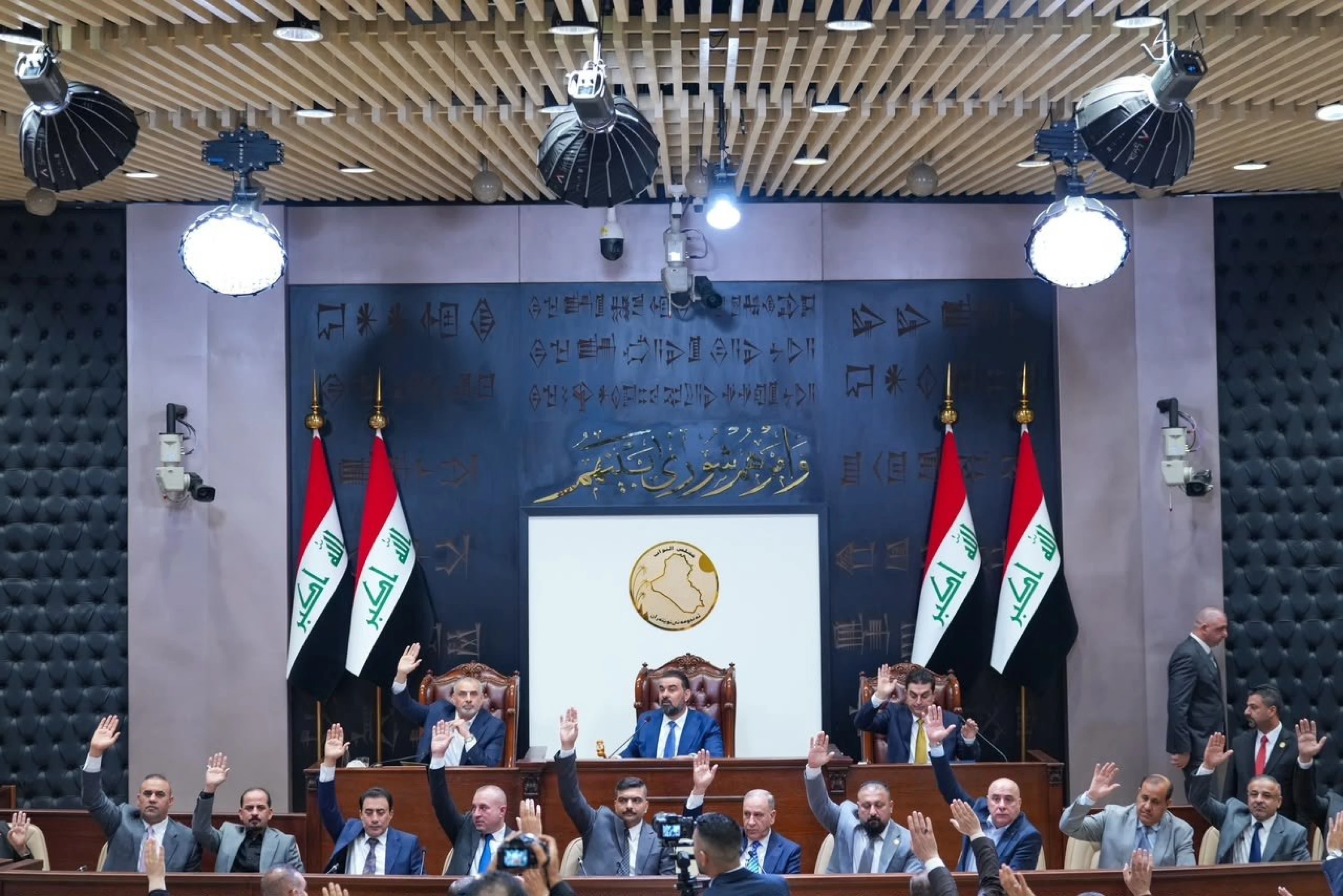
The Iraqi parliament’s finance committee on Sunday said it has completed a draft for a domestic and foreign borrowing bill.
Mudher Mohammed Salih, financial advisor to Prime Minister Ali al-Zaidi, said if the borrowing law was approved, it would be “a temporary measure to ensure the continuation of spending until the budget is approved, and does not represent a permanent alternative to the general budget.”
On Sunday, Uday Awad Kadhim, head of the parliament’s finance committee, told The New Region that “due to the closure of the Strait of Hormuz, export levels have stopped, and the government has no option other than borrowing available to it.”
As a means in its war against the US and Israel, Iran has shut the Strait of Hormuz, a key waterway responsible for the transport of roughly 20 percent of the world’s oil, sharply driving up global oil prices.
Iraq exported only 18.6 million barrels of crude oil in March, compared to 99.8 million barrels in February, before the conflict erupted, resulting in nearly $4 billion in lost revenue. The closure of the Strait of Hormuz has thus significantly affected Baghdad’s ability to balance and set the 2026 budget and pay public sector salaries.
Salih said the borrowing and grants law will only be in effect until the general budget is approved, so that state institutions can remain operational.
Also on Sunday, Ikhlas al-Dulaimi, another lawmaker on the finance committee, told The New Region that the government will not set a budget for 2026 and will work on determining how much is needed for salaries and other budgets. She added that they will work on the 2027 budget in October.
“Resorting to this option instead of passing the budget law is often linked to budget delays and the resulting lack of legal cover for government spending. This compels the government to seek temporary financing tools to ensure the continued payment of salaries, the funding of public services, and the fulfillment of urgent financial obligations,” Salih said.
The regional turmoil has forced Iraq to explore northern routes in a scramble to sell more oil, such as Turkey’s Ceyhan port. It has also compelled Baghdad to explore land routes westward through Syria.
In April, Iraqi officials warned that delays in approving the 2026 federal budget could harm the country’s economy, with Salih saying Iraq’s heavy reliance on public spending makes the economy particularly vulnerable to budget delays.
Last week, Zaidi visited the US for a week-long visit that saw him meet US President Donald Trump in the White House, in addition to conducting talks with myriad US companies in a bid to bolster Iraq's economy with foreign direct investment.
The premier also received a grant from the US during the trip, according to Dulaimi.
 Facebook
 LinkedIn
 Telegram
 X
X