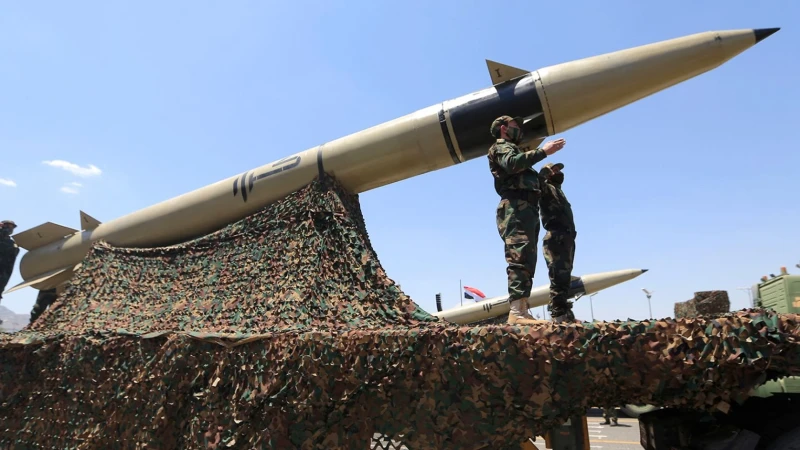

ERBIL, Kurdistan Region of Iraq - Yemen's Houthis announced early Thursday that their forces targeted two Saudi oil tankers in the Red Sea, marking the first strikes carried out to enforce the Iran-backed group's recently announced blockade of their long-time foe.
Houthi spokesperson Yahya Saree in a video statement said that two vessels, the ENCELIA and the LAYLA, were attacked with "a number of ballistic and cruise missiles, as well as drones," adding that the kinetic action comes "within the context of breaking the unjust and oppressive siege."
"In the same context, the Yemeni Armed Forces [referring to Houthi armed groups, not Yemen's internationally recognized government] forced approximately ten ships to retreat and return."
Saudi state media on Thursday morning confirmed that the ENCELIA had been struck, affirming that all crew members were safe and declaring, "These attacks constitute a violation of international laws and conventions that guarantee the safety of commercial vessels and their crews."
"We affirm to the Saudi enemy that any folly or aggression targeting our country will be met with large-scale operations deep within its territory, and the consequences will be dire," continued Saree.
Having enjoyed a tentative piece for years following a UN-backed truce in Yemen's decade-long civil war, tensions between Riyadh and the Iran-backed Houthis flared following an airstrike on Sanaa International Airport that prevented an Iranian plane from landing last week.
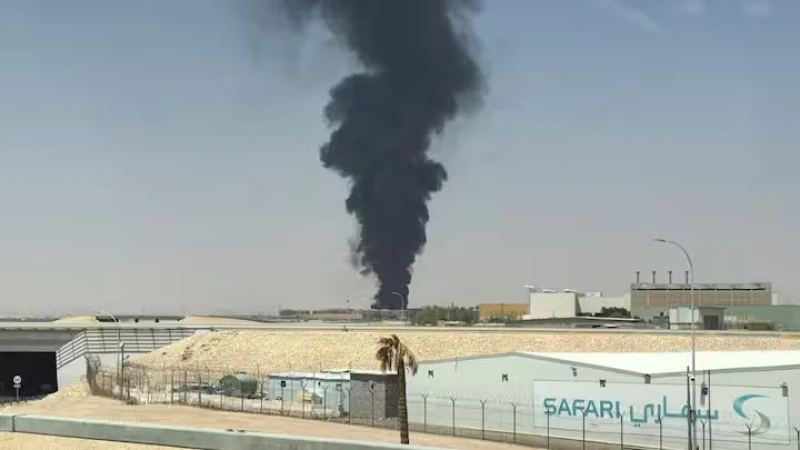
Despite Yemen's anti-Houthi government claiming the attack, the rebel group immediately accused Saudi Arabia of perpetrating the attack, striking a Saudi airport in retaliation and announcing a maritime blockade of the country.
With their center of power in western Yemen, the Houthis are strategically placed to exert a degree of control over the Bab el-Mandeb strait, which connects the Red Sea to the Indian Ocean and has proved a crucial oil export route for Riyadh amid the closure of the Strait of Hormuz by Iran during its conflict with the US and Israel.
Reuters reported on Friday that over 70 percent of Saudi crude exports currently occur via the port of Yanbu along the Red Sea, rendering any obstruction of access to the Indian Ocean for vessels bearing Saudi oil a stark economic threat.
The Iran-backed movement proved its disruptive capacity from late 2023, when it began targeting allegedly Israeli-linked commercial vessels in the strait in response to the Israeli genocide in Gaza.
Three Houthi officials, speaking to the Associated Press, said that months of preparation have gone into plans to disrupt shipping in the strait and entail the use of naval mines, seaborne explosives, drones, and boarding operations using helicopters.
After Washington's memorandum of understanding with Iran collapsed and led to renewed hostilities, as well as shipping chaos in the Strait of Hormuz, the prospect of the Houthis restricting transit in Bab el-Mandeb to assist their Iranian allies has been a source of concern for international powers.
Fox News on Thursday reported that Tehran was signaling the possibility of such a move, with a US State Department spokesperson telling the outlet that "ensuring freedom of navigation in the Red Sea" is a "core interest" of the Trump administration and reiterating Washington's designation of the Houthis as a terrorist organization.
 Facebook
 LinkedIn
 Telegram
 X
X