
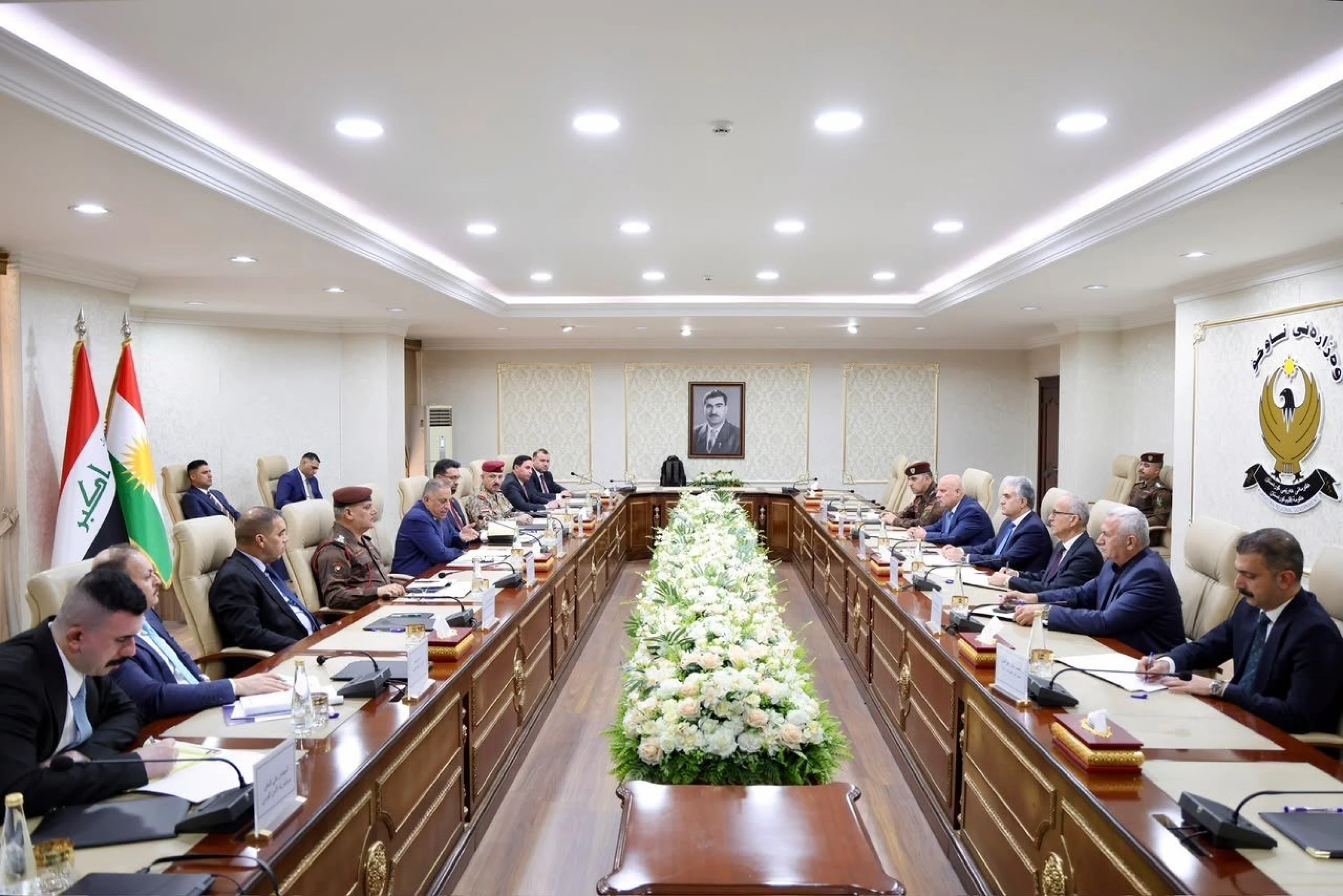
ERBIL, Kurdistan Region of Iraq – A high-level committee overseeing the implementation of an Iran-Iraq security agreement held a meeting in Erbil on Saturday, emphasizing the importance of continued communication between Baghdad and the Kurdistan Regional Government regarding the deal's implementation.
In 2023, Iraq and Iran signed a security agreement under which Baghdad pledged to disarm and relocate Iranian Kurdish opposition groups from border areas, following repeated warnings from Tehran.
Chaired by Kurdistan Region’s Interior Minister Rebar Ahmed and Iraq’s National Security Advisor Qasim al-Aboudi, the Saturday meeting in the Region’s capital highlighted “the details and provisions of the joint security agreement… particularly those related to securing the borders, preventing infiltration and smuggling, and maintaining security and stability throughout Iraq,” Aboudi’s office said in a statement.
The committee also reviewed the implementation of the agreement’s provisions and stressed “the necessity of continued communication and joint coordination” between Erbil and Baghdad, “regarding the security agreement and in a manner that serves the interests and sovereignty of Iraq.”
Tehran routinely accuses the Kurdish opposition groups of harboring separatist agendas, posing a threat to the country’s national security, and inciting the Iranian population against the Islamic Republic.
Meanwhile, the Kurdish groups say they are fighting to secure Kurdish rights and end what they describe as the regime’s oppressive policies against the marginalized population.
In February, shortly before the outbreak of the US-Israeli war on Iran, a number of Kurdish opposition groups formed a joint alliance, vowing to topple the regime, realize the Kurdish people’s right to self-determination, and establish democratic institutions in Iran’s Kurdish-majority western areas (Rojhelat).
Despite initial reports that were later denied, the armed wings of the political parties never engaged in direct armed confrontations with Tehran during the regional war.
However, opposition groups’ bases in the Kurdistan Region were repeatedly targeted by the Iranian military during the unrest, with attacks continuing despite a June ceasefire between Washington and Tehran. The offensives caused heavy material damage and resulted in dozens of deaths and injuries.
In remarks to President Masoud Barzani, during a meeting in Erbil, Aboudi affirmed Baghdad’s “keenness to exert maximum efforts to preserve the security and stability of the [Kurdistan] Region and all cities of Iraq.”
 Facebook
 LinkedIn
 Telegram
 X
X