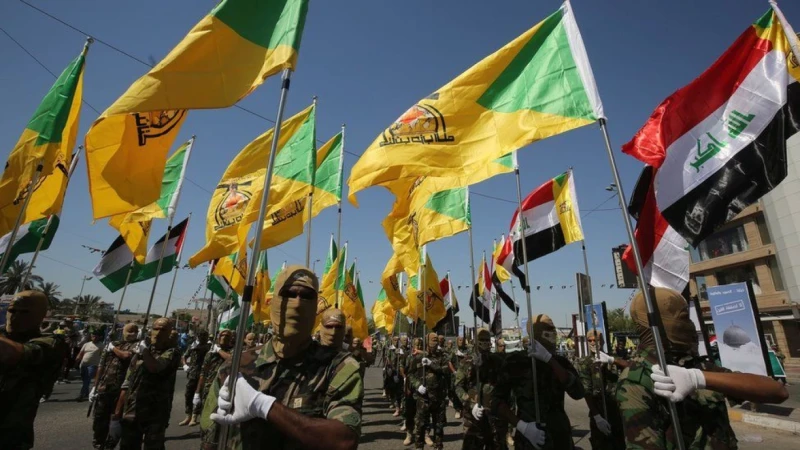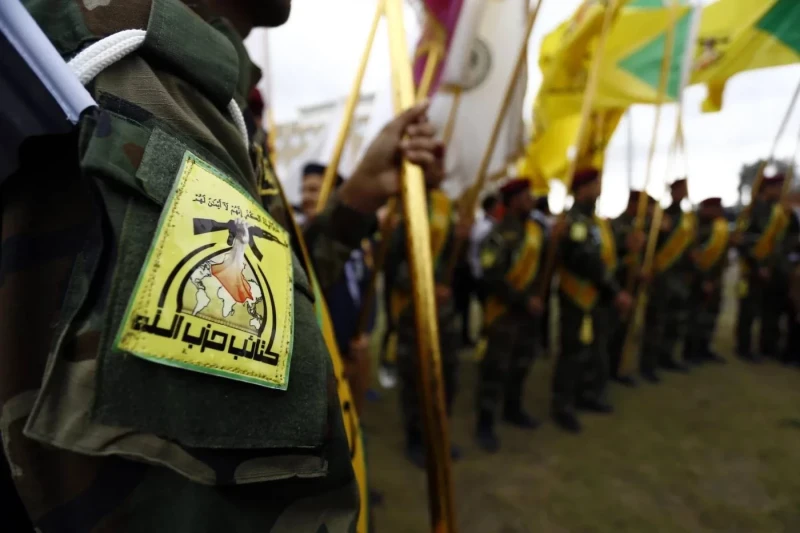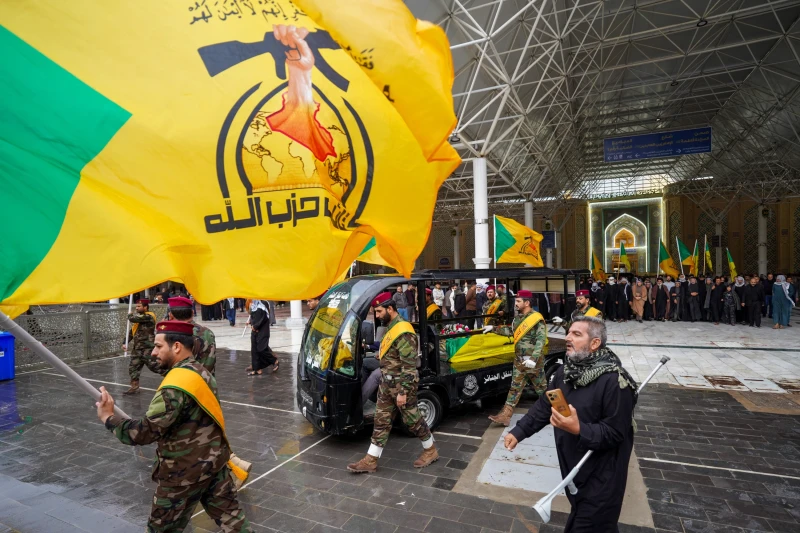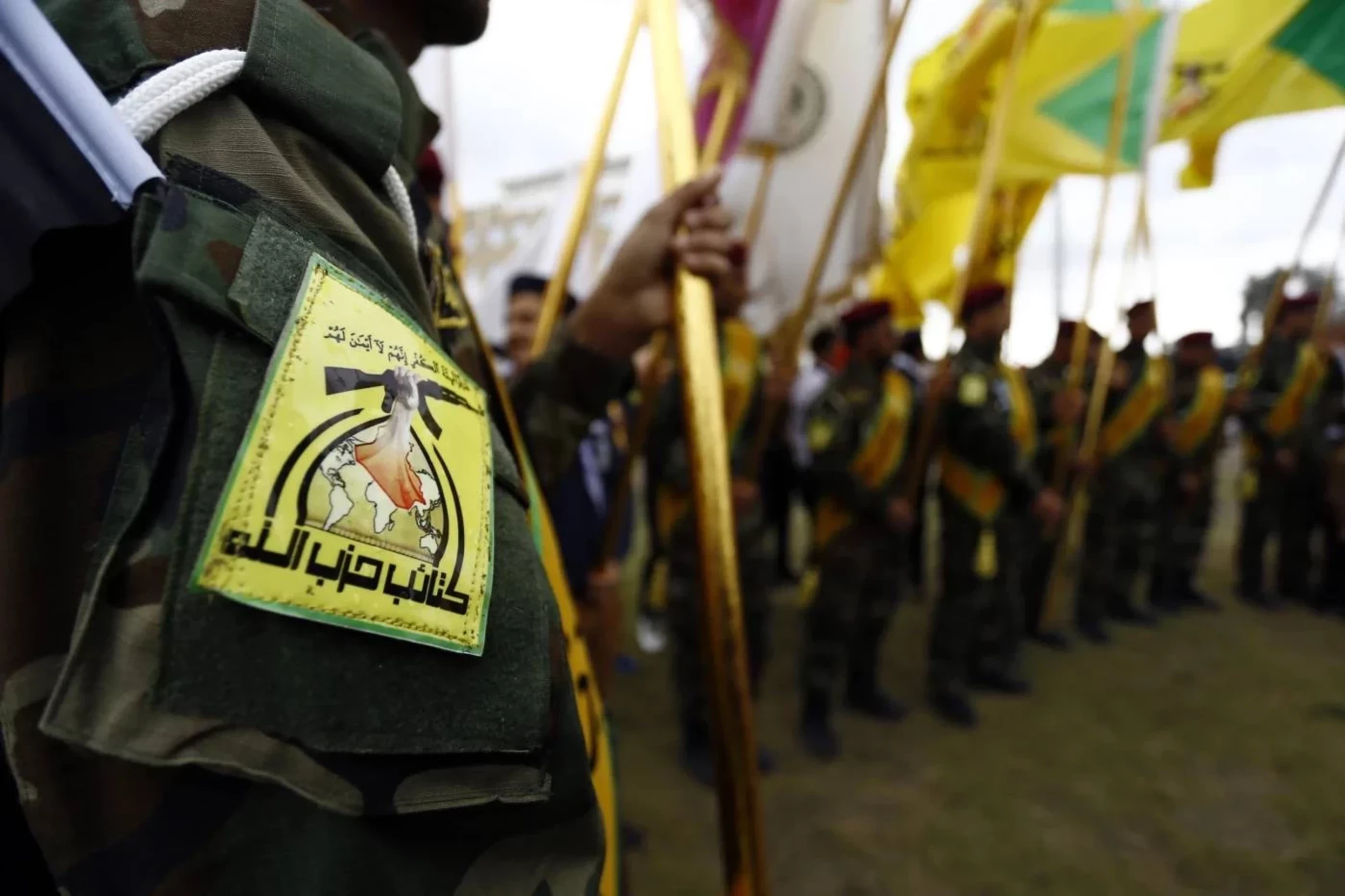
ERBIL, Kurdistan Region of Iraq – Kataib Hezbollah said Tuesday that the Iran-backed Iraqi militia would only cooperate with the government on disarmament if Baghdad meets conditions including the complete withdrawal of US forces from Iraq, the withdrawal of “Turkish forces occupying northern Iraq” and the “disbanding of the Peshmerga.”
Baghdad has set a September 30 deadline for armed groups operating outside state control to hand over their weapons to the government, warning that elements using Iraqi territory as a launching pad for attacks after the deadline will be considered “criminals” and prosecuted under the counter-terrorism law.
The Islamic Resistance in Iraq, an umbrella network of pro-Iran militia groups that includes Kataib Hezbollah, has claimed several attacks on US interests in the region.
Abu Mujahid al-Assaf, a senior Kataib Hezbollah official, set out a series of conditions in a statement for the Islamic Resistance in Iraq to engage with the government over handing over its weapons. The first was the complete withdrawal of US forces and “Turkish forces occupying northern Iraq,” as well as the “disbanding” of the Kurdistan Region’s Peshmerga.
He called the Peshmerga “the most heavily armed and dangerous militia to the unity of Iraq, in addition to their suspicious ties with the Zionist-American enemy.”
Under the Iraqi Constitution, the Kurdish Peshmerga are part of Iraq’s national defense system and are entitled to privileges similar to those of other Iraqi forces. The force also played a pivotal role in the defeat of the Islamic State (ISIS).
The Iraqi army and Peshmerga currently operate joint forces to secure areas around the disputed territories and prevent a security vacuum.
Assaf said they have “patiently endured” what they called Iraqi Prime Minister Ali al-Zaidi’s “empty bravado,” accusing him of ignoring seasoned politicians and siding with US Envoy to Iraq Tom Barrack, whom he described as “the one who harbors enmity towards the Shiites.”
The disarmament initiative in Iraq is heavily backed by the US, which has long pushed for those groups – many of whom have attacked American bases in the region – to be disarmed.
While several pro-Iran armed factions have announced their willingness to hand over their weapons and integrate into the state security apparatus, others have expressed skepticism.
Earlier this month, Iraq’s Security Media Cell affirmed that “there is no turning back” from Baghdad’s policy of restricting weapons to the state, saying the process will ensure a “more stable environment for future generations.”
Assaf also accused Zaidi of provoking the group through actions including “storming homes and terrorizing the families of martyrs, the wounded, mujahideen, and tribal leaders,” warning that the group “may begin to act according to the principle of ‘an eye for an eye.’”
 Facebook
 LinkedIn
 Telegram
 X
X