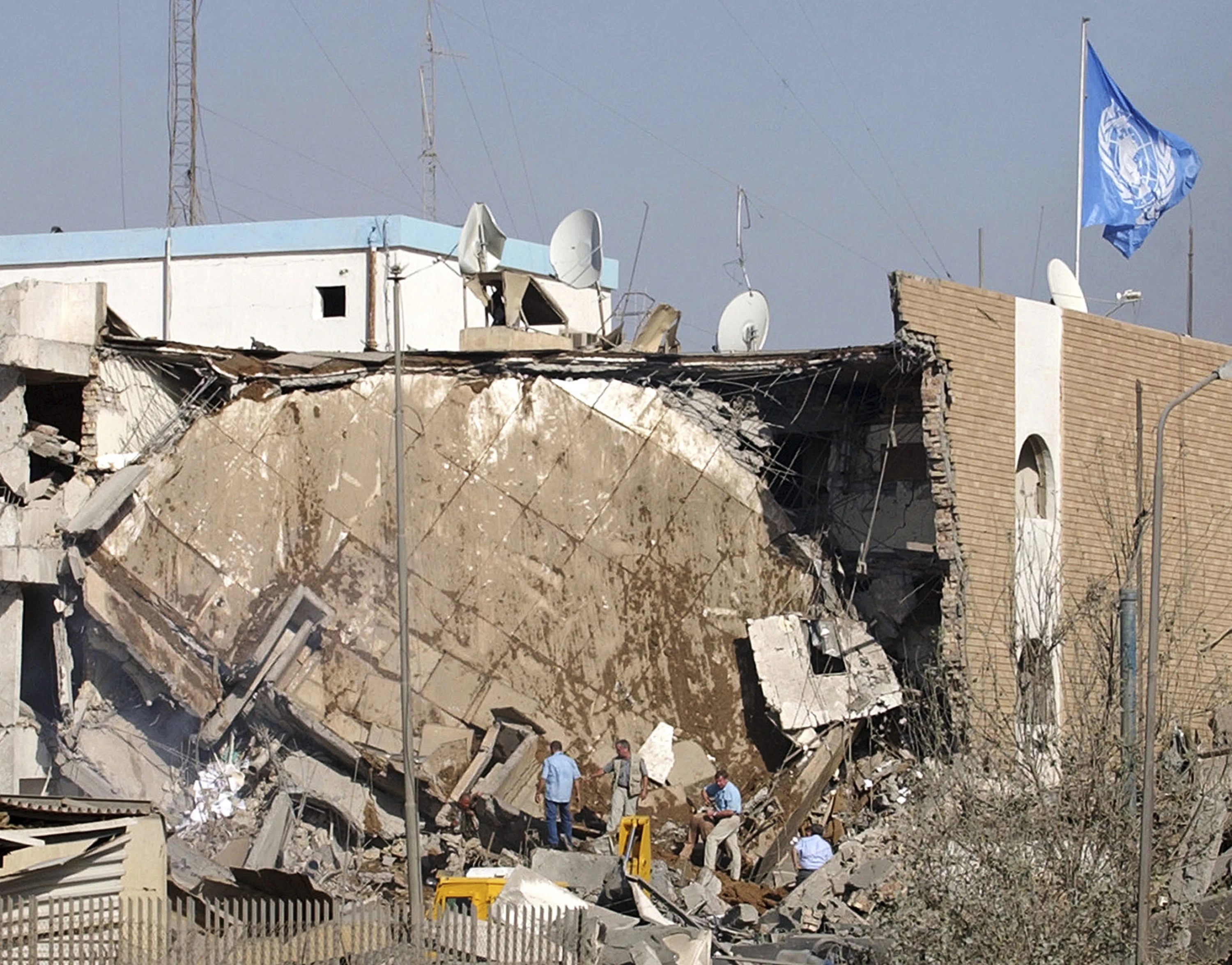
ERBIL, Kurdistan Region of Iraq - The United Nations’ top representative in Iraq on Wednesday commemorated the victims of the suicide truck bombing on its headquarters in Baghdad which killed over 20 and injured 100 others, leading to the creation of World Humanitarian Day.
In the afternoon of August 19, 2003, the newly established UN Assistance Mission in Iraq (UNAMI) headquarters at Baghdad’s Canal Hotel was subject to a suicide bombing that killed 22, including the top UN envoy Sergio Vieira de Mello, and injured at least 100 others, leading to the establishment of World Humanitarian Day.
Marked every August 19, the occasion serves as a commemoration of humanitarian personnel who have died in the line of duty.
“On this day 23 years ago, a horrific attack targeted the United Nations headquarters at the Canal Hotel here in Baghdad, and we lost 22 of our colleagues that day, while many others were injured,” Peter Hawkins said.
“Many survivors still carry the memories and effects of that morning to this day, and that day was one of the darkest in the history of the United Nations family,” he added.
UNAMI was established in 2003 at the request of the Iraqi government. Its role was to advise and assist the government and people on several fronts, including political dialogue, national reconciliation, the electoral process, and promoting and protecting human rights.
At the time, the Saddam Hussein regime had just fallen following the US-led invasion and there were insurgent groups carrying out suicide attacks across the country, a precursor of the bloody violence that was later to ravage Iraq during the mid-2000s.
Hawkins also commended the Iraqi people, saying the anniversary is a reminder of the contributions the Iraqi people have made to the UN and their “exceptional ability to persevere, courage and determination to build a better future for their country” despite the challenges throughout the years.
UNAMI's mandate ended on December 31, 2025, with the UN vowing at the time to continue working in Iraq in the pursuit of "long-term, sustainable development - driven by national leadership, stronger institutions, and effective partnerships."
 Facebook
 LinkedIn
 Telegram
 X
X