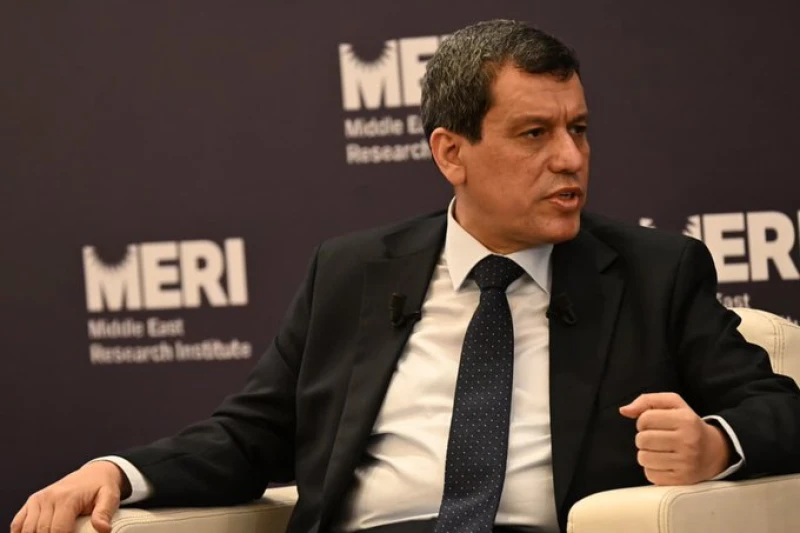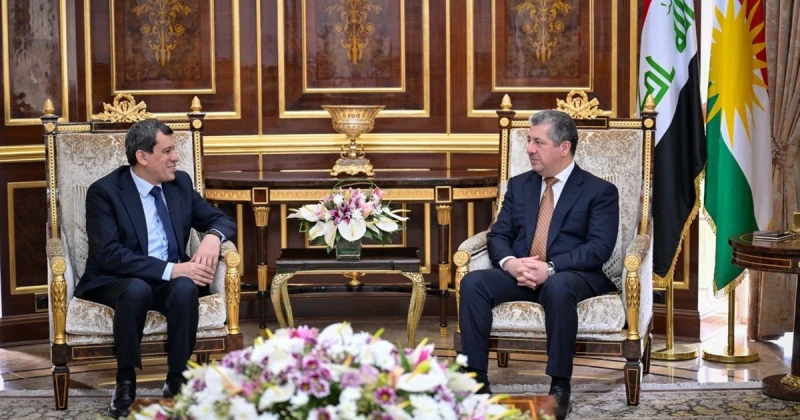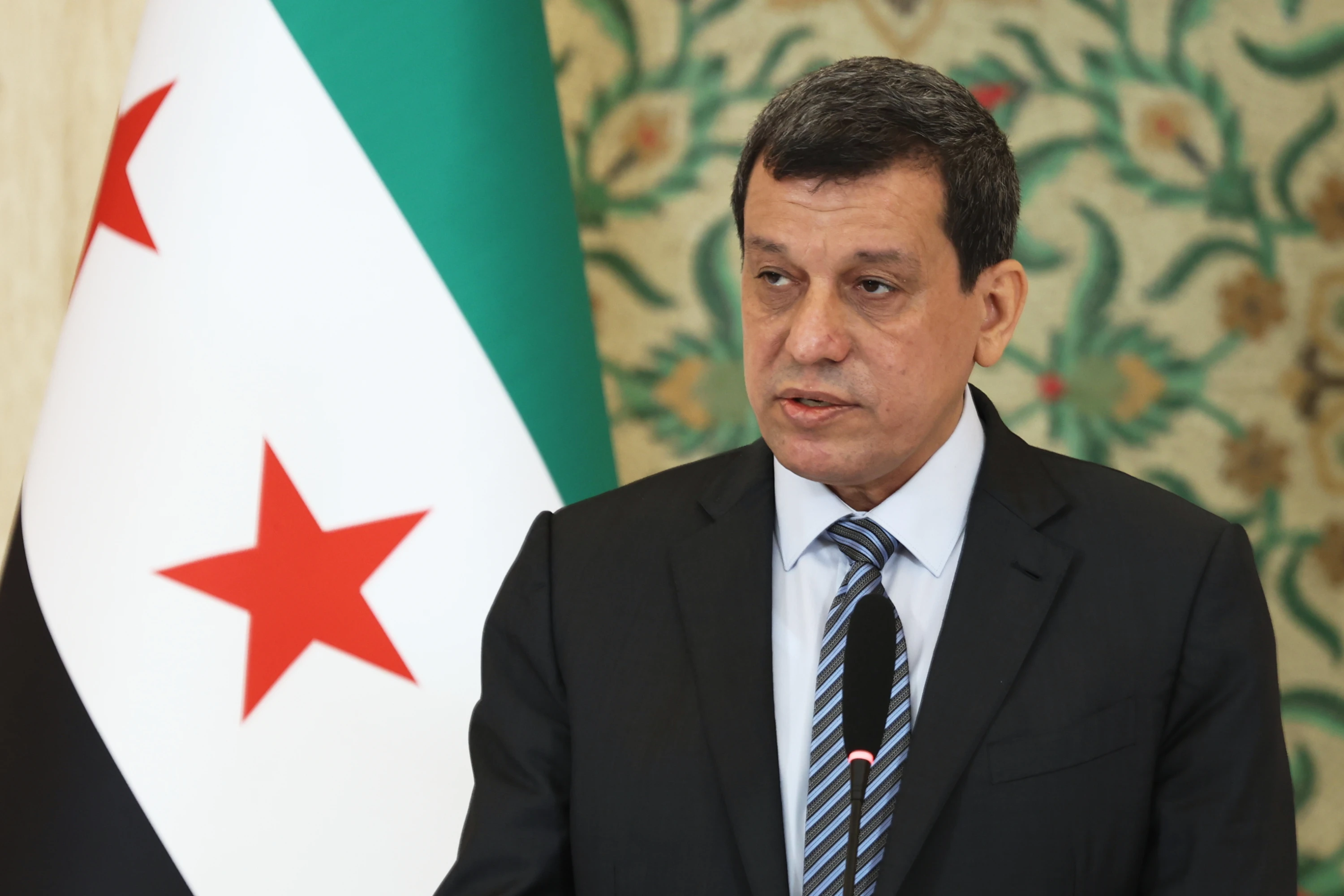
ERBIL, Kurdistan Region of Iraq – Syrian Presidential Advisor for Kurdish Affairs Mazloum Abdi on Friday rejected claims that the Syrian Democratic Forces (SDF) surrendered and that there is “nothing left” of the group, hailing “significant” steps taken toward securing Kurdish linguistic rights in Syria.
In zn interview with Yeni Yasam, a pro-Kurdish daily newspaper based in Turkey, Abdi said claims that assert the Kurdish-led force he until recently commanded “has surrendered, there is nothing left now" are merely propogated by “SDF opponents,” denouncing them as “not true.”
He also rejected the claim that “nothing has changed, the SDF remains the same, no agreements were reached, [and] they didn’t become part of Syria.”
The advisor explained that SDF forces have now joined the Syrian army in the form of brigades and are represented in its leadership, with their main task being to “strengthen the army.”
“The SDF joined the army through a planned and gradual process in accordance with the agreement reached. Now, as a force within the Syrian army, they will continue to defend this region,” he said
In August, Abdi announced the SDF’s dissolution, alongside its affiliated military and civilian institutions, and their “complete integration into state institutions,” in a presser, completing an integration deal with Damascus that had accelerated since January.
He was subsequently appointed presidential advisor through governmental decree No. 164 of 2026 issued by Syrian President Ahmed al-Sharaa.
In March 2025, Abdi and Sharaa signed a landmark agreement to integrate the SDF and the Rojava administration into Syrian state institutions.
That deal was followed by another major agreement in January 2026, following clashes between the SDF and Damascus-affiliated forces that saw the Kurdish-led forces pull back from large swathes of territory in northern and eastern Syria.
The SDF was established in 2015 as a multi-ethnic force, with the Kurdish People’s Protection Units (YPG) as its backbone. It included Kurds, Arabs, Assyrians, and Armenians and became a key US-backed force in the fight against ISIS, ultimately defeating the group’s territorial rule in Syria in 2019.
The language question
Abdi said that a “significant step” was taken towards securing Kurdish language rights in Syria, noting that “for the first time, Kurdish was officially recognized in education, and not only Kurdish language classes but also other subjects were included in the curriculum.”
“This is the first time this has been done across Syria, compared to the past, and it is a great achievement for the Kurdish people.”
The Syrian education ministry in August a new plan for Kurdish-language instruction in the country, under which students in Kurdish-majority areas would receive a maximum of three classes in their mother tongue per week, as well as an additional "activities" class.
The decision reflects a drastic shift from the Rojava administration’s Kurdish-language education system, which had been in place for more than a decade.
The failure to enshrine Kurdish as an official language in the Syrian constitution, a position it enjoys in Iraq, and the limiting of Kurdish classes to thrice weekly has been met with dismay by many of Rojava's Kurds and former institutions, for whom mother tongue education was a cornerstone of their system.
The advisor recognized that compared to the fully Kurdish curriculum the move may seem like “a step backward,” stressing continued struggle in that direction and asserting that while the steps taken are “a first; they are not enough for us.” He added that lingusitic rights have been a “red line” in their discussions with Damascus.
“To achieve our main goals for the Kurdish language, we need to fight.”
 Facebook
 LinkedIn
 Telegram
 X
X