
ERBIL, Kurdistan Region of Iraq – Top leaders of the Kurdistan Region commemorated the 65th anniversary of the September Revolution (Aylul) on Friday, marking the historic Kurdish armed rebellion against the Iraqi state.
In September 1961, the Iraqi regime began an aerial bombardment on the country’s Kurdish territories after negotiations between Baghdad and the Kurds failed to bear fruit, leading to a Kurdish insurgency, under the leadership of the late Mustafa Barzani, known as the Aylul uprising.
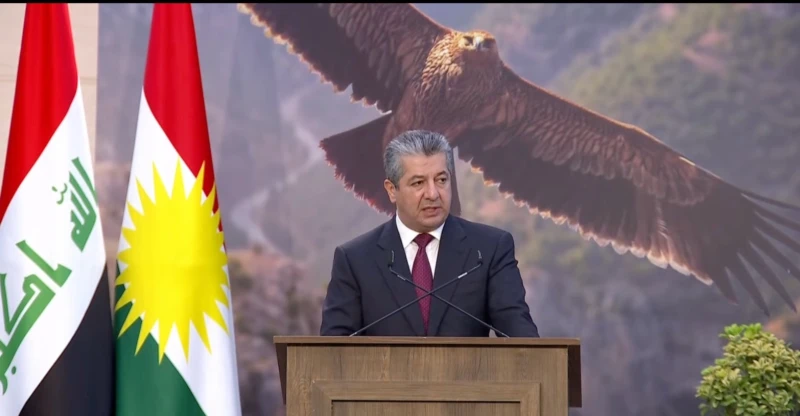
In a statement, Kurdistan Region Prime Minister Masrour Barzani stressed the need for “unity and solidarity among all Kurdish political forces and parties” on the occasion, adding that “together, we remain committed to defending, upholding, and advancing the constitutional status of the Kurdistan Region and our collective national achievements.”
“We honor and remember all Peshmerga, patriots, and participants,” the premier said, extending salutes to the “enduring memory of the martyrs of this revolution and all martyrs of Kurdistan.”
President Masoud Barzani also marked the anniversary of the uprising in a statement, asserting that the event “established a solid, organized foundation for the people of Kurdistan to continue their struggle and stand firm against injustice and oppression.”
“The September Revolution became a source of strength, inspiring subsequent stages of our people's liberation struggle and motivating Kurdish fighters across all other parts of Kurdistan,” the leader added.
The revolution ended after the signing of an agreement between the Iraqi and the Iranian governments in 1975 in Algeria, wherein Iran agreed to cut off support for Iraqi Kurds in exchange for the transfer of Iraqi territory to Iran.
Kurds subsequently suffered intense persuction and genocide at the hands of the Baathist regime in Baghdad until the establishment of internationally-supported no-fly zones over the country's north in 1991 created space for the formeration of autonomous rule, with the ousting of Saddam Hussein during the US-led invasion of 2003 ultimately leading to the formation of the Kurdistan Region as a constitutional entity.
 Facebook
 LinkedIn
 Telegram
 X
X