
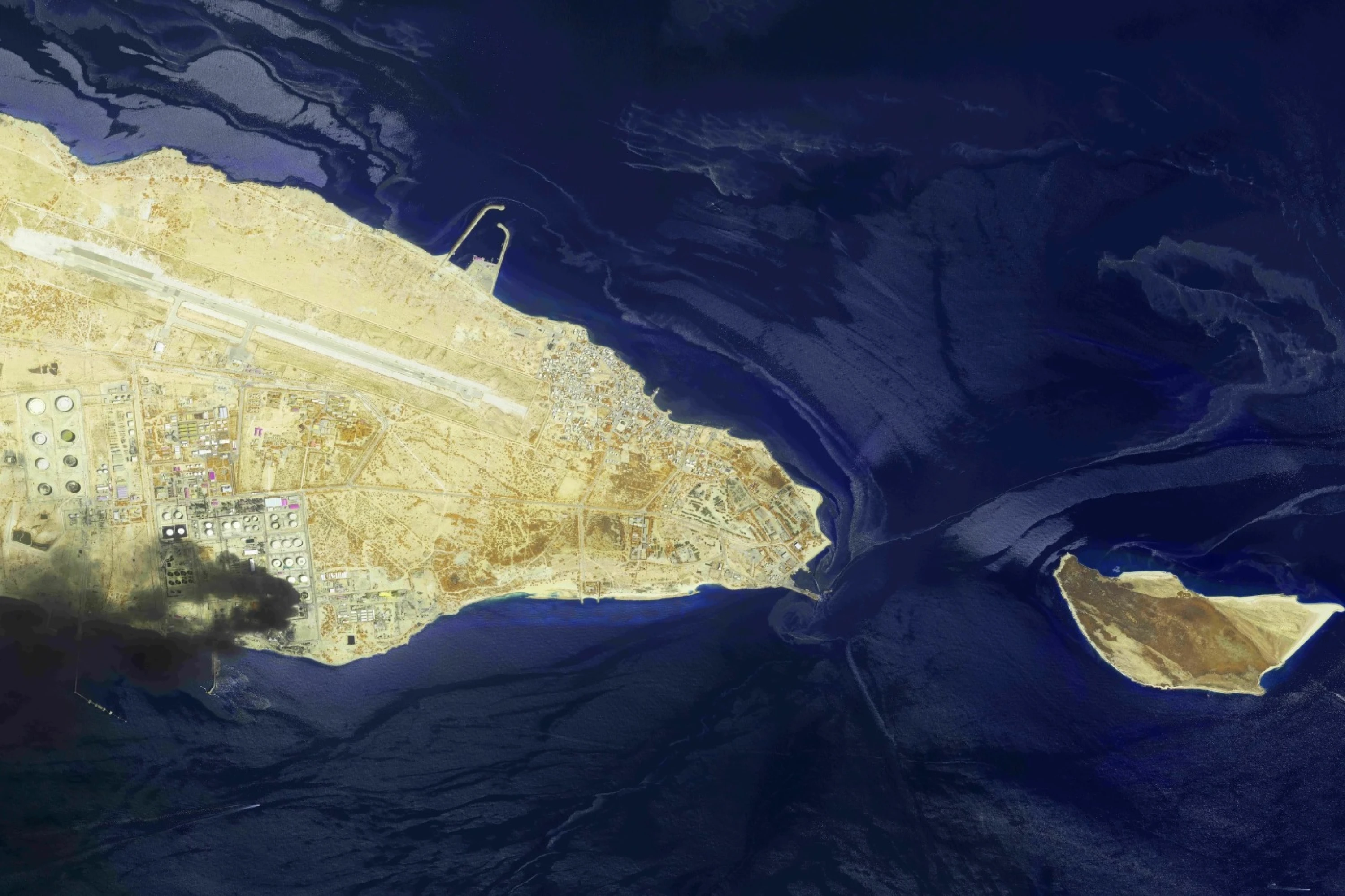
ERBIL, Kurdistan Region of Iraq – Attacks by the United States and Iran in the Persian Gulf risk causing long-term pollution to the area’s environment due to its shallow and partially closed-off waters, a Kurdish expert warned, with tit-for-tat strikes commonplace despite mediation efforts.
“The Persian Gulf is highly vulnerable because its shallow and partly enclosed waters can make oil pollution spread quickly and remain for a long time, which will lead to various environmental consequences later,” Sarmad Latif, senior water and climate security researcher at the Sulaimani-based Komar University of Science and Technology, told The New Region.
Since the US-Iran war started in late February, the US has attacked Iran using warships and aircraft carriers in the Gulf, while Iran has launched strikes on the US Navy and regional countries as well as laid out sea mines.
The fighting has caused major oil spills, with attacks on commercial vessels such as oil tankers and energy infrastructure across the coastlines, according to the Geneva Environment Network.
“A recent example includes an oil spill from the damaged Iranian vessel Shahid Bagheri, which began leaking heavy fuel oil following a strike and is now threatening the ecologically significant Hara mangrove wetlands near the Strait of Hormuz. The spill risks contaminating a protected biosphere reserve that supports fisheries, migratory birds, and endangered species,” the network said.
It added that the effects are difficult to measure due to limited access to affected areas and disruptions to monitoring systems. While some impacts, such as fires and air pollution, are immediately visible, others are more long-term, including soil degradation and water contamination.
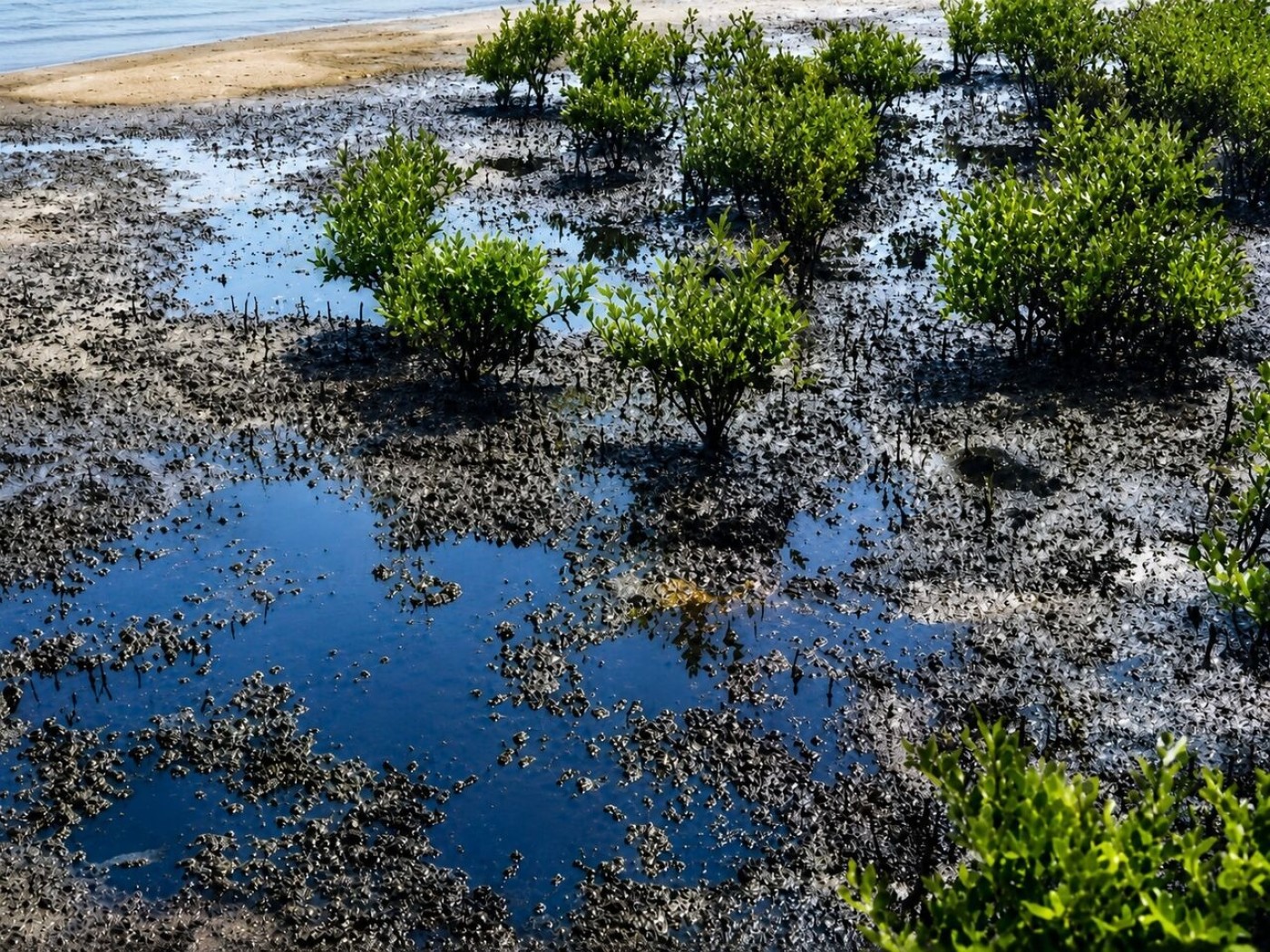
[Undated image reportedly shows oil pollution on the southern coast of Qeshm Island spreading to the mangrove forests of the village of Naghasheh: Photo: IRNA]
According to Latif, the current systems in place could control the damage from small spills, but larger spills in “the current destructive conflict could seriously exceed their capacity” and require strong regional cooperation, stressing that cleanup cannot start unless the war ends.
Article 35 of the 1977 Additional Protocol I to the Geneva Conventions stipulates that methods of warfare that are expected to cause widespread and long-term damage to the natural environment are prohibited.
“Oil pollution can reduce fish stocks, damage fishing areas, and lower fishermen’s income and food security. Besides this, the remaining materials of airstrikes and drones include heavy metals and hazardous substances, which will completely harm fish habitat,” Latif said.
“Many species will be seriously affected, like fish, seabirds, underwater animals, various trees that grow in salty water, and also various areas of underwater grass that provide food and shelter for many marine animals,” he added.
Iran has shut the Strait of Hormuz, a vital waterway through which roughly 20 percent of the world’s oil is transported, as part of its war against the US and Israel, contributing to a sharp rise in oil prices. The US has responded by imposing a naval blockade on Iranian ports.
Control of the waterway has been a salient issue in the conflict, with Tehran having made clear its intention to end free transit and establish a tolling or fee-paying mechanism despite vehement US objections.
The expert referred to the 1991 Gulf War as an example of a conflict that caused serious environmental damage. The war was triggered by Iraq’s invasion of Kuwait and ended with a decisive victory for a US-led international coalition in support of Kuwait.
“The best lesson for all of us is the Gulf War of 1991, which caused long-term ecological degradation, as stated by many peer-reviewed papers,” Latif noted.
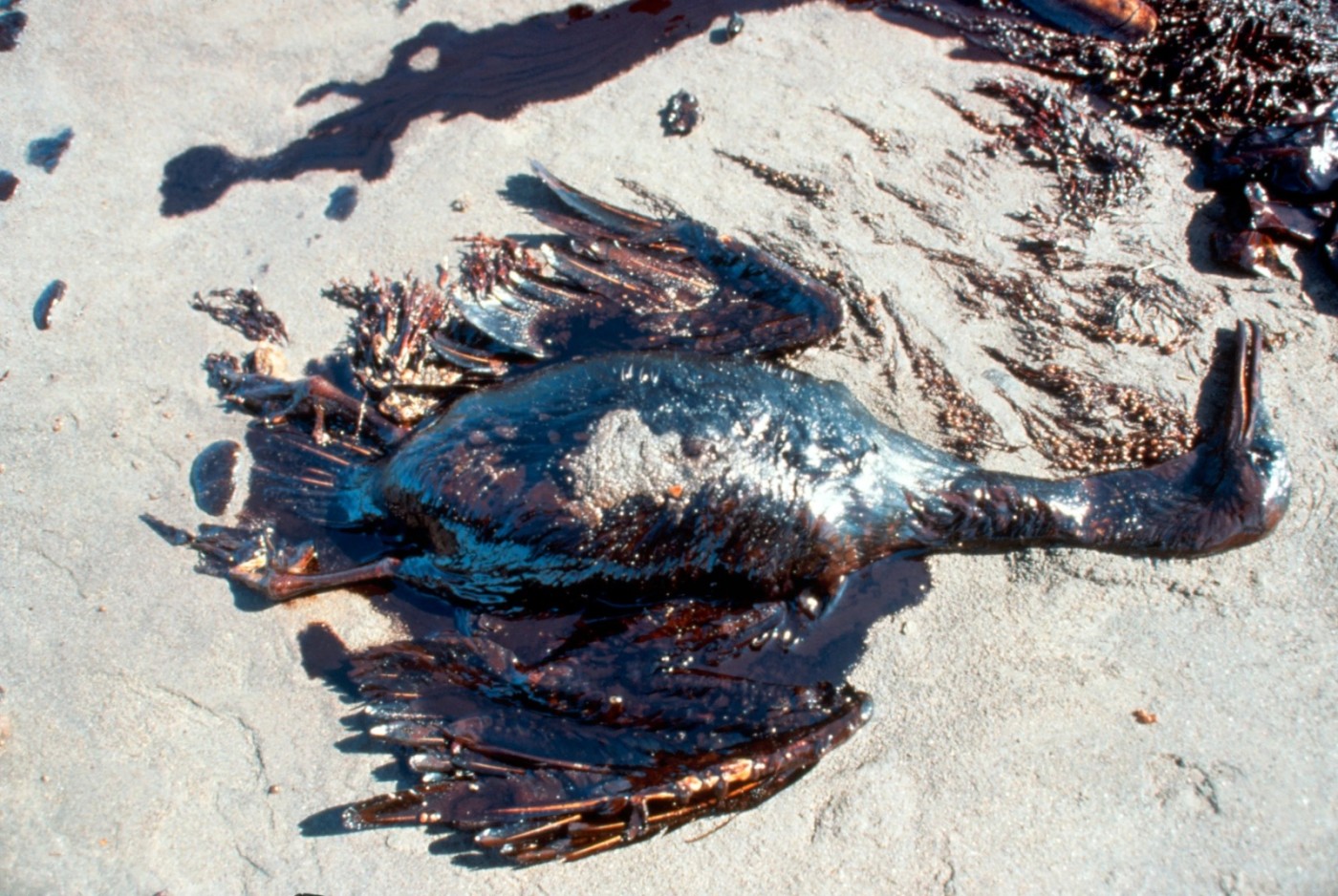
[Oiled seabird following the Gulf oil spill, 1991. Photo: Corbis via Getty]
 Facebook
 LinkedIn
 Telegram
 X
X