ERBIL, Kurdistan Region of Iraq – Iraq’s pro-Iran Ashab al-Kahf militia on Sunday warned it could abandon its commitments if Baghdad backtracks on guarantees, as the government pursues a phased plan to bring armed factions under state control.
“Any backtracking on pledges or violation of guarantees provided will place full responsibility upon those involved. Do not force us to absolve ourselves of the commitments we made to our leadership and people, and do not drive us to adopt positions we do not desire,” the group said in a statement.
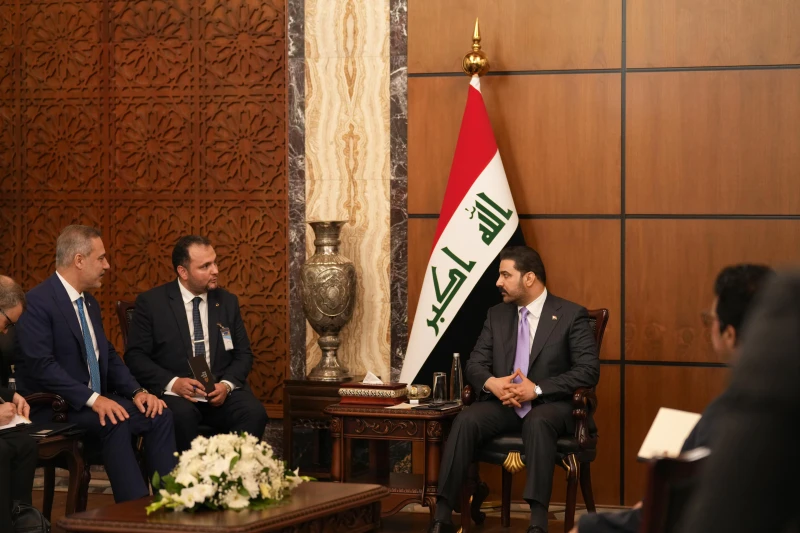
Ashab al-Kahf did not specify which guarantees or commitments it was referring to, but its warning comes as Prime Minister Ali al-Zaidi’s government negotiates with armed factions over weapons regulation and the eventual integration of fighters into state institutions.
The government had initially set September 30 as a deadline for armed groups to hand over their weapons to the state, coinciding with the planned completion of the US-led coalition’s military mission in Iraq. Several pro-Iran factions, including Ashab al-Kahf, rejected the call to surrender their weapons.
Baghdad has since shifted toward a longer, phased process extending into 2027. In an interview with The New York Times on September 21 in Baghdad, Zaidi said an initial 90-day period would require armed factions to halt attacks, with guarantees that they would not be targeted by US strikes. That would then be followed by the gradual handover of weapons and integration of fighters into state institutions.
Ashab al-Kahf has previously said it would only consider regulating its weapons after the withdrawal of foreign forces, specifically naming US and Turkish forces as well as the US-led coalition.
The group said Sunday that its warning was directed to “all those at the forefront of the scene—and all those who have offered guarantees or made commitments—against the consequences of reneging on the obligations we undertook before our leadership and our people.”
The militia also criticized the government. “When your decisions are crafted in Washington—where is the sovereignty?” the statement read, adding, “You are deluded; this is occupation.”
The group’s position reflects a broader dispute between Baghdad and pro-Iran armed factions over the future of armed groups that have operated alongside, and at times outside, the authority of the state.
Many of these groups were formed or expanded during the fight against ISIS and later became major parts of Iraq’s security and political landscape. Some subsequently carried out attacks against US personnel and interests, particularly during periods of heightened tensions between Washington and Tehran.
While several pro-Iran armed factions have announced their willingness to hand over their weapons and integrate into the state security apparatus, others have continued to resist.
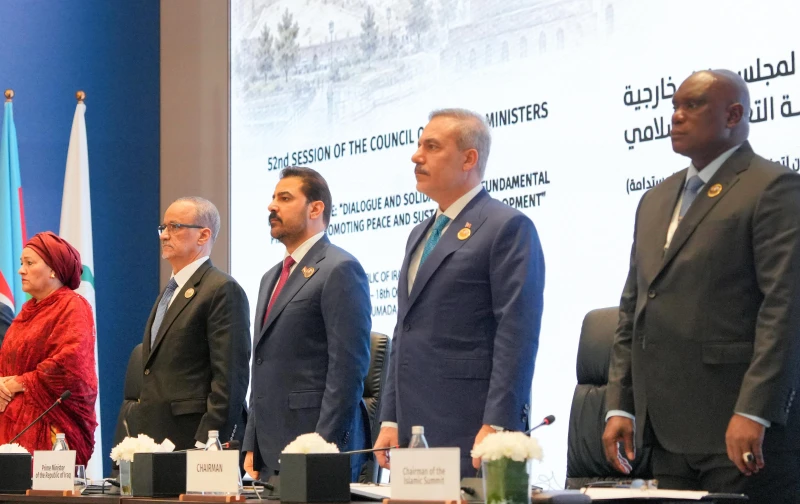
Zaidi addressed the UN General Assembly on Friday, where he reaffirmed his government’s commitment to consolidating weapons under state authority and fighting corruption.
The dispute has also played out in Iraq’s response to recent US measures targeting Iranian aviation.
Iraq began suspending Iranian airline flights on Friday after US sanctions threatened airports and ground-service companies that continued servicing Iranian carriers. Iran-aligned Iraqi factions strongly objected to the move, accusing Baghdad of submitting to US pressure and urging the government to circumvent the sanctions. Some groups also called for sit-ins at Iraqi airports unless flights resumed.
 Facebook
 LinkedIn
 Telegram
 X
X