ERBIL, Kurdistan Region of Iraq – Iraqi Prime Minister Ali al-Zaidi on Wednesday said that military decision-making in the country is “now entirely national,” stressing that the responsibility rests solely with state institutions after the withdrawal of the US-led international coalition.
On Wednesday, the US-led coalition against the Islamic State (ISIS) completed its withdrawal from Iraq and the Kurdistan Region in accordance with an agreement between Baghdad and Washington. The withdrawal comes after years of cooperation between the coalition and Iraqi and Kurdish forces in the fight against ISIS.
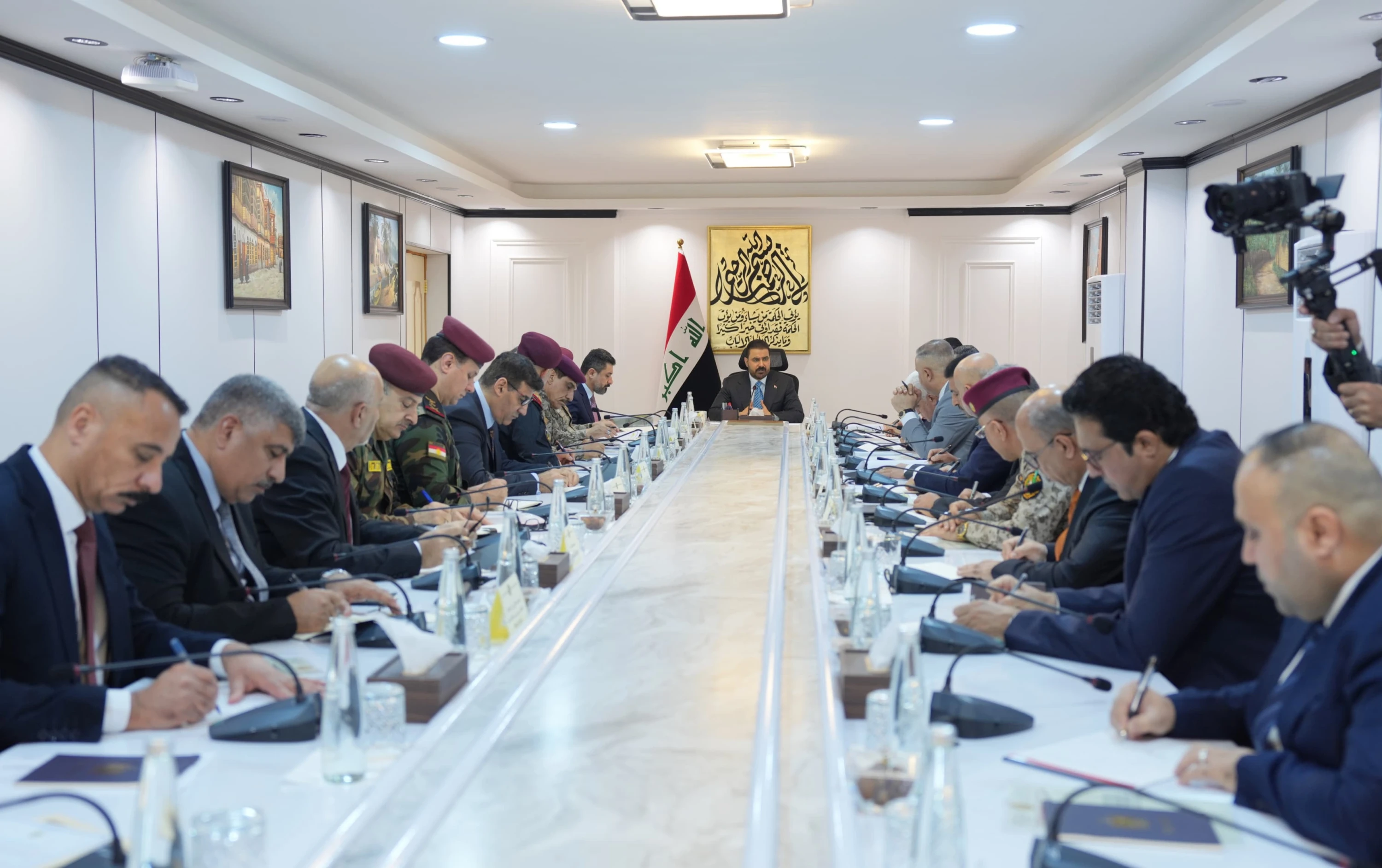
In an extraordinary meeting of the Ministerial Council for National Security, Zaidi “emphasized that security and military decision-making is now entirely national, resting solely with official state institutions,” according to a statement by the premier’s spokesperson Sabah al-Numan.
In a statement announcing full coalition withdrawal from Iraq, the US Defense Department said that the responsibility of addressing Iraq’s security challenges, including ISIS remnants, now rests on the Iraqi government while the US will continue providing training and intelligence support.
ISIS took control of swathes of Iraqi and Syrian territory in 2014, declaring its so-called caliphate with the Iraqi city of Mosul as its capital. They were territorially defeated with assistance from the US-led coalition forces in Iraq in 2017.
Despite their territorial defeat, ISIS militants have continued to pose a security threat in Iraq through sporadic hit-and-run operations and attacks on remote areas. Iraqi forces, in cooperation with Kurdish forces, have intensified their efforts to eliminate these remnants.
The premier further stressed the need to bolster coordination between the country’s security institutions, advance intelligence efforts, support proactive security operations, and counter “extremist rhetoric and sectarian incitement that target the unity of our people's diverse components.”
Zaidi also highlighted the role the Military Industrialization Commission assumed in establishing partnerships with global companies specializing in manufacturing weapons and military equipment.
In remarks to The New Region, Numan said that Baghdad had purchased advanced air defense systems from the US, South Korea, and other countries, which are set to arrive in Iraq within the next three to six months.
The spokesperson asserted that Iraqi security forces had carried out aerial operations using F-15 aircraft targeting suspected terrorists, “without any need for coalition forces to carry them out.”
The government had also initially set September 30 as a deadline for armed groups to hand over their weapons to the state, coinciding with the planned completion of the US-led coalition’s military mission in Iraq. Several pro-Iran factions, including Ashab al-Kahf, rejected the call to surrender their weapons.
Baghdad has since shifted toward a longer, phased process extending into 2027. In an interview with The New York Times on September 21 in Baghdad, Zaidi said an initial 90-day period would require armed factions to halt attacks, with guarantees that they would not be targeted by US strikes. That would then be followed by the gradual handover of weapons and integration of fighters into state institutions.
Many pro-Iran armed groups have long used the US-led coalition’s presence in the country as a reason to maintain their weapons. These groups initially helped defeat ISIS but then shifted to also attacking American personnel and interests as tensions soared between Washington and Tehran in the following years.
 Facebook
 LinkedIn
 Telegram
 X
X