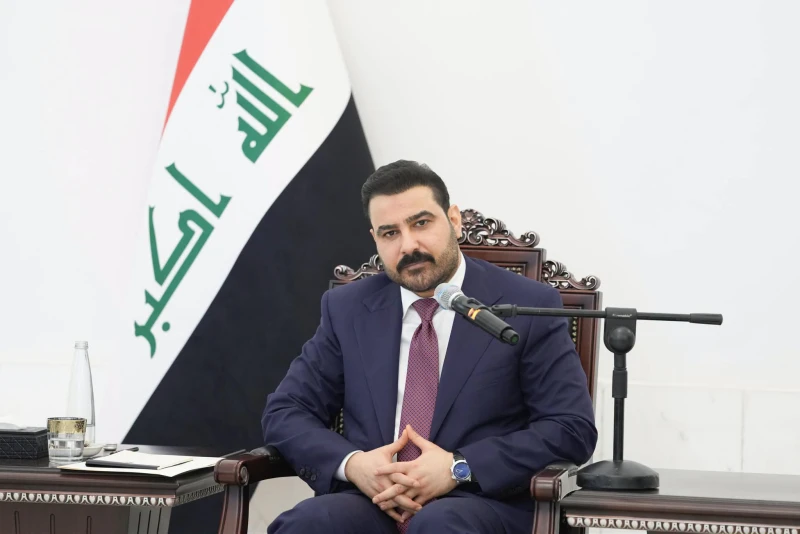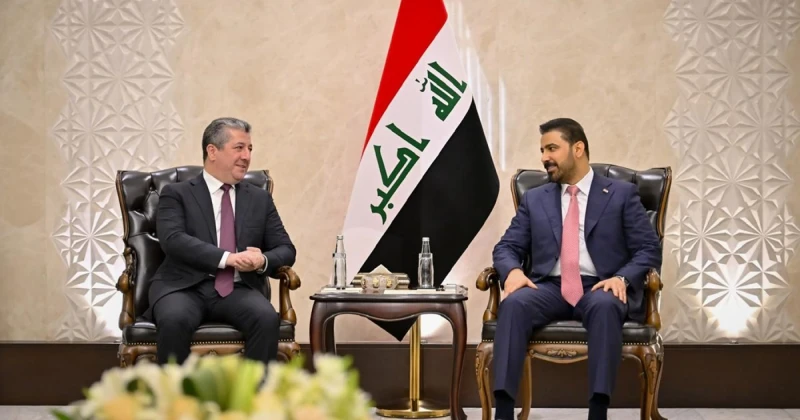
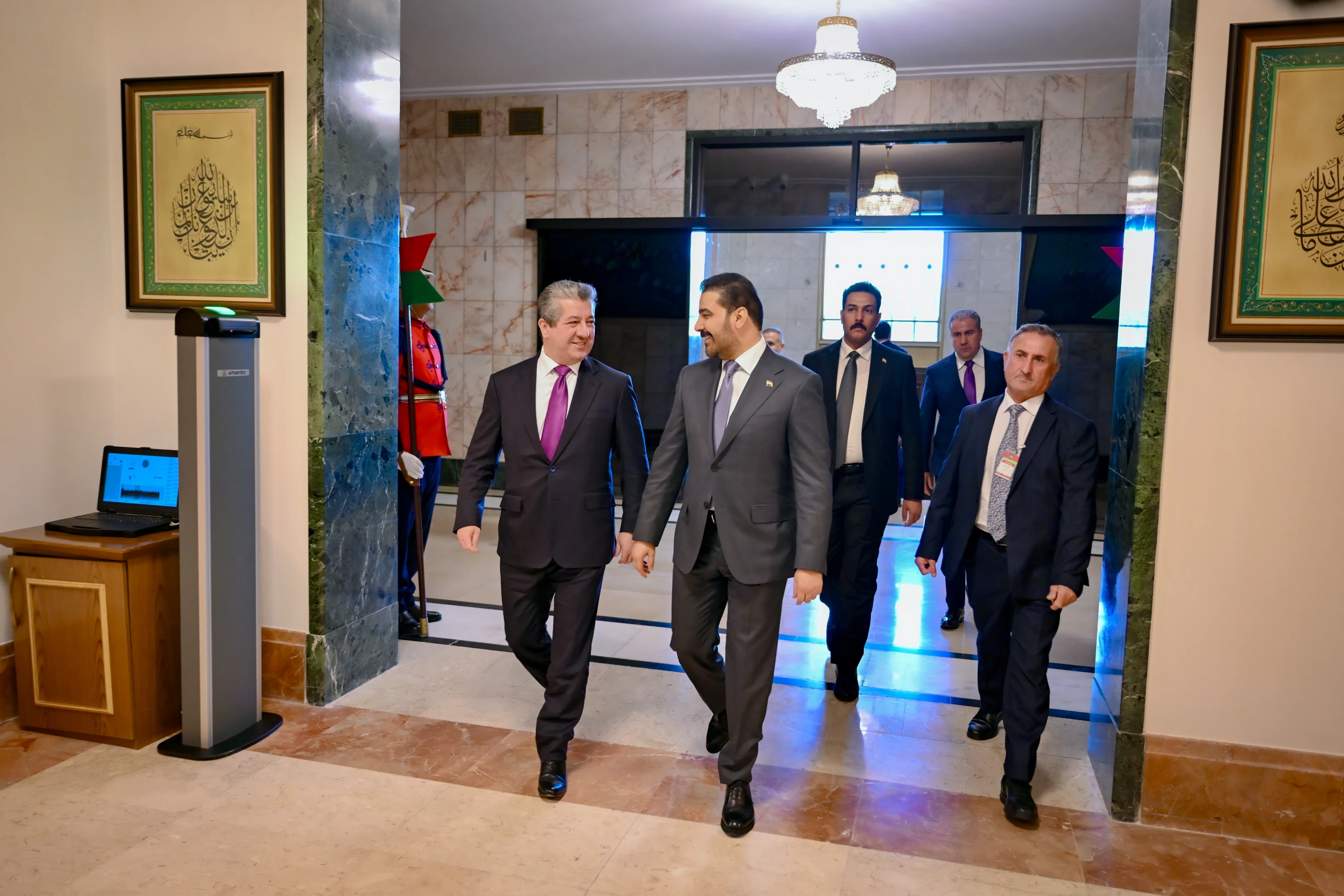
ERBIL, Kurdistan Region of Iraq – Iraqi Prime Minister Ali al-Zaidi reaffirmed Baghdad’s commitment to upholding the Kurdistan Region’s constitutional rights and resolving outstanding financial issues with Erbil during talks with Kurdistan Region Prime Minister Masrour Barzani on Monday, as the two sides discussed the Region’s share of the 2027 federal budget, salary payments and oil production.
Barzani arrived in Baghdad on Monday to discuss the Region’s financial entitlements and share of the 2027 federal budget with Zaidi and other senior Iraqi political leaders.
2027 Federal Budget
During the meeting, Barzani “stressed the importance of securing the Kurdistan Region’s share of the 2027 federal budget fairly, on the basis of the constitution and with respect for the federal system and the constitutional entity of the Kurdistan Region,” according to a statement from the Kurdistan Regional Government (KRG).
A major point of contention in the proposed budget is the Region’s allocation, with the initial draft setting its share at 12.68 percent. The KRG has insisted that its share should reflect its proportion of Iraq’s population, which it puts at 14.14 percent.
Both sides also stressed the need to “keep paying the salaries of the Region’s employees, on a par with employees in the rest of Iraq,” the KRG statement added.
The timely payment of public-sector salaries has long been a point of contention between Erbil and Baghdad, with the Kurdistan Region frequently facing delays in receiving federal salary allocations.
Zaidi expressed Baghdad’s “firm commitment” to ensuring the Kurdistan Region’s constitutional rights and resolving outstanding issues in a way that serves “the supreme national interest of all the people of Iraq,” according to a statement from his office.
The visit came ahead of the draft budget’s planned submission to the Council of Ministers, which was initially expected on Tuesday but was delayed until Saturday, according to The New Region’s correspondent in Baghdad.
Erbil and Baghdad have held several meetings on the budget. A high-level KRG delegation arrived in Baghdad on Sunday to discuss the disputed 2027 budget draft with federal authorities.
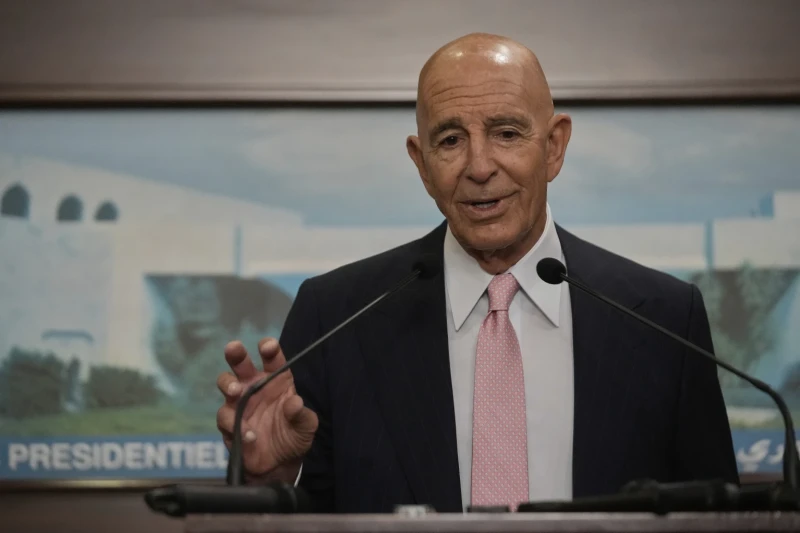
US Special Envoy to Iraq Tom Barrack welcomed Monday’s meeting, praising the pair for their “leadership” in addressing outstanding issues.
“The United States stands with both as they build one prosperous, sovereign Iraq,” he wrote on X.
KRG spokesperson Peshawa Hawramani told The New Region that Erbil and Baghdad had reached an understanding “on many issues” during the meeting, adding that talks “will continue” to resolve the remaining differences.
Khor Mor attack
The Kurdistan Region’s largest gas field was targeted late Sunday. Its operator, UAE-based Dana Gas, said the facility had been hit in a suspected drone attack.
Zaidi and Barzani both condemned the attack “in the strongest terms,” saying attacks on the Kurdistan Region’s economic and energy infrastructure “must end,” according to the KRG statement.
Following the attack, Zaidi ordered the formation of a joint investigation committee with Kurdistan Region authorities to investigate the incident.
Following the meeting, the KRG’s natural resources ministry announced that, at its request, Zaidi had approved the federal oil ministry supplying “the necessary quantity” of liquefied petroleum gas (LPG) to residents of the Kurdistan Region until production at Khor Mor resumes.
Khor Mor has come under repeated attacks, forcing staff evacuations and halting production.
The field was also attacked in November 2025, halting production and reducing the Region’s electricity generation by 80 percent for several days, from 4,000 MW to 1,000 MW.
The strike was strongly condemned regionally and internationally, with the KRG appealing for air defense systems to protect the key facility – the largest of its kind in the Kurdistan Region.
Oil Production
Zaidi also highlighted Baghdad’s goal of increasing Iraq’s oil production to 10 million barrels per day by 2032, an objective that would “include the approximately 1 million barrels per day produced by fields in the Kurdistan Region,” his office said.
The premier stressed that the “increase would have a positive impact on development and the economy across the entire country.”
Barzani and Zaidi also discussed expediting the passage of the oil and gas law to address issues related to oil production and exports, and the need for mechanisms to manage and regulate oil fields.
“Mechanisms for regulating the management of oil and non-oil revenues were discussed, in coordination between the finance ministries of the federal government and the Kurdistan Regional Government,” the KRG statement said.
 Facebook
 LinkedIn
 Telegram
 X