
ERBIL, Kurdistan Region of Iraq - Iraqi Prime Minister Ali al-Zaidi on Monday said that five non-state factions "have agreed to surrender weapons" to the Iraqi government amid Baghdad's disarmament drive, noting that three have already "handed over their arms" while dialogue continues with other militias.
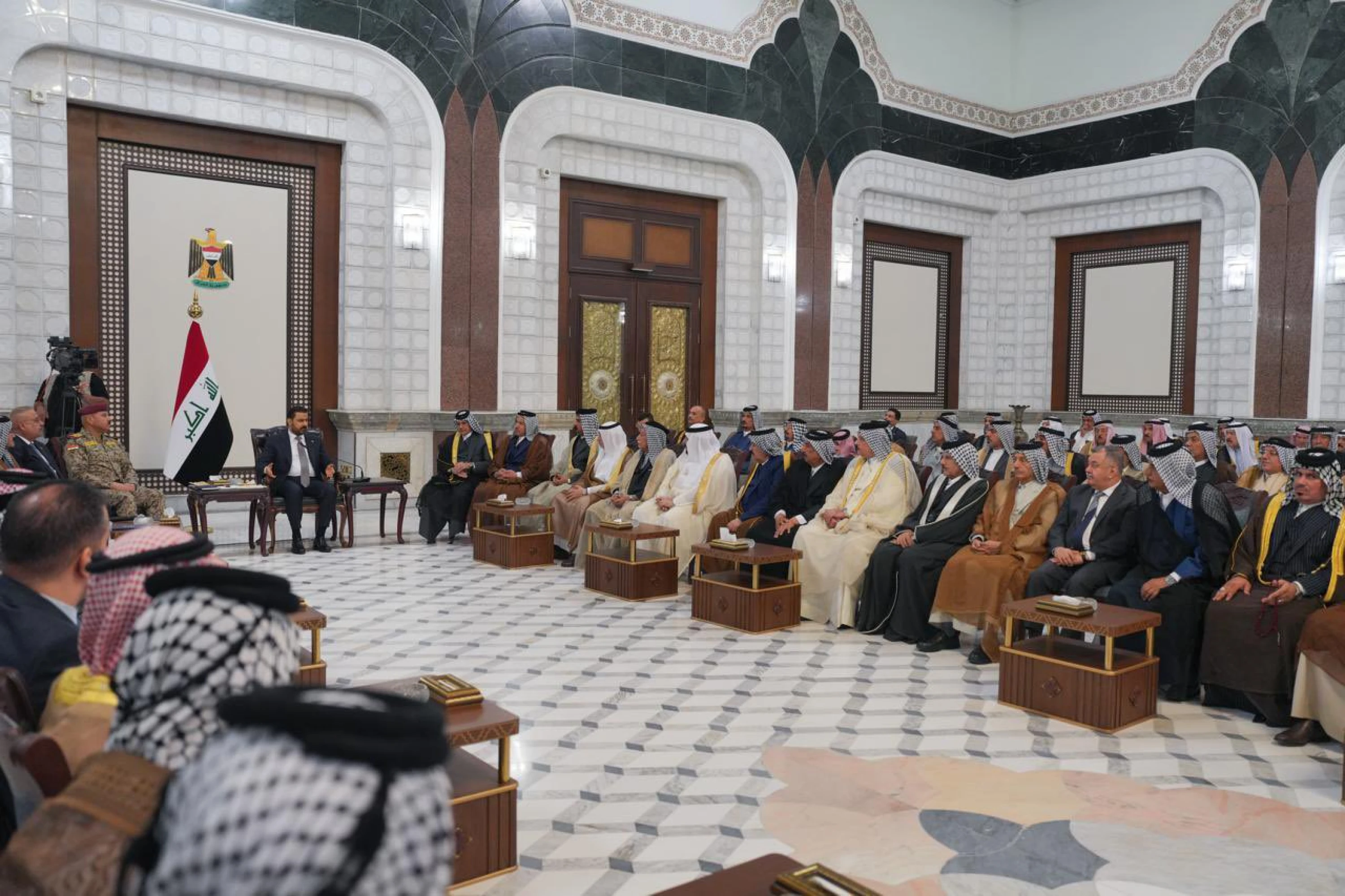
Zaidi made the remarks during a meeting with tribal sheikhs, coming as an initial end-of-September deadline for the disarmament of armed factions operating outside state authority has come and gone, with many hardline, Iran-aligned groups having outright rejected the process.
The prime minister, who made the restriction of weapons to state hands a key pledge upon commencing his tenure, has since shifted to a phased process extending into 2027. Under the plan, armed factions would first observe a 90-day period without attacks, with guarantees that they would not be targeted by US strikes, before moving toward the gradual handover of weapons and integration of fighters into state institutions.
"Five factions have agreed to surrender weapons, and three of them have already handed over their arms, with dialogue ongoing with the others," Zaidi said in his Monday speech.
Thus far, Asaib Ahl al-Haq, Kataib Imam Ali, and Muqtada al-Sadr's Saraya al-Salam have claimed to have surrendered their weapons to the government. It remains unclear who the other factions that Zaidi says have agreed to disarm are, with Iraqi Foreign Minister Fuad Hussein told reporters in Washington on Thursday that negotiations were underway with seven armed groups.
Multiple pro-Iran factions, including the powerful Kataib Hezbollah, rejected the notion of handing arms to the state, leading Baghdad to seek other mechanisms to regulate the factions’ weapons in a manner that would be acceptable to the groups.
The now-expired September deadline was inextricably linked with the date of the US-led Global Coalition's withdrawal from Iraq, an event touted by Baghdad as "Sovereignty Day."
Addressing the country to mark the occasion of Iraq's National Day on October 3, Zaidi said that the US withdrawal ushers in an era of a new Iraq that "makes its own decisions, protects its land and airspace, and where all weapons are subject to the Commander-in-Chief of the Armed Forces."
 Facebook
 LinkedIn
 Telegram
 X
X