ERBIL, Kurdistan Region of Iraq – A parliamentary alliance of Iraqi Assyrian and Chaldean Christians that holds the majority of the quota seats is seeking to dislodge the Iran-backed pseudo-Christian Babylon Movement from the migration minister position, a lawmaker said Tuesday, after obtaining the prime minister’s approval.
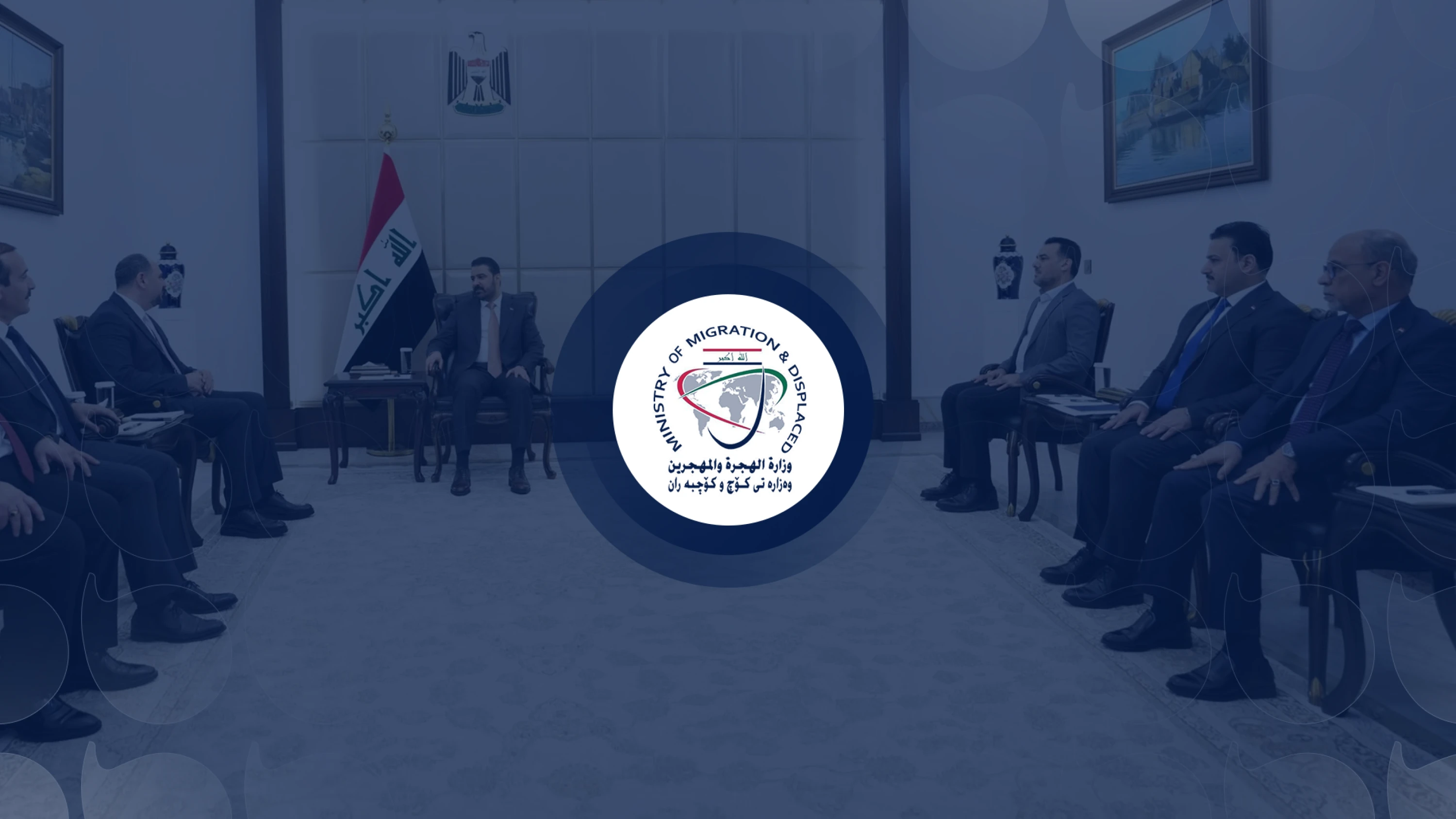
The Christian Soyana bloc, an alliance of Assyrian and Chaldean Christian lawmakers that holds three of the five quota seats designated for Assyrian, Chaldean, and Syriac Christians, is vying for the Ministry of Migration and Displaced, which has been held by the Iran-backed Babylon Movement since 2020.
The Iraqi parliament has launched a renewed drive to fill outstanding ministerial posts before the end of the week. Prime Minister Ali al-Zaidi took office in May, but nine ministries in his cabinet remain vacant, including defense and interior.
The Minister of Migration and Displaced is also yet to be determined, with Soyana seeking to unseat Babylon’s Evan Faek Gabro from the position – one she has held for over six years.
Kaldo Ramzi Oghanna, head of Soyana’s bloc in the Iraqi parliament, said they have reached an agreement with Zaidi to secure the ministry, displacing Babylon in the process. However, the bloc will need to secure parliamentary approval.
“The prime minister has given us his assurances. We are not begging or bargaining for this position; rather, it is our proper entitlement as the majority of the quota,” Oghanna told The New Region on Tuesday. “The prime minister must take responsibility and abide by his promise.”
He revealed that Hadi al-Amiri, a veteran Shiite politician and head of the Badr Organization, met with Soyana lawmakers on Monday night to reach a compromise with Babylon and appoint an “independent” candidate – a proposal Soyana rejected.
“We completely rejected his proposal because an independent candidate would ultimately again fall into the sphere of Babylon,” the lawmaker said.
“I reiterate: we will not compromise on our right.”
Soyana holds three of five Christian quota seats in the parliament, with the other two being Babylon members. Oghanna did not immediately disclose the bloc’s candidates for the ministry.
The Babylon Movement is the political arm of the Babylon Brigades, an Iran-backed pseudo-Christian militia operating mainly in Iraq’s northern Nineveh Plains, historically home to numerous Assyrian and Chaldean Christian villages and towns.
Babylon, however, refuses to concede the ministry, insisting that the incumbent, Gabro, must remain in her post.
“They believe Soyana represents the Christian majority. It is not a matter of majority representation, but rather the weight of alliances,” a senior Babylon official told The New Region.
The senior official, who declined to be named, claimed that “the Babylon Movement holds more sway over parliament” than Soyana.
The Babylon Brigades, led by Rayan al-Kildani, have been accused of illegally seizing historic Christian land and church properties in Nineveh after the Islamic State (ISIS) was driven out of the area. The group has also been repeatedly criticized for land grabs of the properties of Christians in Baghdad.
In 2019, the US Treasury sanctioned Kildani under the Global Magnitsky Human Rights Accountability Act for “serious human rights abuses and corruption.”
In the designation, the Treasury described the Babylon Brigades, which compose the 50th Brigade of the Popular Mobilization Forces (PMF), as “the primary impediment to the return of internally displaced persons to the Nineveh Plains.”
A profile of the Babylon Brigades by the Washington Institute says it “pretends to be a local Christian unit, but its members have been recruited from Shia Muslim communities in southern Iraq with the goal of dominating the strategic Nineveh Plains region.”
Leaders of the Coordination Framework, Iraq’s governing Shiite alliance, told The New Region in late September that Zaidi’s difficulty in completing the government formation process was due to competing demands from Washington and his powerful Shiite political backers.
The US has demanded that figures belonging to or backed by Iran-aligned armed factions be excluded from top executive posts regardless of their parliamentary weight and political entitlements, threatening sanctions otherwise.
 Facebook
 LinkedIn
 Telegram
 X
X