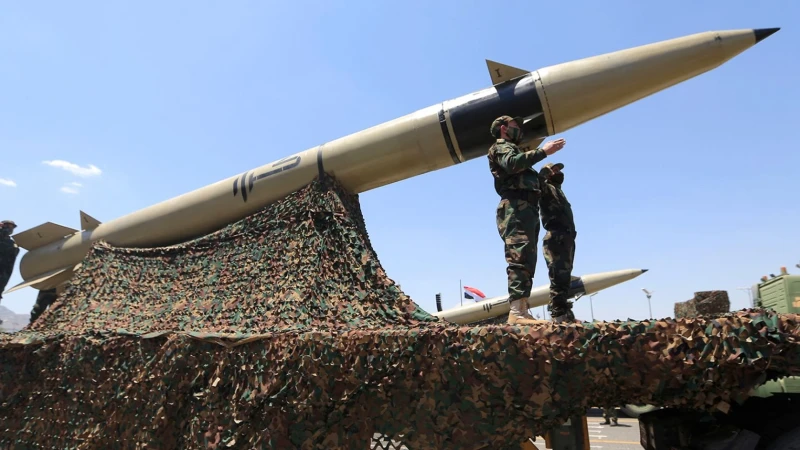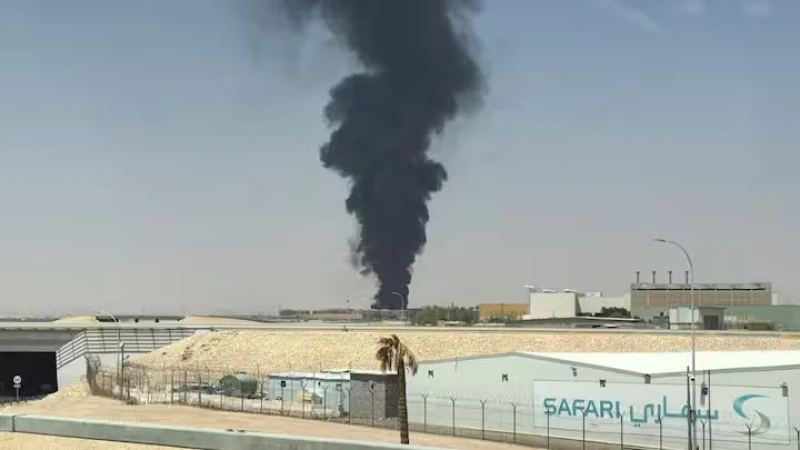

ERBIL, Kurdistan Region of Iraq - Pakistan, Saudi Arabia, Turkey and Egypt on Sunday condemned Houthi attacks following a strike on Riyadh’s international airport that killed a dozen people and injured more than 300, expressing support for Riyadh to take “all legitimate measures” to counter them.
In a joint statement, the four countries expressed “full support for all legitimate measures and steps it takes to counter these attacks,” reaffirming their support for Saudi Arabia’s sovereignty and territorial integrity.
The countries held “the Houthi militia fully accountable for the results of these attacks” and demanded an “immediate and unconditional halt of these attacks,” the statement said.
Saudi civil aviation authorities said that the latest attack early Sunday on the international airport in Riyadh killed 12 people and injured more than 300, some of whom were in critical condition. The dead included four Saudi citizens and nationals of Bangladesh, Egypt, Jordan, Palestine, the United States, Sudan and Syria, according to a Saudi statement. The injured were being treated at several hospitals.
Turkish Foreign Minister Hakan Fidan said Thursday that Ankara would not send troops to Yemen to fight Houthi rebels, stressing that the Mecca Joint Defense Agreement, signed by Turkey, Saudi Arabia and Pakistan in early August, is “not an offensive agreement.” The pact treats an armed attack on any signatory as an attack on all, committing the three countries to support one another’s defense.
Turkey and Pakistan announced on Monday that they will deploy military forces to Saudi Arabia amid the Houthi attacks. Turkey’s parliament has yet to ratify the agreement, and Ankara is assessing possible defensive assistance, including air defense, electronic warfare and technical support.
Houthi military spokesperson Yahya Saree said the group had carried out “four qualitative operations” against Riyadh in the previous 24 hours, using “several ballistic and cruise missiles and drones.” He said the operations targeted several Saudi airports and gas fields.
Saree also claimed that Saudi Arabia had “launched 124 airstrikes” against Yemen in the previous 24 hours.
The Houthis had advised travelers and personnel to stay away from Saudi airports, warning that they were “vulnerable to targeting.”
Qatar, Iraq, Israel, Jordan and Lebanon also separately condemned the attacks, with most describing them as a threat to regional security.
Syria’s foreign ministry also condemned the attacks on Sunday, calling on the international community to “take serious steps to stop the attacks,” warning that they threatened regional stability.
The statements came as reports emerged that Damascus and Riyadh were discussing possible Syrian military assistance against the Houthis in Yemen.
Axios reported, citing three US officials, that Saudi Arabia and Syria were discussing a possible deployment of Syrian troops to Yemen to join a counteroffensive against the group and that Syrian interim President Ahmed al-Sharaa was “seriously” considering the proposal but had not made a decision.
Reuters, citing a US official and a Syrian military official briefed on the matter, also reported that Damascus was considering providing military assistance to Saudi Arabia, with options under consideration including defensive support to protect the kingdom from attacks or deploying forces in an offensive role alongside Saudi-backed Yemeni troops.
Syrian Foreign Minister Asaad al-Shaibani and his Saudi counterpart, Faisal bin Farhan, held a phone call on Sunday to discuss regional developments, Syria’s foreign ministry said.
The two ministers stressed “the importance of strengthening cooperation and joint coordination, and intensifying efforts aimed at consolidating security, stability, and peace in the region,” the ministry added.
On Saturday, US President Donald Trump said Washington might join Saudi Arabia in its war against Yemen’s Iran-backed Houthis following continued attacks on Riyadh.
The conflict between Riyadh and the Houthis had lain largely dormant since a UN-brokered ceasefire in 2022. However, the latter group blamed Saudi Arabia for an airstrike on Sanaa International Airport in July, setting in motion a chain of events that culminated in a large-scale Houthi offensive that expanded their effective control over war-wracked Yemen.
The long-range Houthi strikes come amid a counter-offensive launched by the Saudi-backed Yemeni government, seeking to dislodge the rebels from the coastline along the Bab el-Mandeb Strait, from where they have sought to impose a maritime blockade on Saudi maritime traffic through the Red Sea.
Despite Yemeni government claims that they have displaced the Houthis from the city of Mokha, the Iran-backed rebels have insisted that they are holding onto the territory they have seized
 Facebook
 LinkedIn
 Telegram
 X
X