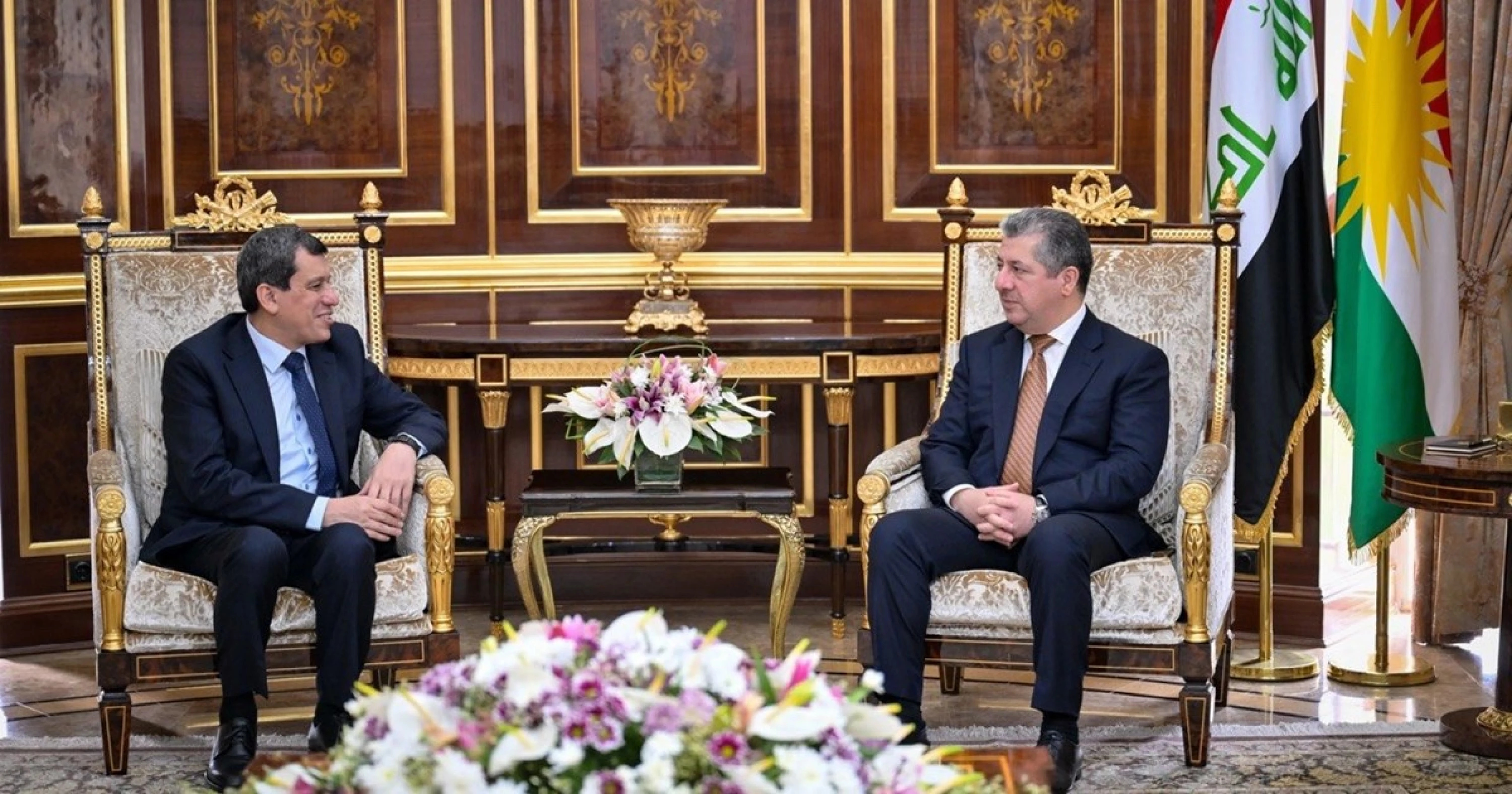
ERBIL, Kurdistan Region of Iraq – Kurdistan Region Prime Minister Masrour Barzani and Syrian presidential advisor Mazloum Abdi met on Tuesday in Erbil, discussing the latest regional developments and Syria’s stability.
During the meeting, the pair emphasized the importance of “preserving peace, security, and stability in Syria and protecting the rights of Kurds and all other components,” read a statement from the Kurdistan Regional Government (KRG).
They also "exchanged views on the developments in Syria and the wider region."
The former Syrian Democratic Forces (SDF) chief attended the Middle East Research Institute (MERI) Forum prior to meeting the prime minister. He was joined by prominent Kurdish politician Elham Ahmed, a member of the Syrian parliament’s Foreign Relations Committee.
The former SDF leader also met with President Masoud Barzani and Kurdistan Region President Nechirvan Barzani earlier on Monday.
The meetings come days after renewed tensions in Hasaka after pro-government groups desecrated Kurdish symbols in the city, calling for the full restoration of state sovereignty over the province.
Kurdish residents subsequently held counter-protests, with footage circulating online showing security forces forcibly dispersing Kurdish protesters by firing into the air.
Abdi announced the dissolution of the SDF on August 25, and was appointed as an advisor to the Syrian Presidency three days later.
The move sparked controversy among Kurds online as well as parts of northeast Syria (Rojava), who viewed the development as concessions and detrimental to Kurdish demands and aspirations for a decentralized state.
Despite the issuance of a presidential decree nominally intended to secure Kurdish linguistic and cultural rights in the country, Damascus has come under extensive criticism for reducing Kurdish-medium education to a handful of classes per week in Kurdish-majority areas, marking a dramatic departure from the wholesale mother-tongue education enjoyed by Kurds during the era of autonomous rule.
 Facebook
 LinkedIn
 Telegram
 X
X