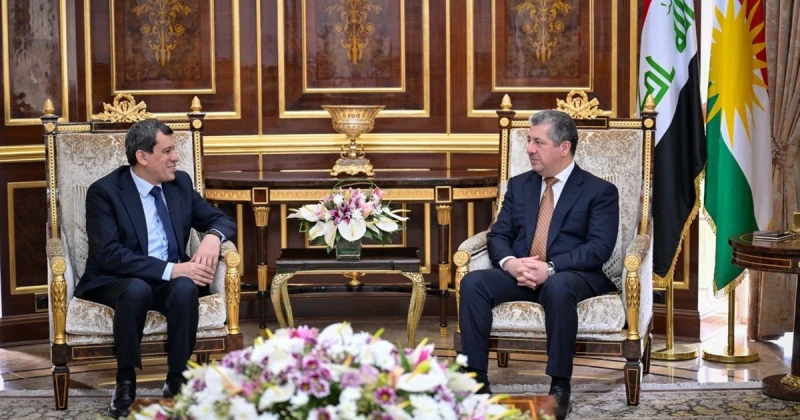
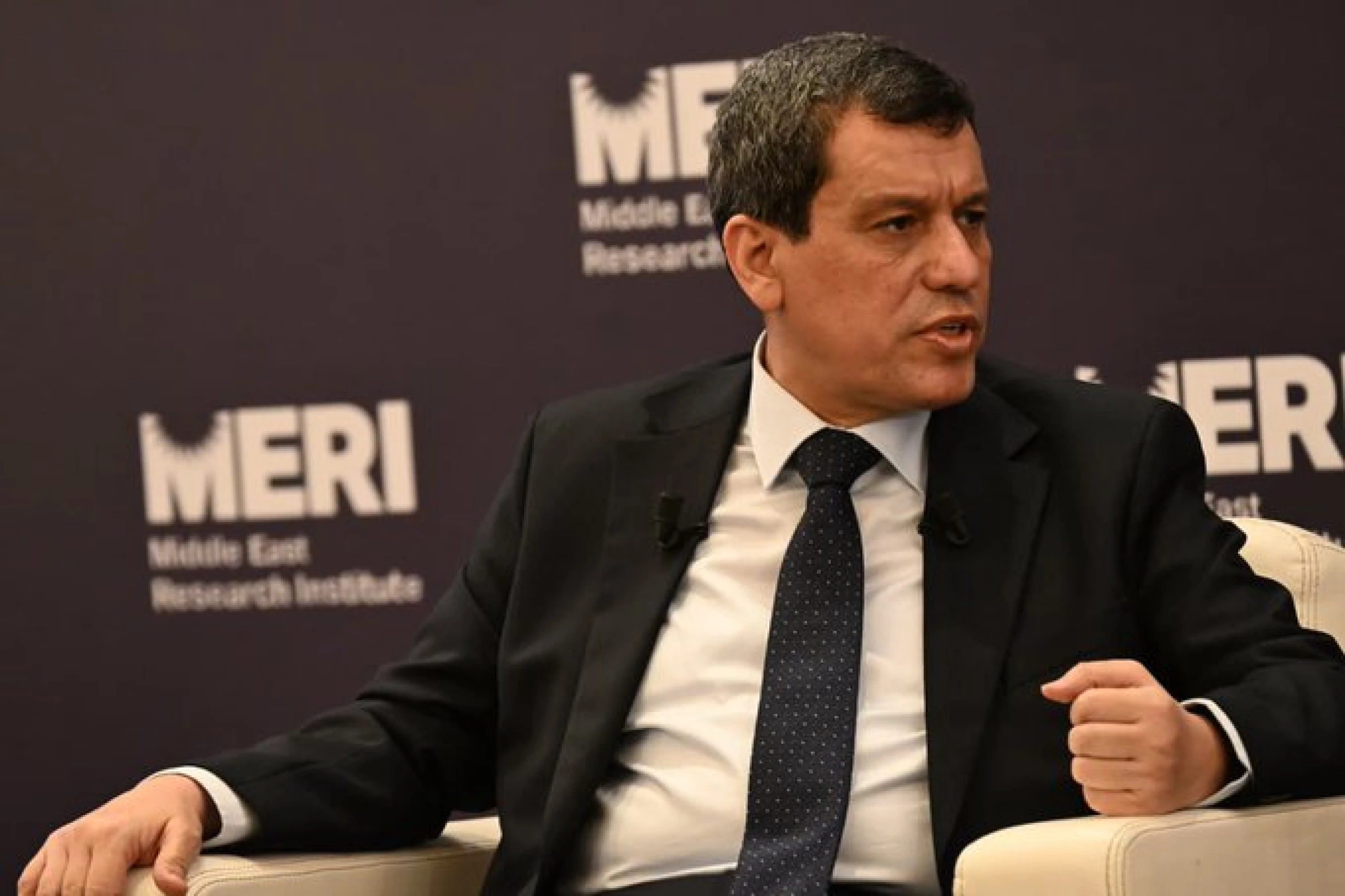
ERBIL, Kurdistan Region of Iraq – Syrian presidential advisor Mazloum Abdi said Tuesday that “Rojava will reach its rights” if Syrian guarantees regarding Kurdish rights are added to the constitution, while noting the emergence of “a sort of trust” between the parties amid the ongoing integration process into state institutions.
In late August, Abdi announced the dissolution of the Kurdish-led Syrian Democratic Forces (SDF), one of the primary forces in the fight against the Islamic State (ISIS) and the main power holder in northeast Syria’s Kurdish-majority region of Rojava since 2015, as part of the integration agreement signed with Damascus in January.
Before the dissolution, Abdi announced that the integration of the Kurdish-led armed forces and administration into the Syrian state was "complete.”
Constitutional guarantees
“Now we have entered a new process,” the former SDF chief said, speaking at the Middle East Research Institute (MERI) Forum in Erbil.
“We now have a constitutional struggle ahead of us,” he said, noting that “our resolve can only be reached in the constitution,” citing efforts “to guarantee Kurdish rights within the constitution.”
The Kurdish-led authorities and Damascus signed an agreement on January 29 that would see the autonomous administration in northeast Syria brought under the auspices of the Syrian state, coming after violent clashes in Aleppo's Kurdish-majority quarters escalated into a broader offensive by Syrian forces under the leadership of interim President Ahmed al-Sharaa.
“Now the Kurds have entered the government, and the establishment of trust between Kurds and the government has begun because they have practically entered,” Abdi said, citing the integration of Kurdish forces into state institutions.
“If the decrees signed by the president and the discussions we have had between ourselves are put into the constitution, then Rojava will reach its rights,” Abdi said.
On January 16, Sharaa issued a presidential decree establishing Kurdish as a national, albeit not official, language of Syria, committing to the protection Kurdish cultural rights, and undoing prior legislation that had left many Kurds in the country unable to acquire Syrian citizenship.
Abdi stressed that “a sort of trust has emerged” between him and Sharaa.
“For trust to be established on both sides, we need more time and, most importantly, more steps need to be taken on the ground,” Abdi noted, while criticizing the “very low” level of Kurdish representation in the “ministries and central administrations.”
Kurds have been “distanced” from having a role in Syria throughout its history, while there was hostility towards Kurds during the former regime and before, he said, adding that Kurds have never felt like they had space to play a role.
Kurdish language rights
“One of the challenges that still needs to be solved is the issue of language,” Abdi said, citing the acceptance of the Kurdish language “in education [system] as an official language.”
The Syrian education ministry in August announced a new plan for Kurdish-language instruction in the country, under which students in Kurdish-majority areas would receive a maximum of three classes in their mother tongue per week, a dramatic shift from the Kurdish language curriculum northeast Syria’s residents enjoyed for a decade.
In addition, Damascus has not moved to introduce the Kurdish language as an official language in Syria, despite repeated requests by Kurdish authorities.
“A part of the curriculum is in Kurdish language; we see this as progress. But yes, there is still a need to resolve this issue.”
While signing the January agreement, the parties “could not reach a conclusion” on the matter of Kurdish language, Abdi said, noting that we agreed to “continue discussions on language until it is resolved, and this continues until now.”
“What we have established now is a foundation that we can build on.”
The failure to enshrine Kurdish as an official language in the Syrian constitution, a position it enjoys in Iraq, and the limiting of Kurdish classes to thrice weekly have been met with dismay by many of Rojava's Kurds, for whom mother tongue education was a cornerstone of the autonomous administration.
In late September, Rojava University expressed “skepticism” about the delay in integrating the institution into Syria’s higher education ministry, lamenting its “unclear” status and voicing rejection of any potential centralized decision to be made about the university by Damascus.
 Facebook
 LinkedIn
 Telegram
 X
X