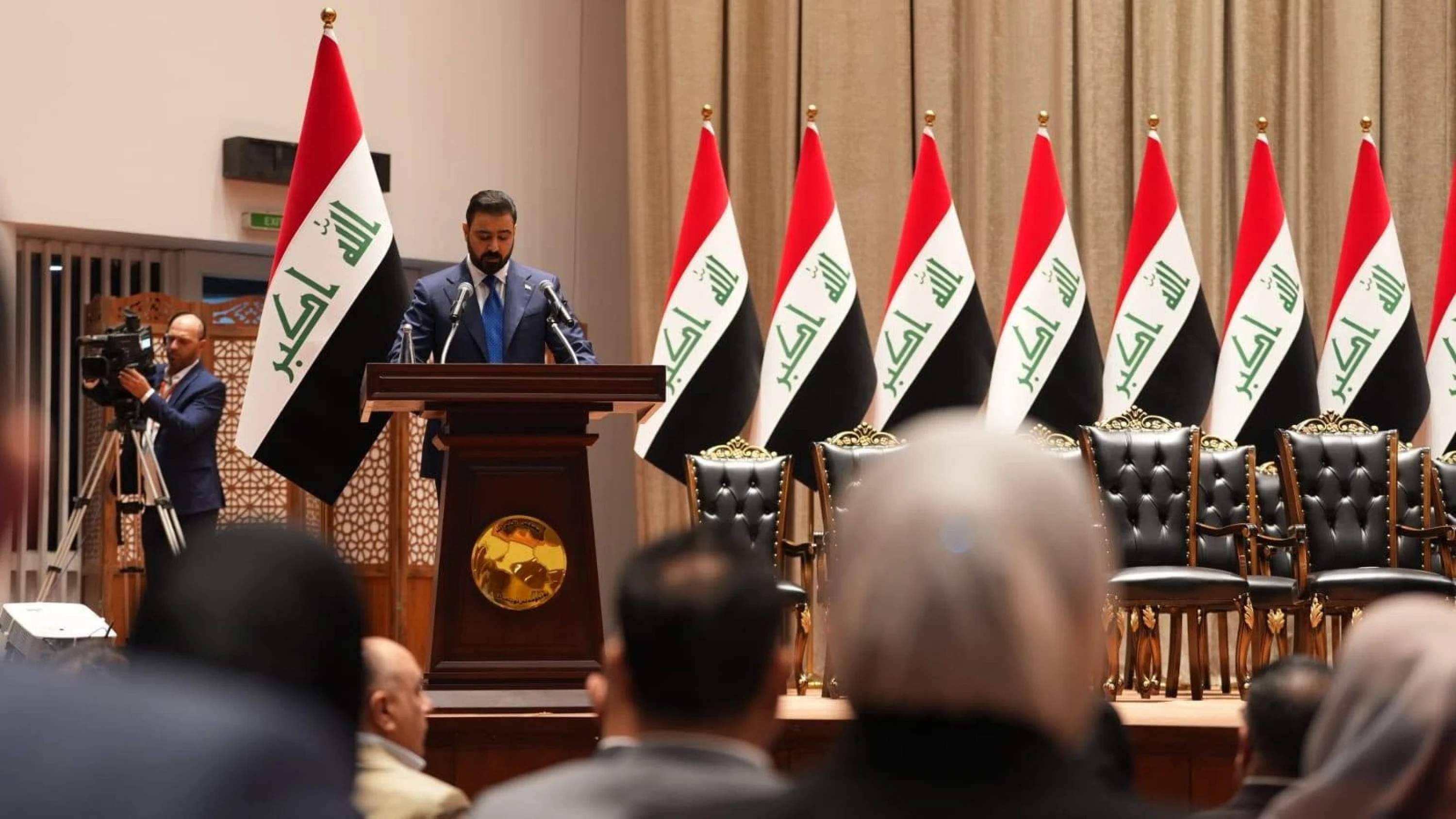
ERBIL, Kurdistan Region of Iraq – Iraqi state media reported that an agreement has been reached to designate candidates for nine ministerial positions during a Thursday parliamentary session led by Prime Minister Ali al-Zaidi, with the defense and interior portfolios set to be the first positions put to a vote.
Zaidi on Tuesday called on the parliament to schedule a session on Thursday to vote on candidates for vacant ministerial posts and deputy prime minister positions. The request was swiftly answered by the legislature, confirming the session.
The premier assumed his role as prime minister on May 14 following a parliamentary session that saw his program for government and 14 ministerial appointments endorsed. Disputes over some portfolios left nine ministries unfilled.
The incomplete ministries consisted of interior, defense, planning, higher education, labor and social affairs, youth and sports, migration and displacement, the Ministry of Construction, Housing, and Municipalities, and the Ministry of Culture, Tourism, and Antiquities.
"Political blocs have agreed to confirm the remaining cabinet members,” Jaafar al-Zamili, a parliament member from the Badr Organization, told state media late Wednesday.
"Nayef al-Shammari has been designated for the defense ministry, while Yasser al-Maliki is set to head the interior ministry," he said.
The vote on those two ministries “will take priority," during the Thursday session, according to the lawmaker.
Shammari, a lawmaker from Nineveh province, is affiliated with the Hasm al-Watani Alliance, led by former Defense Minister Thabet al-Abbasi. He previously maintained ties with the National Contract bloc of Popular Mobilization Forces (PMF) chief Falih al-Fayyadh and served on the parliamentary security and defense committee.
Shiite strongman Nouri al-Maliki’s State of Law Coalition, meanwhile, has put forth the leader’s son-in-law and head of the coalition’s parliamentary bloc Yasser al-Maliki for the interior ministry.
The New Region has learned that candidates for three ministries have not been selected, with two linked to the Sunni Azm Alliance and one entitled to the Christian community.
Two Sunni Azm Alliance candidates were selected without prior votes or a decision by the party, according to The New Region’s Baghdad correspondent, while the party’s picks were not among the nominees.
Thaer al-Kaabi, a lawmaker from the National Approach Alliance, confirmed Shammari and Maliki’s candidacy for the defense and interior ministries.
According to information obtained by The New Region, one of the deputy prime minister positions is set to go to Laith al-Khazali, the younger brother of Qais al-Khazali, leader of Asaib Ahl al-Haq (AAH), which is a pro-Iran armed group that is part of the state-integrated PMF.
Laith al-Khazali is under US Treasury Department sanctions.
Qais al-Khazali was among the first faction leaders to publicly respond to Zaidi’s call for disarmament, announcing AAH’s readiness to join the government’s program to restrict weapons to the state.
The Kurdistan Democratic Party (KDP), the largest Kurdish bloc in the parliament, is set to receive two high-profile posts: One of the deputy prime minister positions will reportedly go to Fars Brifkani, while Rebaz Hamlan is set to assume the role of Minister of Construction, Housing, and Municipalities.
Zaidi’s government emerged from an agreement within the Iran-backed Shiite Coordination Framework, while his rise to the premiership was also strongly backed by influential Shiite cleric Muqtada al-Sadr. The first controls the largest bloc in parliament, while the second wields considerable influence on the streets through his millions of followers.
 Facebook
 LinkedIn
 Telegram
 X
X