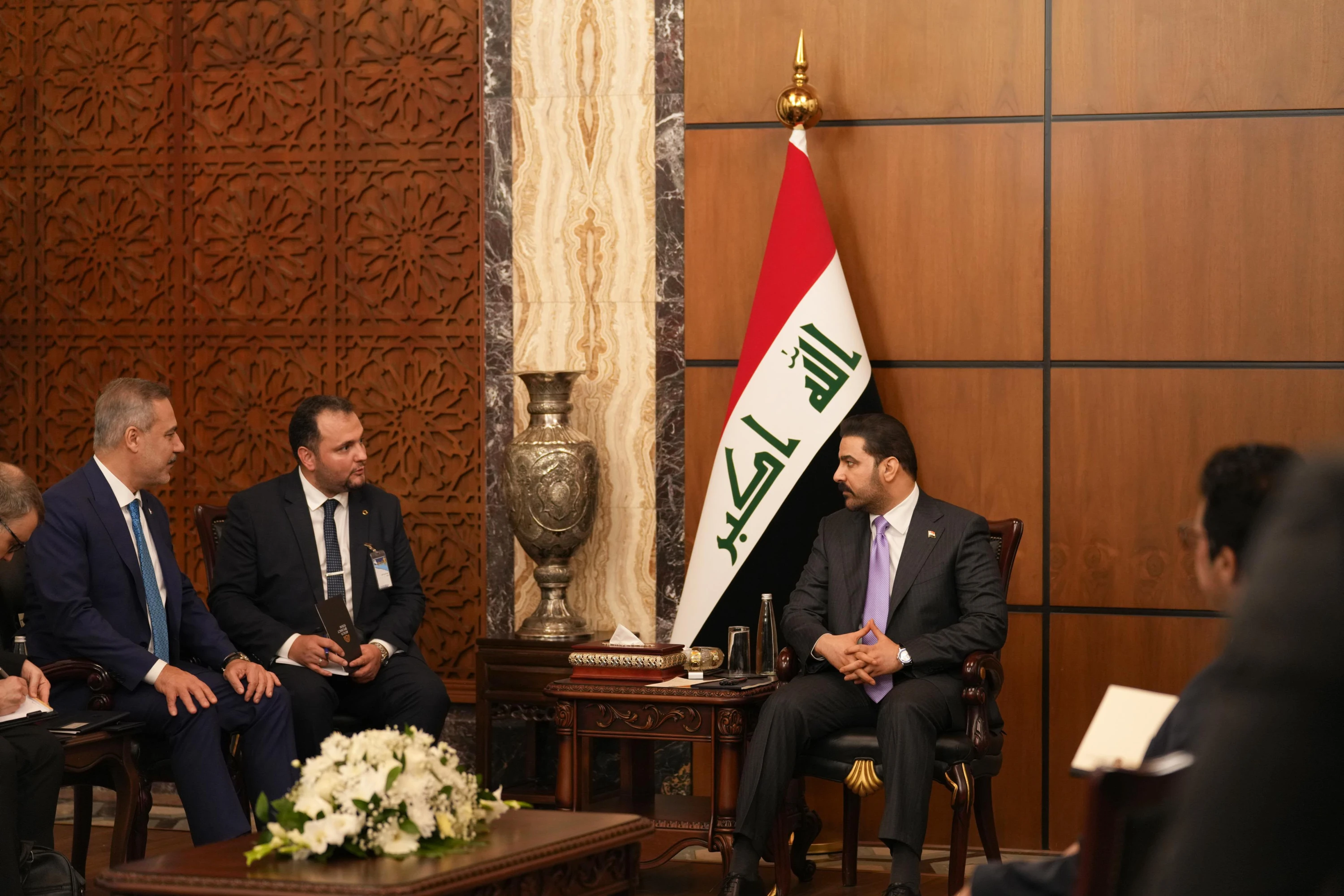
ERBIL, Kurdistan Region of Iraq – Iraqi Prime Minister Ali al-Zaidi on Saturday received Turkish Foreign Minister Hakan Fidan in Baghdad, where they discussed existing agreements on water resources, as upstream damming has exacerbated Iraq’s drought.
Iraq has historically struggled with water shortages, with authorities routinely blaming upstream countries for withholding water through dams on the Tigris and the Euphrates rivers.
The pair discussed “ways to strengthen cooperation in various fields, particularly water resources, and to activate existing agreements and memoranda of understanding,” according to a statement from Zaidi’s office.
The prime minister stressed “the importance of reaching a comprehensive water agreement,” it added.
Around 90 percent of Iraq’s water sources originating from Turkey. Earlier this year, the environment ministry called for international pressure on Ankara to increase water flows.
Turkey and Iraq have signed multiple agreements to address the issue. In August, Torhan al-Mufti, an advisor to Zaidi, said Turkey is set to release “a guaranteed but not fixed” water share into Iraq based on a formula agreed upon by both countries
According to Mufti at the time, negotiations are underway with Turkey, Iran, and Syria to finalize arrangements that will address the water inflows.
The United Nations has ranked Iraq among the world’s most climate-vulnerable countries, while authorities have warned that water reserves have fallen to dangerous levels, making conservation and careful management essential.
Zaidi and Fidan also discussed “establishing a joint operations room to address several security issues,” coming amid a peace process between Ankara and the Kurdistan Workers’ Party (PKK).
The armed group, which fought Ankara for over four decades, agreed to disband following a call by its jailed leader Abdullah Ocalan in May 2025, withdrawing from military positions in the Kurdistan Region. The PKK held a symbolic disarmament ceremony in Sulaimani in July 2025.
Some Iran-backed militias have cited the withdrawal of Turkish forces from Iraqi territory as a prerequisite for handing over their weapons, complicating Zaidi’s efforts to bring weapons under state control.
The pair also agreed on following up on previous agreements “especially those related to the Development Road project,” a massive, multi-billion-dollar project that entails the expansion of railways, roads, and ports, shortening travel time between Asia and Europe and linking the Grand Faw Port in southern Iraq to the Turkish border.
In late August, Hussein Ahmed, the Iraqi transport ministry’s head of media, said the project’s design phase exceeded 95 percent completion, and that the ministry was preparing to finalize an agreement with its Turkish counterpart.
 Facebook
 LinkedIn
 Telegram
 X
X