
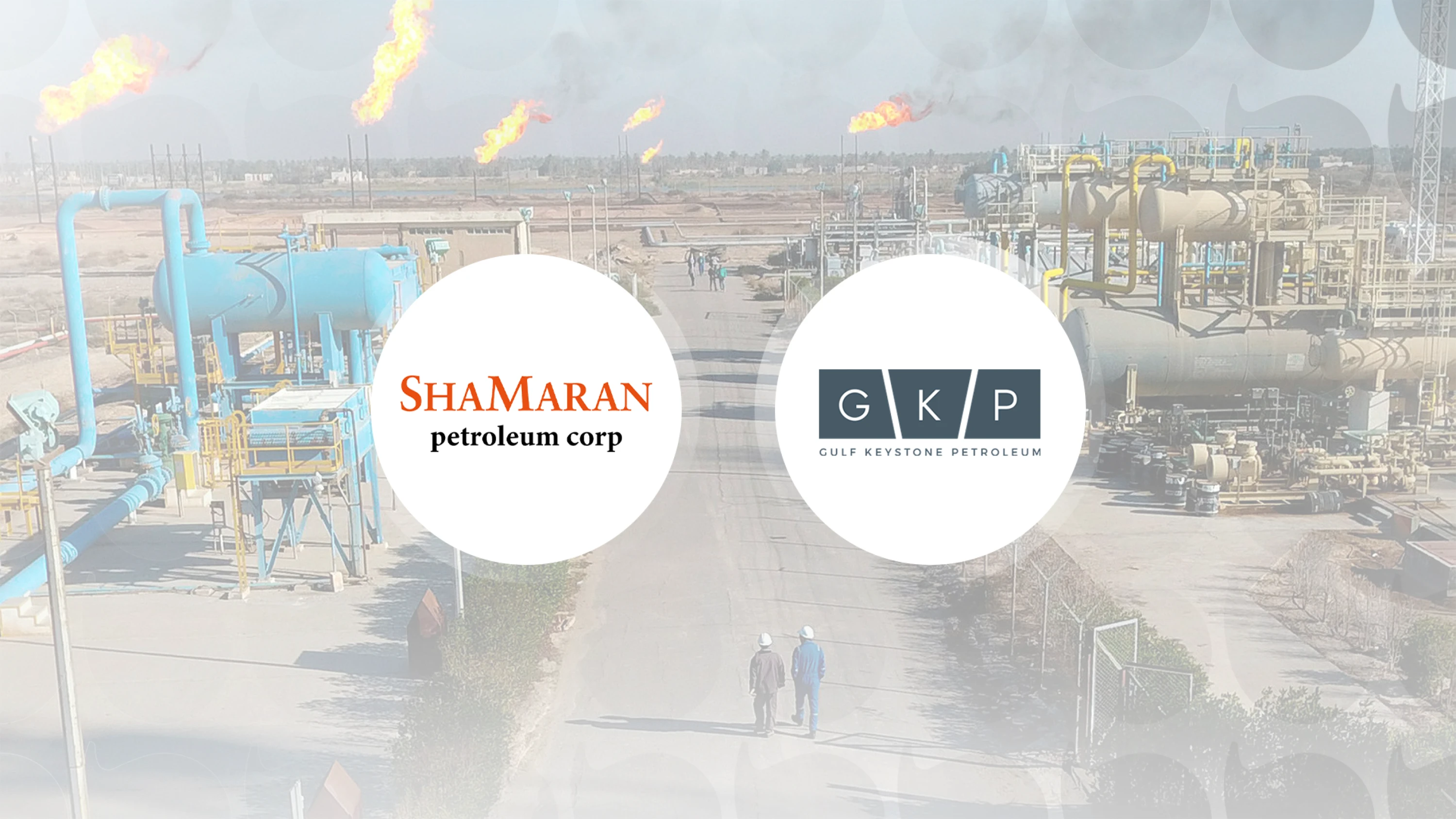
ERBIL, Kurdistan Region of Iraq – The British Gulf Keystone Petroleum and Norway's ShaMaran Petroleum on Tuesday announced a $601 million merger, combining to make up one of the largest oil producers in the Kurdistan Region.
“The Transaction will create a leading independent oil producer focused on the Kurdistan Region” and federal Iraq, Gulf Keystone said in a statement.
The UK-listed producer operated the Sheikhan field while ShaMaran has working interest in the Atrush, Sarsang, and Hamrin fields, operated by HKN Energy.
“We view this combination as a natural next step for both companies. Bringing together Shaikan with the adjacent Atrush and Sarsang fields will deliver synergies and gives the enlarged company a significantly stronger platform to invest in the future development of Shaikan and Hamrin,” Jon Harris, CEO and Executive Director of Gulf Keystone, said.
“We also look forward to working with HKN Energy as an experienced operator and partner on ShaMaran’s assets.”
ShaMaran shareholders will receive newly issued shares in Gulf Keystone under the new merger, which has valued ShaMaran’s entire share capital at around $601 million. Shareholders of both companies are expected to own around 50 percent of the combined entity, according to the deal’s terms.
Existing Gulf Keystone Shareholders are also expected to receive a dividend of $50 million upon the transaction’s closure.
The UK-listed Gulf Keystone is set to move to the Euronext Oslo Bors main market and close its London Stock, while ShaMaran’s listing and shares will “cease in connection with the completion of the transaction.”
The merger comes amid a surge in oil prices owing to the the US-Iran war and the restriction of regional shipping lanes, particularly in the Strait of Hormuz.
Iran has closed the strait since late February, a key waterway where roughly 20 percent of the world’s oil is transported.
The Kurdistan Region’s energy infrastructure has been targeted by drone strikes from Iran and its allied militias for several years, causing a significant decline in the Region’s oil production and export capacity.
In June, Kurdistan Regional Government (KRG) spokesperson Peshawa Hawrami said several major energy companies had resumed production at oil fields across the Kurdistan Region after completing repairs to damage caused by airstrikes during the recent Middle East war, including Gulf Keystone.
 Facebook
 LinkedIn
 Telegram
 X