
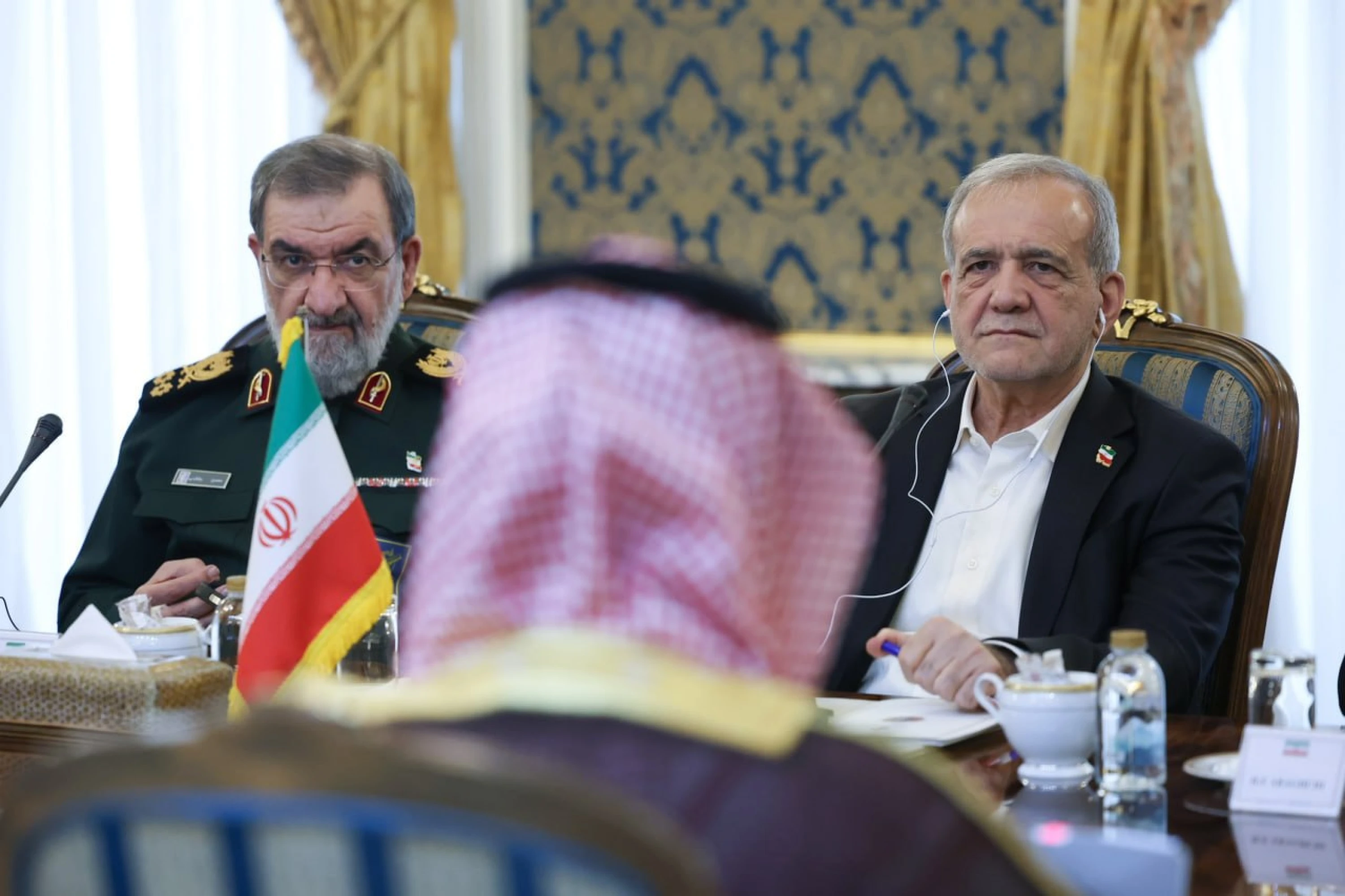
ERBIL, Kurdistan Region of Iraq - Iranian President Masoud Pezeshkian on Monday received a high-level delegation from the Mecca Defense Agreement states in Tehran, stressing to them the importance of consolidating "regional unity and cohesion."
Signed in August amid the backdrop of Riyadh's escalating conflict with Yemen's Houthis and Iranian strikes on the Gulf states, the Mecca Agreement saw Turkey, Saudi Arabia, and Pakistan form a defensive alliance that commits each country to providing security assistance should any of the other member states come under attack.
The agreement has since been activated by Saudi Arabia in October, with both Ankara and Islamabad now providing support to Saudi forces after Houthi rebels, a long-term ally of Iran, began long-range ballistic missile strikes deep into Saudi population centers.
Despite their longstanding ties, Tehran has insisted that is remains uninvolved in the current phase of the Saudi-Houthi conflict and has limited its public statements on the matter to calls for dialogue and peace efforts.
On Monday, Turkish intelligence chief Ibrahim Kalin, Pakistani army chief Asim Munir, and Saudi Defense Minister Khalid bin Salman traveled to the Iranian capital, where they met with Mohsen Rezaei, Secretary of Iran's Supreme National Security Council, ahead of a later meeting with Pezeshkian.
"I hope that the presence of representatives of important and influential Islamic countries at this meeting will help further consolidate regional unity and cohesion," Pezeshkian said in a statement shared on the Iranian presidency's website.
Muslim countries must "stand together and adopt a coordinated position," he concluded.
Iranian foreign ministry spokesperson Esmail Baghaei said that Tehran, which has long criticized the presence of US military forces in the Middle East, views the formation of regional security alliances as "a good thing."
"This meeting can be a prelude to further steps towards shaping endogenous security; an issue that we have been insisting on for decades, and we emphasize that regional security will not be ensured except by relying on the will and security considerations of the countries of the region," he said at a press conference.
Saudi Arabia's Deputy Minister for Public Diplomacy Rayed Krimly noted ahead of the meeting that it was organized via Pakistan and Qatar, both of whom have served as mediators between Iran and the US amid their on-and-off conflict that has lasted for most of the year.
US President Donald Trump has publicly mulled the possibility of returning to direct military action, saying on Friday that "we may do another little Epic Fury," a reference to the title of the US-Israeli operation against Iran that began on February 28.
Responding to the comments, Iranian Foreign Minister Abbas Araghchi said, "If any rationality prevails, they will not attempt a military attack or aggression against the Iranian people again."
"They have tried this twice and have seen the results. Should they attempt it once more, they know full well that the result will be no different from what they experienced in the past."
 Facebook
 LinkedIn
 Telegram
 X