
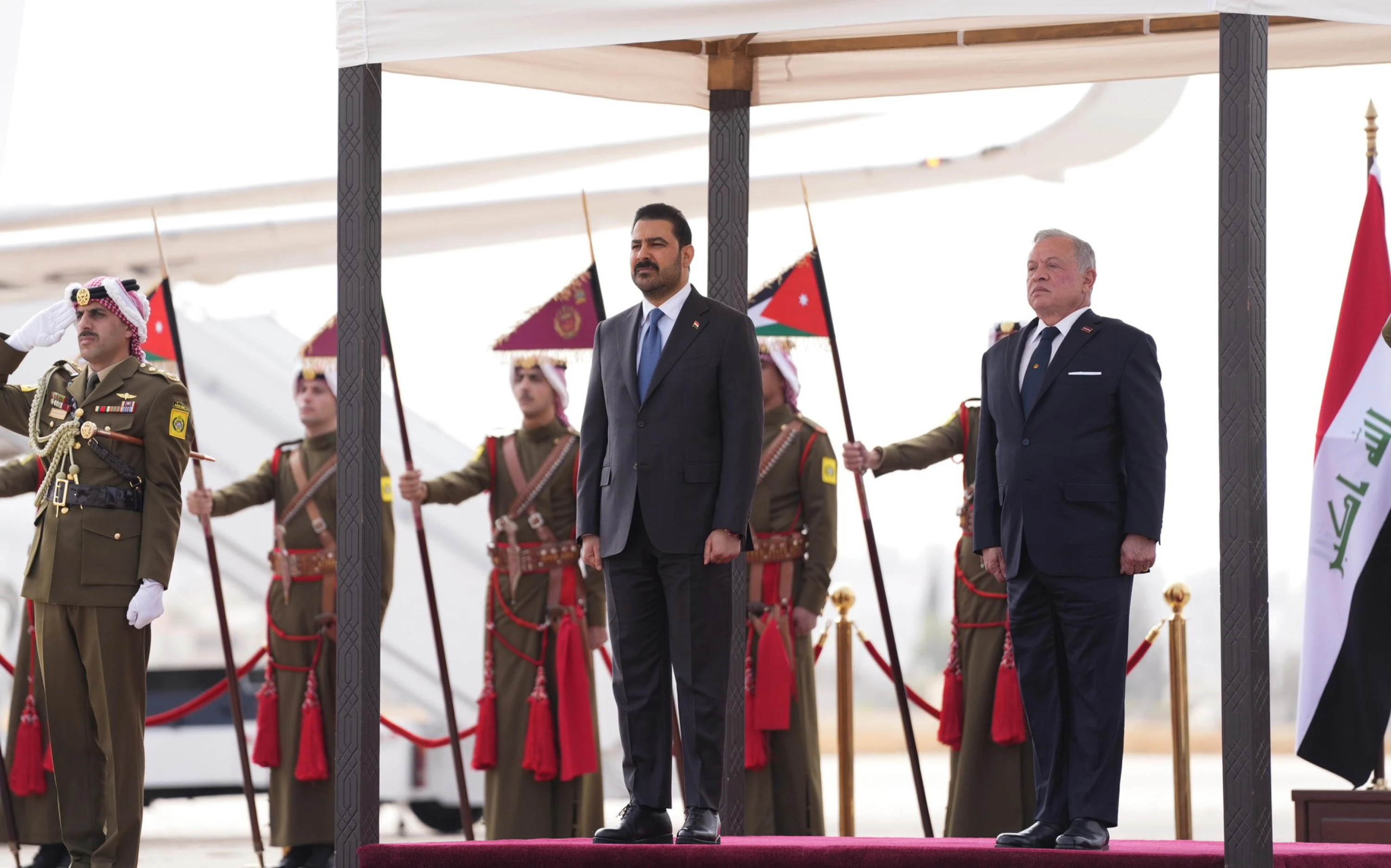
ERBIL, Kurdistan Region of Iraq – Iraqi Prime Minister Ali al-Zaidi concluded a visit to Amman on Monday, where he met with Jordanian King Abdullah II and oversaw the signing of multiple memoranda of understanding (MoUs) seeking to enhance bilateral cooperation.
During his meeting with Jordanian monarch, the two discussed “ways to enhance cooperation” between the two countries, particularly on “various issues of common interest” in a manner that serves their mutual interests, read a statement from Zaidi’s office.
Zaidi also emphasized Baghdad’s interest in enhancing cooperation in the “economic, trade, and investment sectors and developing joint projects in these areas.”
The Iraqi prime minister was later received by the Jordanian counterpart, Jaafar Hassan, where Zaidi emphasized the importance of establishing “a free trade zone” between the two countries, aiming to increase “cooperation and joint ties.”
The two prime ministers oversaw the signing of nine MoUs covering education, culture, support for enterprises, cooperation between diplomatic missions, archives, consumer protection, environmental protection, and anti-monopoly measures.
Zaidi also affirmed that Jordan is a “strategic partner for Iraq” and to further strengthen bilateral cooperation.
As part of his visit to Amman, Zaidi also met with a group of businessmen and investors, reviewing a number of policies and measures adopted by Baghdad “to enhance the investment climate and attract capital to contribute to national development.”
Throughout the US-Israeli February war against Iran, Iraq was repeatedly accused by major Gulf countries and Jordan of allowing pro-Iran armed groups operating from its territory to launch attacks against them.
In March, they urged Iraq to “immediately” stop attacks by pro-Iran armed groups operating from its territory, reaffirming their right to self-defense.
Since taking office, Zaidi has made consolidating arms under state control one of his government’s main objectives.
Zaidi’s government had also set September 30 as the deadline for armed groups to hand over their weapons, coinciding with the US-led anti-ISIS coalition’s withdrawal, but later shifted to a phased process extending into 2027 after several Iran-aligned groups rejected the deadline.
On Monday, Baghdad and Amman expressed support for “diplomatic efforts and dialogues to confront challenges and end crises, conflicts, and their negative effects at both the regional and international levels.”
 Facebook
 LinkedIn
 Telegram
 X