
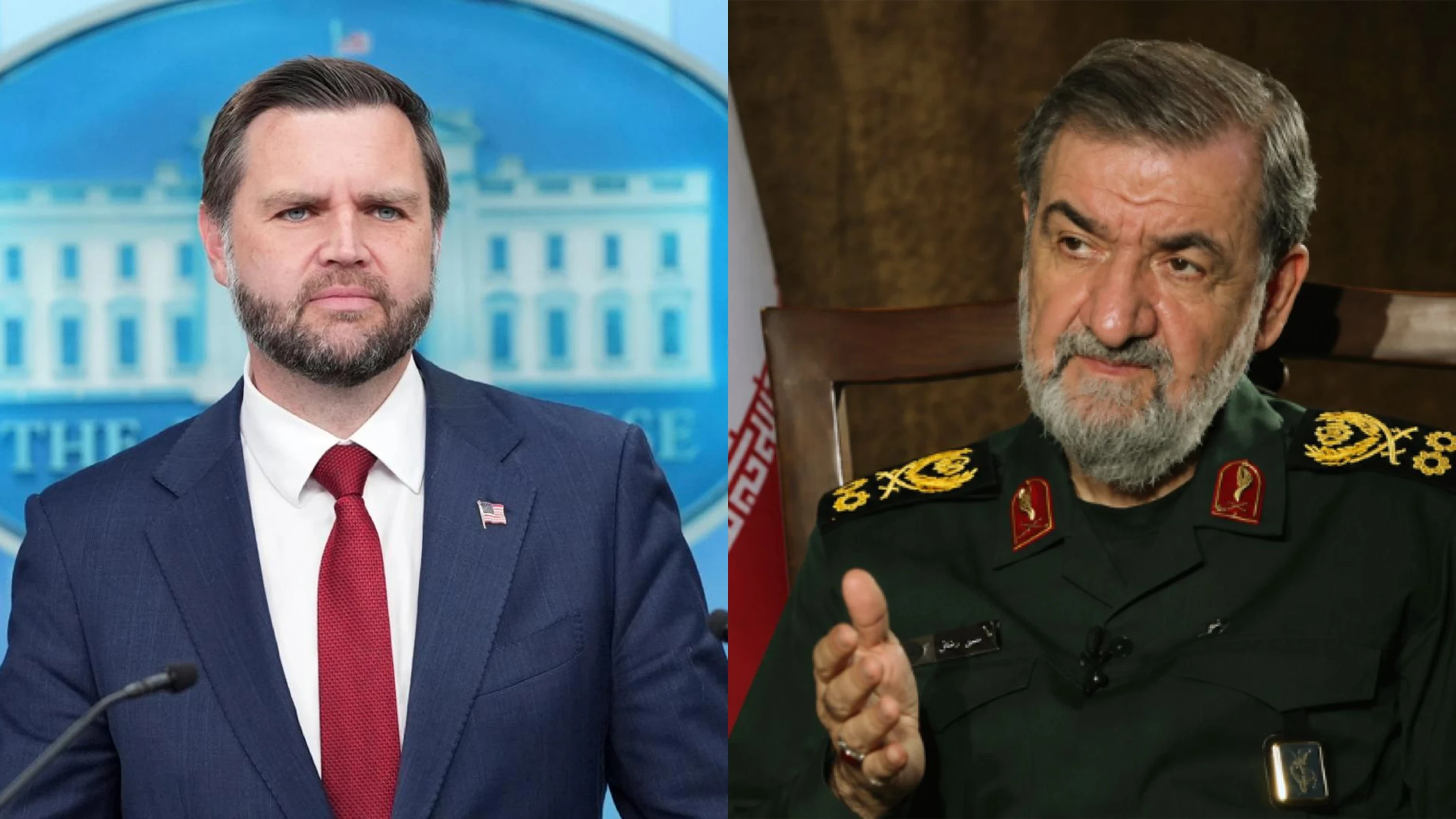
ERBIL, Kurdistan Region of Iraq - Secretary of Iran’s Supreme National Security Council Mohsen Rezai on Saturday said that the "tone" of a letter he received from US Vice President JD Vance "has completely changed" compared to earlier diplomatic overtures, adding that he has yet to respond and will not reveal the contents of the letter.
On Thursday, US media outlets reported that Vance had written directly to Rezai with the aim of restarting peace talks between the two sides, with Axios reporting that the vice president had told Rezaei any negotiations to avert US military strikes "require discussions on the nuclear issue."
However, Iranian state TV later reported that "media speculations about the content of the message are not accurate," contradicting Axios' claims regarding the missive's content.
In an interview carried by Iranian state media on Saturday, Rezai said, "I have read the letter from Vance, Trump's deputy, and I have not yet responded to it."
"Their tone has completely changed, which is a good sign indicating that the Iranian nation has solidified its victory and power," he continued. "Since they have not mentioned anything [details] from the letter, I will not say anything for now."
His comments come as Iranian Supreme Leader Mojtaba Khamenei has warned that Iran's military that any missteps by the US or Israel will be met with a response that is "geographically unrestricted," with Armed Forces Chief of Staff Ali Abdollahi affirming that his forces are "constantly updating our target database" in preparation.
Rezai also spoke of Tehran's nuclear doctrine, which has long been held in check by a historic fatwa issued by late Supreme Leader Ayatollah Ali Khamenei against the country's proliferation of nuclear weapons first publicized in 2003.
"No new decision has been made regarding a change in our nuclear doctrine," the security chief asserted. "However, the discussion is ongoing about whether, if a war were to break out again, we would want to maintain our previous doctrine or not."
Trump has repeatedly claimed that February's US-Israeli war on Iran was instrumental in hampering Iranian ambitions to produce a nuclear weapon, despite Tehran's insistance that its proliferation efforts were for entirely civilian purposes.
The direct engagement between Vance and Rezai marks one of several diplomatic channels currently being used to secure a peace agreement between the warring sides. Discussions with Qatari and Pakistani mediators remain ongoing, with Iran and the US trading and revising a seven-point proposal through the intermediaries.
In an exlcusive interview with Al-Jazeera aired Saturday, Iranian Foreign Minister Abbas Araghchi said that "Iran's conditions are clear, and negotiations between mediators regarding these conditions are ongoing."
"Lifting the sanctions imposed after the Islamabad memorandum of understanding, reducing the number of American forces in the region, reinstating oil exemptions, and releasing all of Iran's frozen assets, including those held in Qatar, are among these conditions."
 Facebook
 LinkedIn
 Telegram
 X