
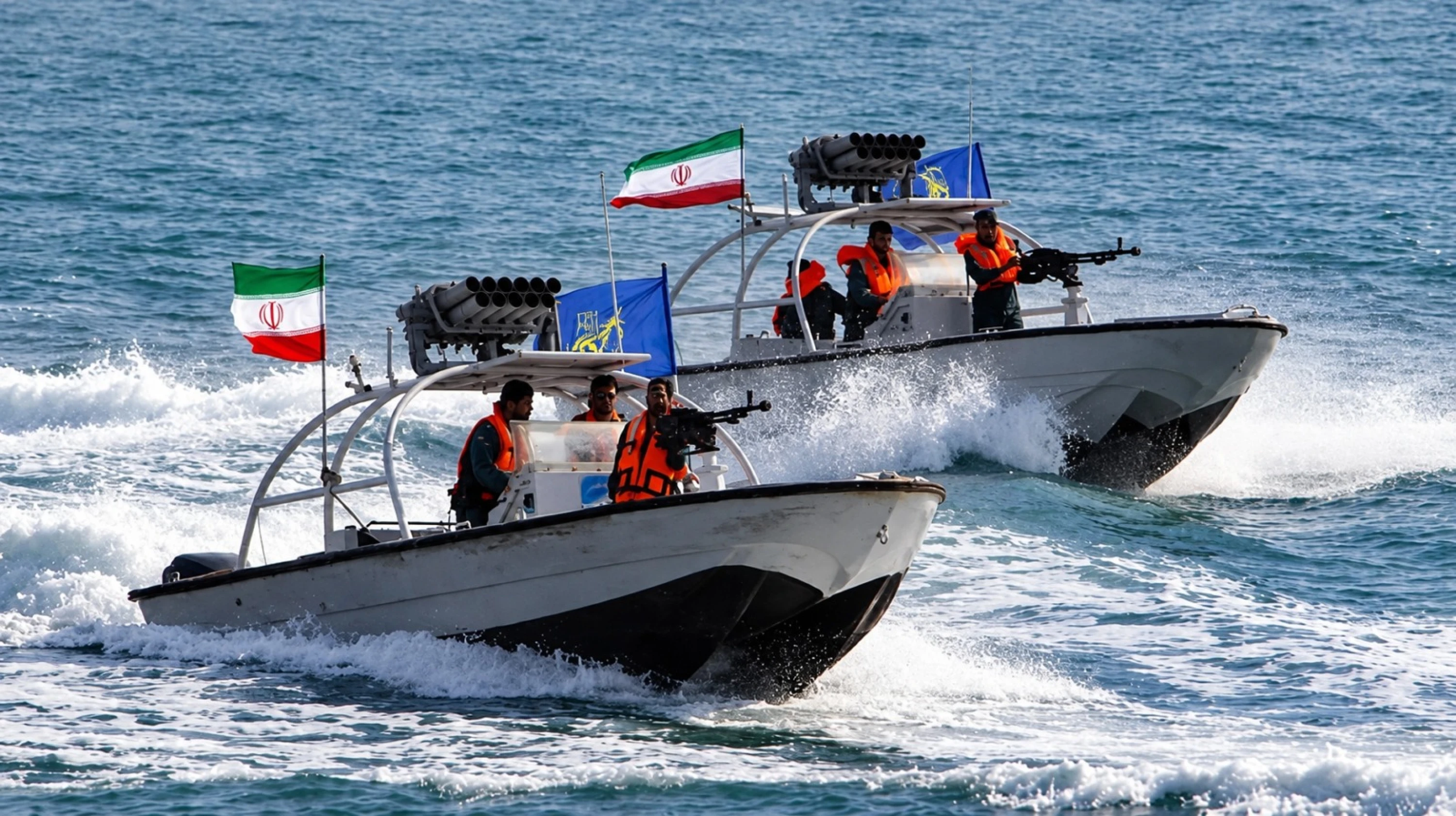
ERBIL, Kurdistan Region of Iraq – Iran’s Islamic Revolutionary Guard Corps (IRGC) said Wednesday that six vessels had been struck in the Strait of Hormuz, describing the incidents as “heavy blows to the enemy,” while also claiming to have intercepted an MQ-9 drone over the waterway.
“Four violating oil tankers, which attempted to traverse a prohibited passage south of the Strait of Hormuz, were destroyed after striking naval mines and remain engulfed in flames,” the IRGC said in a statement on Wednesday, adding that “two other violating vessels have been intercepted and halted,” without specifying the nature of the attack.
It also claimed that the IRGC forces intercepted an MQ-9 drone around 4:30 am in the Strait of Hormuz, marking the 56th attack of this kind.
The IRGC “has dealt heavy blows to the enemy,” it added.
Iran has frequently attacked ships in the Strait of Hormuz, while also claiming other tankers have struck sea mines laid failing to heed Iranian-approved navigation routes.
However, the veracity of Tehran's claims to have riddled the Strait with mines is unknown, with US Central Command (CENTCOM) chief Brad Cooper on Friday reiterating a long-standing claim that all underwater explosives have been removed by the US military.
The latest episode comes as Tehran and Washington continue to trade draft peace proposals with one another, with both sides revising potential frameworks for an agreement that are then passed on via mediators.
On Tuesday, Iran’s security chief Mohsen Rezaei said that the latest US response to Iranian demands “was not convincing,” asserting that Tehran must be provided with “a full and explicit response,” with Washington acting on its commitments, to guarantee the Strait of Hormuz's reopening.
Tehran claims that the Strait of Hormuz could reopen within days if the US meets Iran’s conditions, warning that the situation would otherwise persist.
On Tuesday, Iran's Islamic Revolutionary Guard Corps (IRGC) said that Supreme Leader Ayatollah Mojtaba Khamenei directed the armed forces in the latest meeting to bring “maximum deterrence,” a priority on their agenda, noting the forces' commitment to implement the mandates.
Meanwhile, Iranian President Masoud Pezeshkian said on Monday that Khamenei has granted the government “certain powers” in the negotiations with the US, adding that Tehran is trying to resolve the challenges “through dialogue.”
Despite previous reports to the contrary, when asked by reporters on Monday whether he was considering striking Iran again after the midterm elections, US President Donald Trump responded: “No”.
 Facebook
 LinkedIn
 Telegram
 X