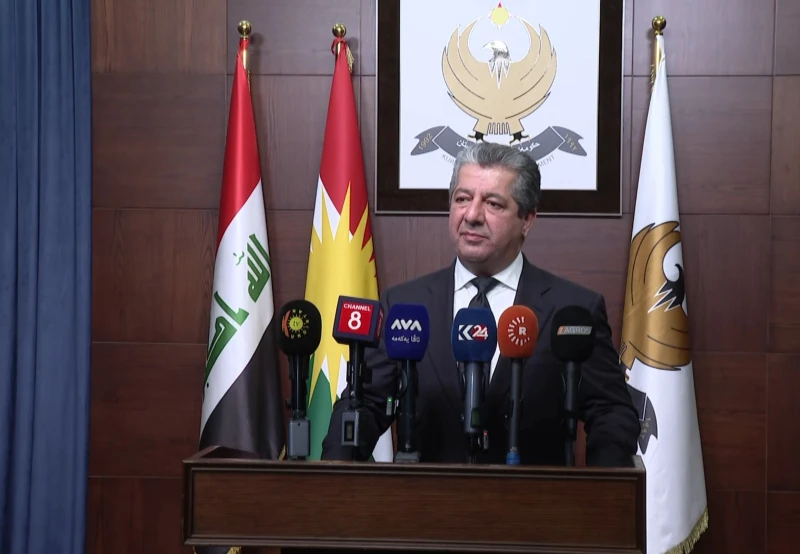

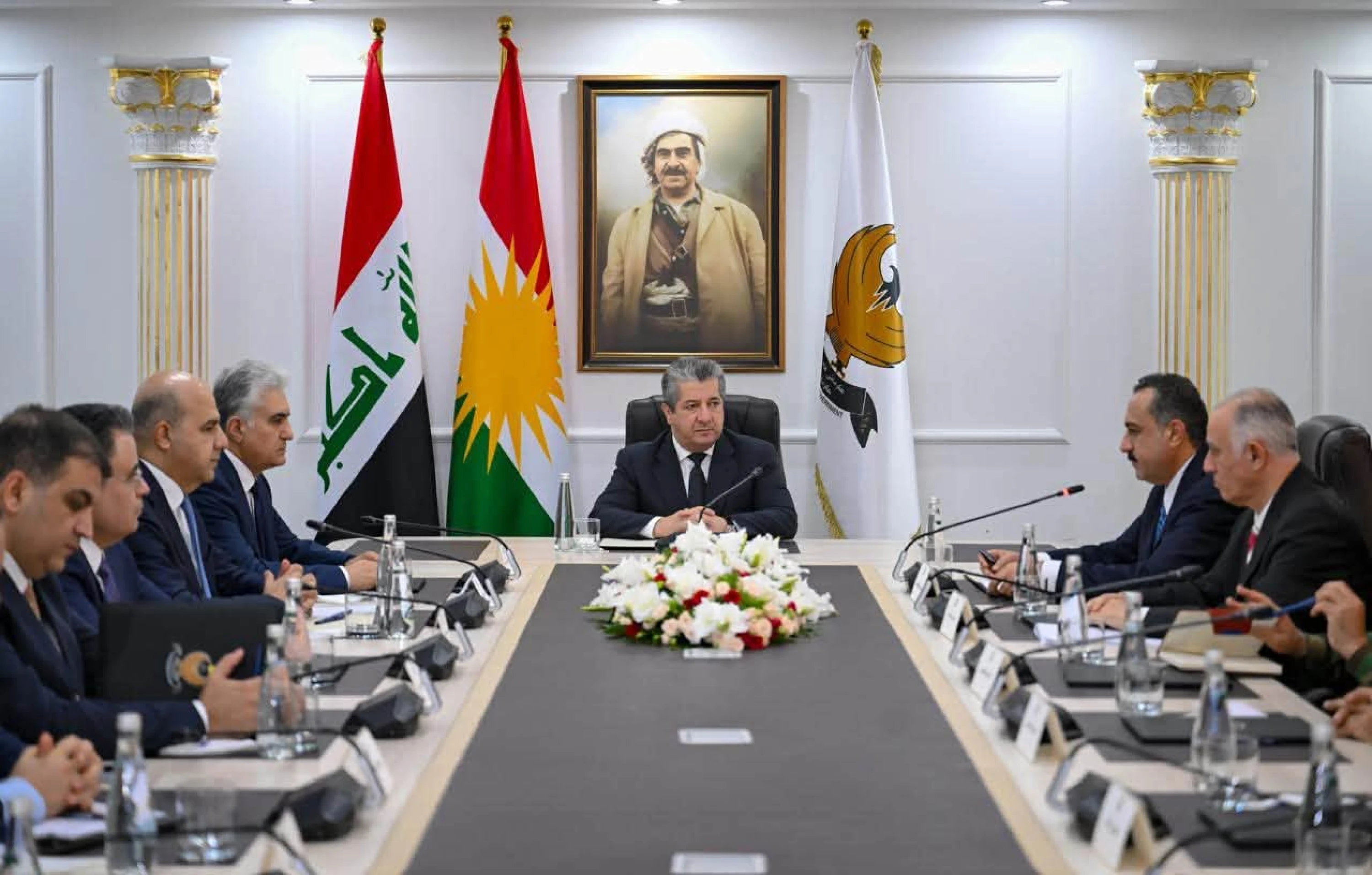
ERBIL, Kurdistan Region of Iraq – Kurdistan Region Prime Minister Masrour Barzani said Tuesday that authorities are working to identify the causes of Saturday’s deadly flash floods in Erbil, including factors that worsened their impact, to help prevent similar incidents in the future.
Parts of Erbil were hit by flash floods on Saturday night, killing a five-year-old boy and a 25-year-old wheel loader operator who had been helping people trapped in the floodwaters.
“I asked for an investigation early on to know the main causes,” Barzani said during a meeting at the Erbil governorate office.
“If there was negligence on someone's side, then there will be procedures, and if the causes were outside of our control, then we must pinpoint how to prepare ourselves to prevent these types of events,” he added.
Barzani said littering had exacerbated the flooding, as drainage channels were clogged with garbage.
He urged residents to avoid littering, follow official guidelines during “unfortunate events” and refrain from gathering in dangerous areas so that emergency personnel can carry out their duties.
“Much of this is the result of natural disasters that strike a particular area at a particular time, and which no one can prevent,” he said. “The question is: how do we protect ourselves? Much of this depends on people following instructions.”
The floods also caused extensive property damage, submerging cars and homes.
During the meeting, Erbil Governor Omed Khoshnaw told Barzani that a preliminary assessment put the damage at around $6.6 million. He said the figure could rise, with the assessment expected to be finalized within two days.
The Kurdistan Region experienced major flooding last winter, with heavy rainfall in December causing several flash floods of varying severity in Sulaimani, Erbil and Duhok.
At the time, the KRG formed compensation committees in affected areas to assess damages and support victims.
Erbil is vulnerable to flooding because heavy rainfall over short periods can overwhelm its drainage system. The city's flat terrain and surrounding hills also cause runoff from nearby areas to flow into urban neighborhoods.
 Facebook
 LinkedIn
 Telegram
 X