
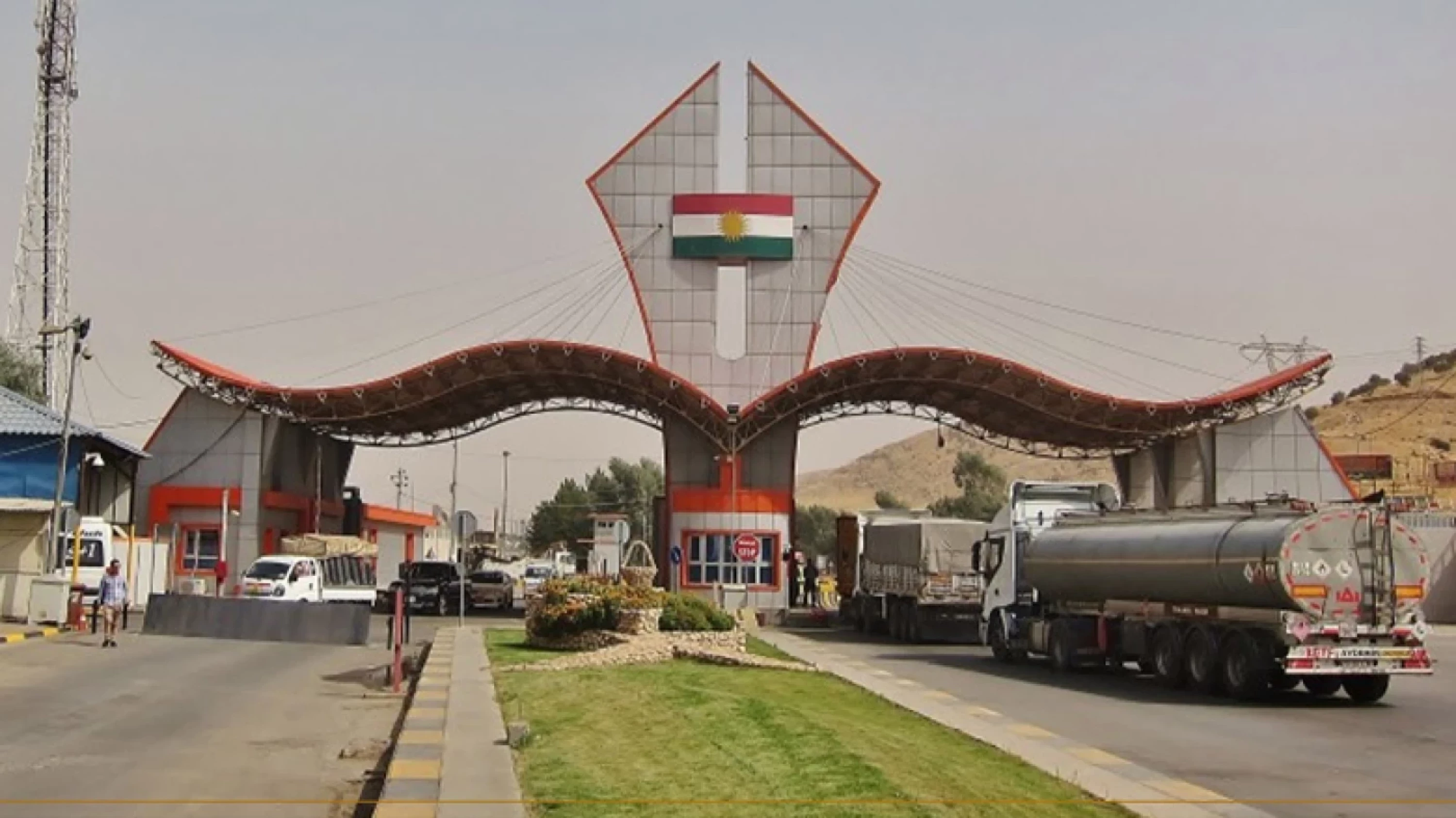
BAGHDAD, Iraq – The “only remaining obstacle” to implementing the ASYCUDA customs system in the Kurdistan Region is resolving the Region’s share of the federal budget, the head of Iraq’s customs authority told The New Region, noting that no technical problems remain regarding its implementation.
ASYCUDA, a digitalized border control system developed by the UN Conference on Trade and Development (UNCTAD), has yet to be implemented in the Kurdistan Region despite the Kurdistan Regional Government (KRG) announcing a “final agreement” on its implementation in August.
Customs disputes have been a longstanding issue between Erbil and Baghdad, with the Iraqi government having sought to unify crossings and customs centers across the country.
“Implementing the system is now tied to the budget issue. Settling the [Kurdistan] Region’s share of the federal budget is the only remaining obstacle,” Thamer Qasim, director general of Iraq’s General Authority of Customs, told The New Region in an interview.
The customs chief explained that under ASYCUDA, 50 percent of the Kurdistan Region’s customs revenues will return to the federal treasury in Baghdad while the other 50 percent will be sent to the KRG.
“I believe that once the budget is passed, if an agreement is reached on the 50 percent figure, the implementation of the system will be extremely urgent, and after that no technical, legal, or political problems will remain,” Qasim said.
A major point of contention between the KRG and the Iraqi federal government has been the Kurdistan Region’s share of the federal budget. The initial draft allocates 12.68 percent to the Region, but Erbil has insisted that its share reflects its actual population, which is 14.14 percent of Iraq.
Erbil and Baghdad have held several meetings on the budget. A high-level KRG delegation arrived in Baghdad on Sunday to discuss the disputed 2027 budget draft with federal authorities.
Last week, Iraqi Prime Minister Ali al-Zaidi discussed the budget with Kurdistan Democratic Party (KDP) lawmakers in Baghdad.
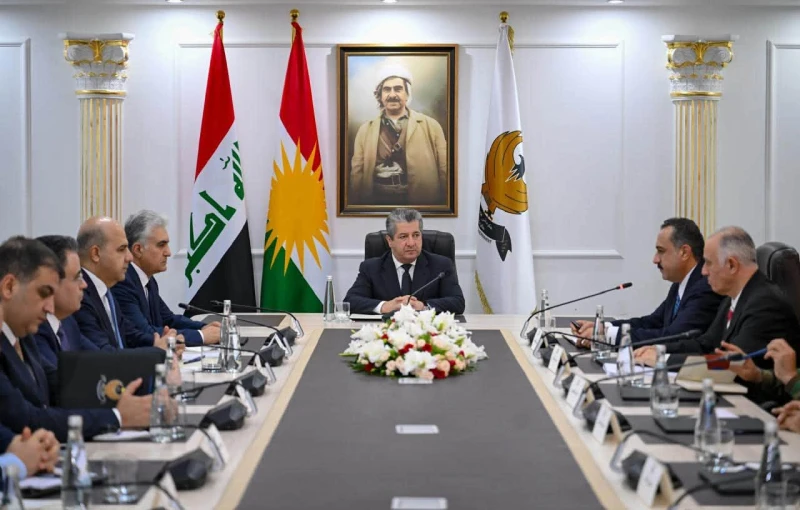
Kurdistan Region Prime Minister Masrour Barzani visited Baghdad on Monday to discuss “the Kurdistan Region’s constitutional rights, financial entitlements and share in the 2027 federal budget” with Zaidi, according to the KRG.
Qasim stressed that with the lack of a new federal budget, the finance ministry is constrained and cannot send the provinces’ share of revenues “because there is no legal framework.”
“The main obstacle is the delay of the budget law. I believe nothing now stands in the way of passing the draft law,” he said.
Customs revenues have also grown substantially, according to Qasim, who said that “Before ASYCUDA, particularly in 2023 and earlier, revenues did not exceed 800 billion dinars [per year].”
“In 2026 so far, we have reached 3.7 trillion dinars [~$2.44 billion], and it is still rising,” he stated.
The KRG and Kurdish traders have also accused the Iraqi government of placing a dollar embargo on Kurdish businessmen, withholding US dollar access from Kurdish traders at the official exchange rate.
However, Qasim claimed that any measures taken by Baghdad are done so “to combat routes used for smuggling,” saying smuggled goods are detrimental to the country’s market.
“Today in the Kurdistan Region, we have dozens of factories and poultry farms whose products are for the domestic market. We must protect those products through a digital customs system in order to prevent smuggling. Traders constantly look for the lowest cost, and smuggling cuts their costs while harming the national economy and local products,” he said.
 Facebook
 LinkedIn
 Telegram
 X