
ERBIL, Kurdistan Region of Iraq – US President Donald Trump held an unprecedented meeting with the leaders of China and Russia on Thursday in which he stressed the importance of joint cooperation to combat the threat of nuclear proliferation “in other countries,” asserting, “That’s what we’re doing in Iran.”
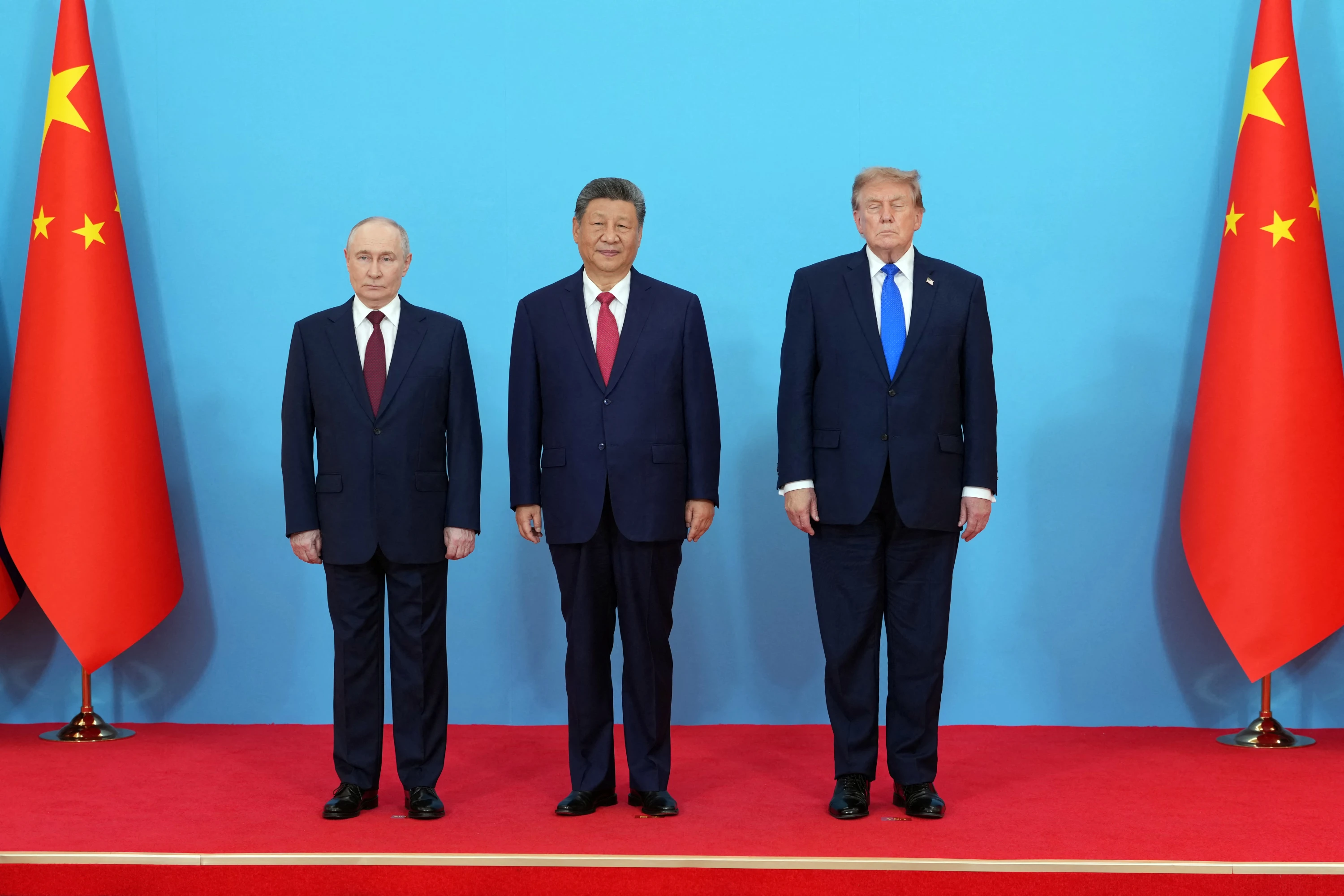
Leaders of the world’s three superpowers, Trump, Chinese President Xi Jinping, and Russian President Vladimir Putin, held their first-ever official trilateral meeting on the sidelines of the Asia-Pacific Economic Cooperation (APEC) summit in China’s Shenzhen.
In his opening remarks, Trump said that it is “vital” for the countries to cooperate “to combat the threat of nuclear proliferation in other countries around the world, that is what we are doing in Iran, we’re not gonna let Iran have a nuclear weapon.”
The president’s remarks come amid ongoing military and political tensions between Washington and Tehran, following the collapse of a June memorandum of understanding aimed at ending the regional war triggered by US-Israeli strikes on Iran in February.
US authorities have repeatedly said the war was launched to prevent Iran from acquiring a nuclear weapon, claiming its uranium enrichment program had brought it “two weeks away” from developing one, while the Iranian side has continuously denied the reports, insisting that their nuclear program is for peaceful, civilian purposes.
The presidents of the US, Russia, and China - Donald Trump, Vladimir Putin, and Xi Jinping, respectively - held a high-profile trilateral meeting in Shenzhen on Thursday, with Trump saying that "too often, past leaders avoided talking to nations with whom they had disagreements, and we feel the opposite."
— The New Region (@thenewregion) November 19, 2026
Meanwhile, Putin said that the three countries share a "joint responsibility" for "maintaining international peace and security.”
Prior to the historic meeting, Trump held a bilateral meeting with Xi, where the pair stressed the need for the resumption of oil transportation through the Strait of Hormuz.
“Both the United States and China have an interest in ensuring that energy flows through the Strait of Hormuz and that Iran cannot have a nuclear weapon,” Trump said prior to the bilateral talks.
Tehran moved to restrict passage through the Strait following the outbreak of the US-Israeli military campaign against Iran in February. US forces later imposed a counter-blockade.
The vital waterway, which accounts for a large share of the world's oil shipments, has become an increasingly unstable arena of military activity, with oil tankers and commercial vessels being struck and catching fire daily, dealing a major blow to the global economy and energy supplies.
Tehran claims that many of the blasts are a result of naval mines it has placed along unauthorized routes through the Strait, despite US claims to have cleared the waterway of ordnance.
Trump also held a 40-minute bilateral meeting with Putin ahead of the trilateral talks, marking their first meeting since their 2025 summit in Alaska. Russian presidential aide Yuri Ushakov said the Russia-Ukraine war was a key topic of discussion, according to Russian state media.
 Facebook
 LinkedIn
 Telegram
 X