
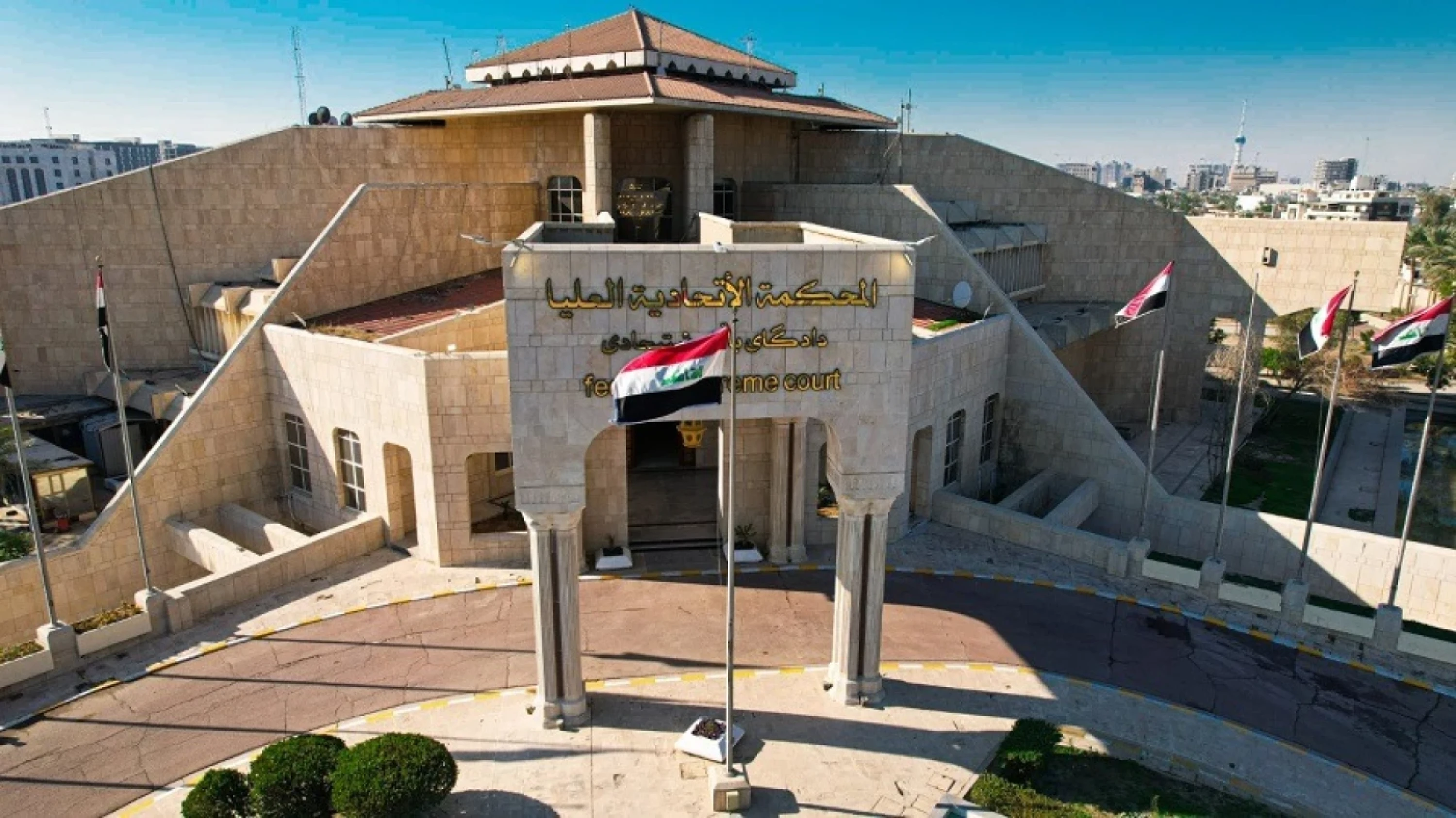
ERBIL, Kurdistan Region of Iraq – The Iraqi Federal Supreme Court on Wednesday stated that Baghdad has the authority to deploy federal forces to and exercise control over international borders and maintains constitutional powers to supervise oil fields, including those in the Kurdistan Region.
Tensions have escalated between the Iraqi federal government and the Kurdistan Regional Government (KRG) following a recent directive by Iraqi Prime Minister Ali al-Zaidi for federal security forces to enter the Region and take control of its border crossings and oil fields in disputed areas.
Kurdish authorities have vehemently condemned Zaidi’s move, deeming it a violation of the Kurdistan Region’s constitutional rights.
The Iraqi Federal Supreme Court provided its interpretation of certain articles of the 2005 Iraqi constitution, saying the analysis was conducted per Zaidi’s request, ruling that “distribution of powers between federal and regional authorities does not infringe upon the unity and sovereignty of the state, nor does it lead to the fragmentation of constitutionally established exclusive powers.”
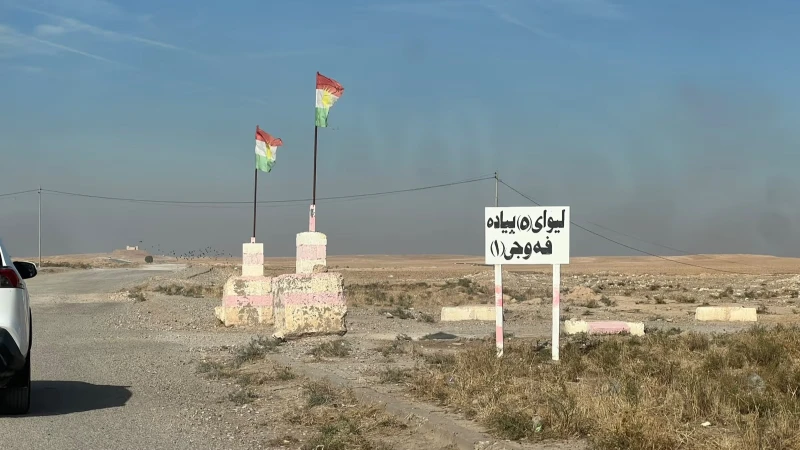
The Tuesday statement from Sabah al-Numan, Zaidi’s military spokesperson, asserted that the Iraqi premier has directed the Border Ports Commission to “assume control of all border crossings in the Kurdistan Region of Iraq.”
In its interpretation of Article 109 of the constitution, the top court stated that “protecting, securing, and defending the international borders of the Republic of Iraq are among the exclusive jurisdictions of the federal authorities,” adding that the federal government is “authorized to deploy and manage the federal armed forces” to secure all international borders in the country, including those located in the Kurdistan Region.
The court further asserted that “federal authorities have the right to exercise their powers of supervision, oversight, and control over the performance of departments operating at all border crossings,” citing Article 114 of the constitution and the provisions of the Border Crossings Authority Law.
Customs disputes and domestic revenues have long been a focal point of contention between Erbil and Baghdad. The Iraqi government has placed a dollar embargo on Kurdish businessmen since the start of the year, citing what it regards as Erbil’s non-compliance with the ASYCUDA customs system.
The KRG has repeatedly emphasized its willingness to implement the system, but has requested more time from Baghdad until all technical procedures are completed.
“Establishing a unified national system for automating border crossings and customs and linking them electronically to the relevant federal ministries and agencies throughout Iraq, including those located in the Kurdistan Region, and setting the necessary technical, financial, and customs standards and controls for its operation, falls within the jurisdiction of the federal authorities in formulating financial and customs policy and regulating trade policy across the borders of regions and provinces,” the top court added.
Additionally, the court noted that Baghdad is responsible for formulating fiscal and customs policy and overseeing public revenues, including non-oil revenues, throughout the country.
The Zaidi statement also directed the Prime Minister of the Kurdistan Region “not to grant approvals for the export of crude oil or petroleum products except through the federal Ministry of Oil, to prevent overlapping jurisdictions,” called for equipping all oil pipelines and wells with modern monitoring technologies and electronic meters, and ordered the establishment of checkpoints leading into the Kurdistan Region provinces, “to be staffed by personnel from the Ministry of Oil, the Energy Police, and the National Security Service.”
The court found that the management of extracted oil is undertaken by the federal government “in conjunction with the governments of the producing regions and provinces,” while specifying that “the federal Ministry of Oil and the relevant federal regulatory bodies exercise their constitutional and legal powers to supervise, monitor, and audit the fields, operations, and contracts related to the production, extraction, marketing, and export of oil and gas.”
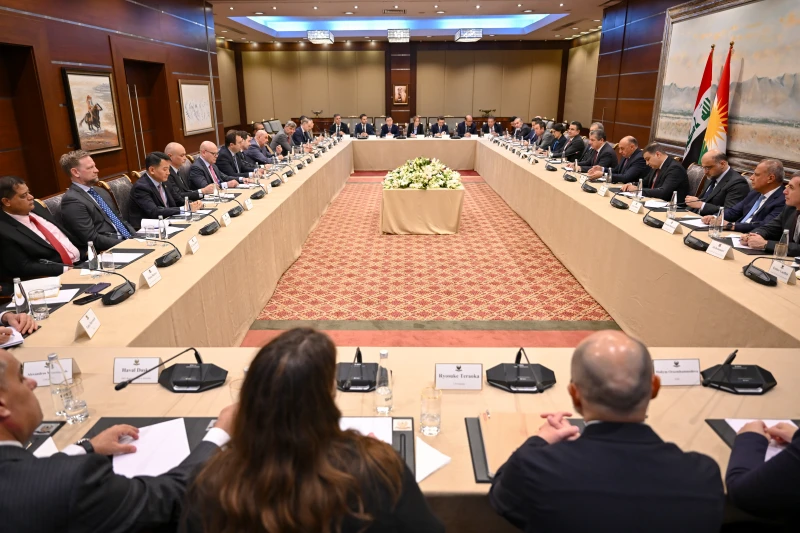
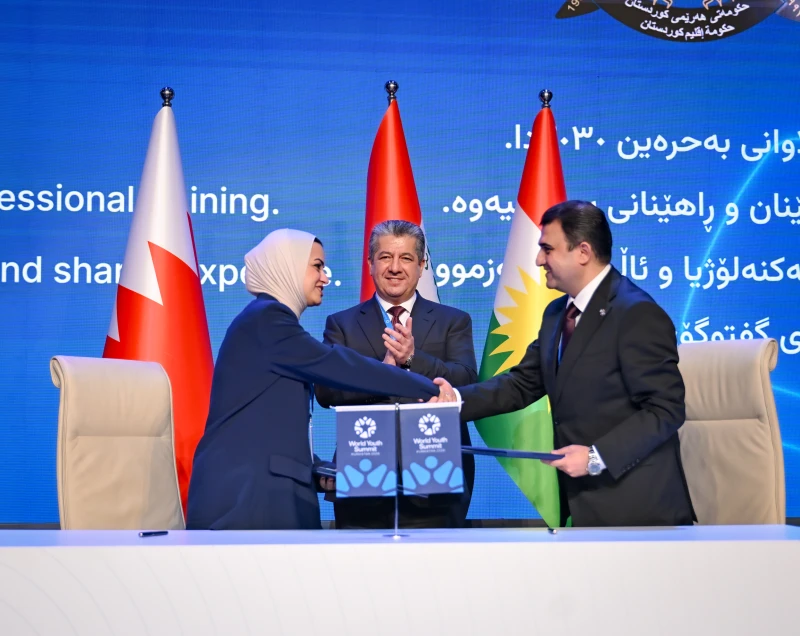
The Kurdistan Region’s Council of Ministers met on Wednesday, chaired by Prime Minister Masrour Barzani, and described the Iraqi government’s stated aim to expand control in the Region as “a dangerous sign,” calling for the full implementation of the 2005 constitution.
During the meeting, the KRG expressed its “deep concern and protest” against the statement issued by Zaidi’s military spokesperson, calling it “a violation of the constitution and constitutional rights of the Kurdistan Region.”
The KRG cabinet further rejected the use of military language and threats by Baghdad, saying it signals “a premeditated and long-standing plan against the constitutional structure of the Kurdistan Region.”
The Iraqi premier had also ordered the federal Ministry of Oil to manage all oil fields in the disputed provinces of Kirkuk, Nineveh, Salahaddin, and Diyala, and ordered the defense ministry to close all informal routes connecting those provinces to the ones in the Kurdistan Region.
The court said that the territorial scope of the KRG’s authority includes areas governed by the Kurdish government before the US invasion of Iraq in 2003, which are located in Duhok, Erbil, Sulaimani, Kirkuk, Diyala, and Nineveh, adding that its authority “may not extend to territories outside this scope.”
Additionally, the federal authorities hold constitutional, administrative, and executive powers over all territories of Iraq that were not part of the areas governed by the KRG before March 2003, the court added.
Also stipulated in the constitution is Article 140, which requires the reversal of the Arabization policies of former Iraqi dictator Saddam Hussein’s Baathist regime and mandates a process to outline a clear and definitive boundary in areas disputed between Baghdad and Erbil.
According to the constitution, no changes can be made to disputed territories until Article 140 is implemented. The article specifies that the process must be completed by no later than December 31, 2007, but successive Iraqi governments have failed to implement it for nearly two decades.
Kurdish authorities have for decades criticized Baghdad and accused the federal government of lacking the political will to implement the article.
 Facebook
 LinkedIn
 Telegram
 X