As post-election bargaining in Iraq picks up, a question preoccupying some is whether the presidency will go to a Kurd or a Sunni Arab this time. Despite the speculation, the presidency is highly unlikely to shift to a Sunni. Iraq’s post-2003 power architecture is dominated by Shiite forces who will not risk the political consequences of a Sunni president, and Kurdish parties—especially the Patriotic Union of Kurdistan (PUK)—are not about to voluntarily relinquish a post that anchors what is left of their influence in Baghdad.
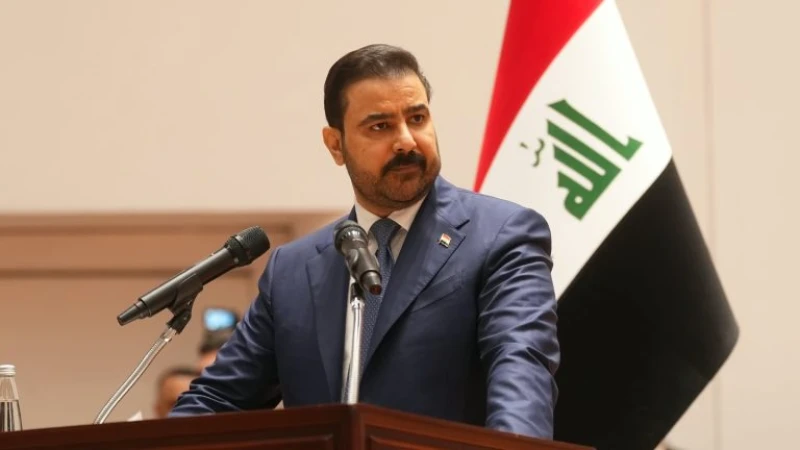
Although for under a year the first post-2003 president of Iraq was a Sunni Arab, Ghazi Ajeel al-Yawar, the position has been held by a Kurd since 2005. What has given fuel to speculation about a Sunni presidency are remarks by powerful Sunni politician Mohammed al-Halbousi, who on more than one occasion has stated that Sunnis should eye the position. A former parliamentary speaker until he was removed by Iraq’s Federal Supreme Court in late 2023, Halbousi is a young and highly ambitious politician and certainly sees the position as an entitlement of his community, particularly as there is no constitutional or legal provision preventing this.
Since the US-led invasion of Iraq in 2003, an informal convention has emerged whereby Iraq’s top three state positions—the president, prime minister, and parliament speaker—are divided between Kurds, Shiites, and Sunni Arabs respectively. This arrangement emanated from the consociational power-sharing model that emerged after the fall of the Baath regime as a way of creating a more diversified and balanced power distribution at the helm of the state. Given the Iraqi state’s domination by the Sunni Arab minority since its foundation in the 1920s and the dictatorship that emerged as a result, this communal power sharing at the top was seen as a bulwark against the concentration of power in the hands of a single individual or community. Although not legally codified, the consociational system in Iraq has generally been successful in ensuring the state does not fully slip into the hands of one person or community.
However, Iraq’s political system and power machinations are highly complex. Kurds would not voluntarily give up the presidency, and there is no sign of that happening. Among the Kurdish blocs, the position has traditionally gone to the PUK, the junior partner in the Kurdistan Regional Government (KRG). Hoshyar Zebari, a senior Kurdistan Democratic Party (KDP) figure—the dominant party of the KRG and the PUK’s part-rival, part-partner—recently told Kurdish media that the position will remain among the Kurds. The KDP has attempted since 2018 to obtain the presidency but has been unsuccessful.
Here lies a key point: the way Iraq’s political system has come to evolve entails that the Shiites are the main group that calls the shots in terms of the state’s top positions and power distribution. Even if Sunni groups united behind a single figure to take the presidency, the Shiites will most likely not accept that because of the actual political consequences of a Sunni president.
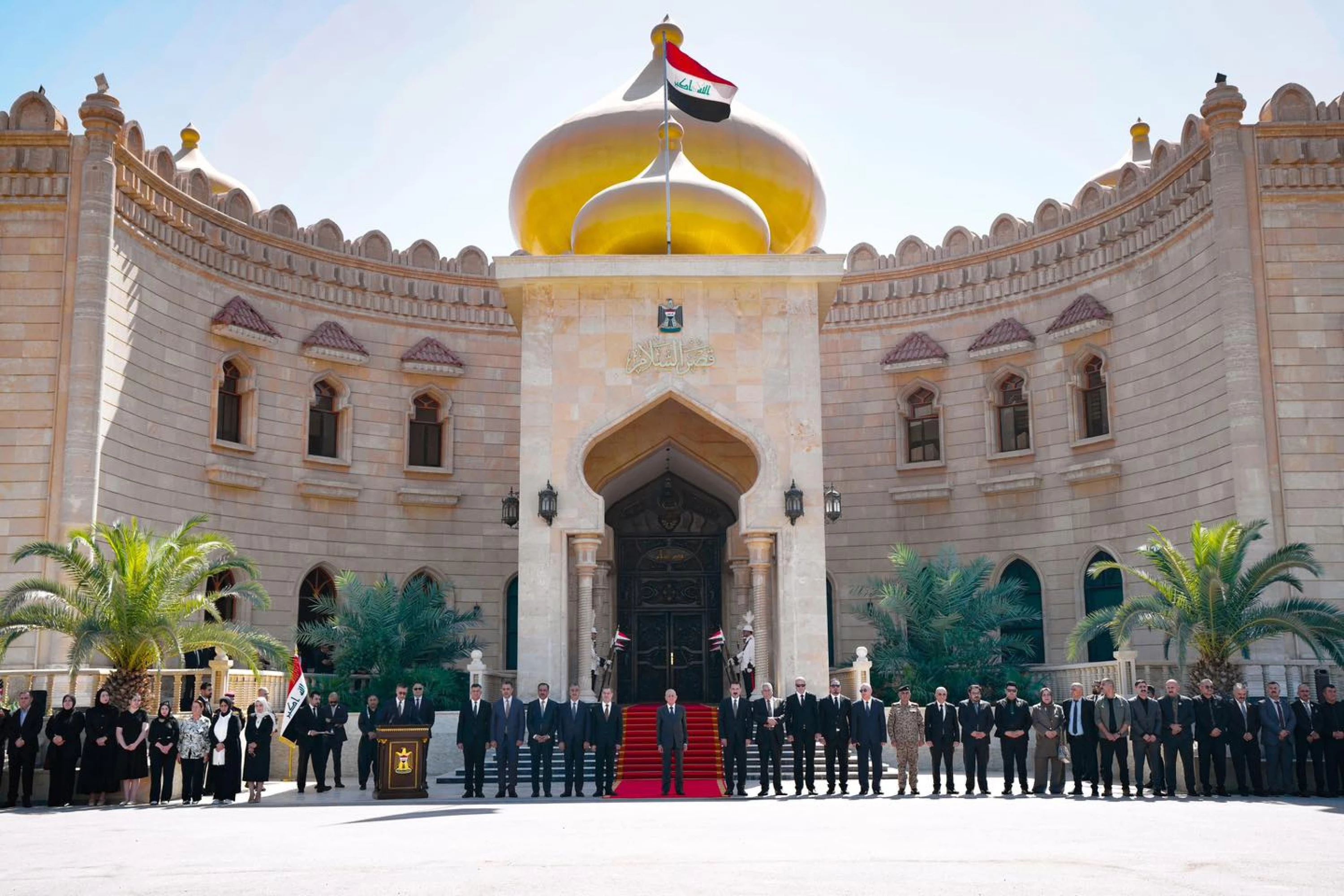
The presidency is typically referred to as a “ceremonial” position, but in reality, it is part of the executive branch and, per Iraq’s constitution, carries some important powers. These include nominating the candidate for premiership (Article 76), calling for extraordinary parliamentary sessions (Article 58), approving or rejecting legislation passed by parliament (Article 73), sending bills to parliament (Article 160), jointly declaring a state of emergency with the prime minister—or by direct implication preventing him from doing so (Article 60), guaranteeing commitment to the Constitution (Article 67), and issuing presidential decrees (Article 73).
An assertive Sunni president willing to exercise these powers to their full extent, when the opportunity arises, would pose a significant challenge to the position of prime minister and parliament. Given that Sunnis generally retain a sense of ownership over the Iraqi state (having run it for the first eighty years) and the support a Sunni president would receive from regional Sunni states—from Turkey to the Gulf and North Africa—a Sunni president would be further emboldened to show they are not a ceremonial figure. For Shiite parties that have invested two decades in consolidating their dominance, this is simply too risky.
The Shiite have so far benefited greatly from the PUK’s retention of the presidential office. Apart from the late Jalal Talabani—particularly during his first term from 2005 to 2009—all other PUK presidencies have, by and large, been unwilling to exercise the full scope of their powers or the prestige of their office. The logic of the presidency in Iraq’s consociational system is that, beyond its formal duties, it should serve as a pillar of intercommunal power sharing and balance and a protector of Kurdish interests in Baghdad. In practice, however, the office has not been used to carve out a stronger Kurdish role in national politics. On the contrary, as many Kurds see it, such a valuable position has been rendered ineffective by figures lacking a genuine popular base and an assertive approach. The PUK appears to be leveraging the presidency primarily as a key node in its patronage network, appointing several brigades of presidential guards along with an army of advisors and palace staff. Meanwhile, persistent PUK–KDP tensions have only further diminished the presidency’s influence.
To circumvent whatever leverage the presidency and the parliament speakership—held by Kurds and Sunni Arabs respectively—once offered, the Shiite political class in recent years has elevated the office of the Chief of Judiciary, under Judge Faiq Zidan, to such a senior and activist role that it now overshadows the presidency and parliament speakership. The judiciary has sacked the parliament speaker and overridden decisions by President Latif Rashid in the case involving Chaldean Patriarch of Iraq and World Cardinal Louis Sako (the decision against Sako was controversial and unfair, to begin with). The judiciary has become a game-setting and game-changing institution, as demonstrated by its interventions in the post-election periods of 2010 and 2021 and its rulings concerning the Kurdistan Region in 2022 and 2023.
With the prime minister’s office and the judiciary under their control, the Shiite establishment—backed by Iran—has effectively centralized state power in its hands, calling the shots, deciding what gets implemented, and determining who is in and who is out. This has become the new reality of Iraq, especially since 2017. At some point, it could prompt the Kurds and Sunni Arabs to mount an effective challenge to this arrangement. However, that would require determined and decisive figures to occupy the offices of the presidency and the parliament speakership.
 Facebook
 LinkedIn
 Telegram
 X
X