ERBIL, Kurdistan Region of Iraq - The Kurdistan Region Security Council (KRSC) announced on Thursday that a Patriotic Union of Kurdistan (PUK) member confessed to organizing recent violent unrest in Lajan, claiming he did so to serve the interests of the Iran-backed Kataib Sayyid al-Shuhada (KSS) and the Popular Mobilization Forces (PMF), following orders from a Harki leader.
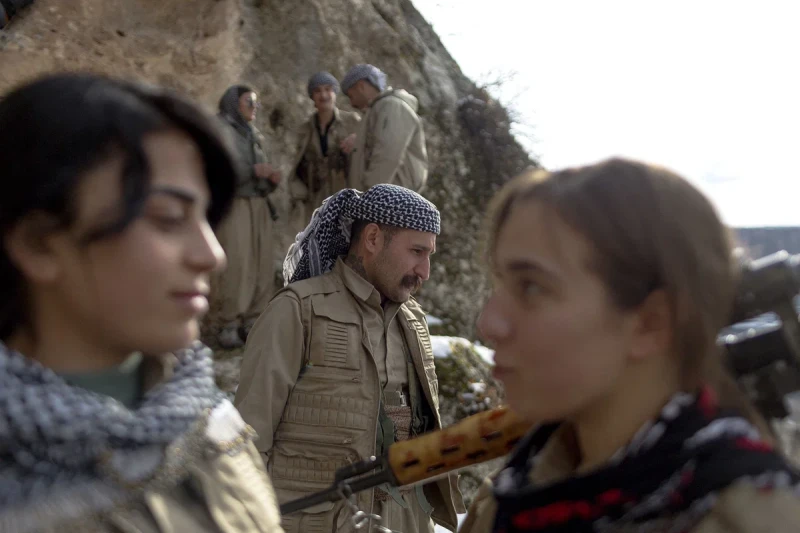
A young man and a Zeravani Peshmerga were killed, and several others, including security forces, were injured, when a number of residents of Lajan village in Khabat district took to the streets in recent days and blocked the road.
The village is inhabited by members of the prominent Harki tribe.
Following the confrontation, numerous residents had evacuated their homes after an announcement was made from the village mosque calling on people to leave to avoid violence.
Residents reported that a large quantity of weapons had been brought into the village.
Following the unrest, the KRSC said it “immediately began investigating” and later “concluded that internal and external factions were involved in the unrest,” according to a video posted by the security body on Thursday.
The council said the violence was part of a series of disruptive plots “planned and prepared in the past.”
“The plots included targeting the Khor Mor gas field to halt production of electricity, attacking oil refineries and power plants, carrying out explosions in Erbil and Duhok provinces, [and] using a political party, opposition groups, and external media outlets to urge people against the government and cause unrest,” the KRSC statement said.
The announcement comes weeks after a strike targeted the Khor Mor gas field in Sulaimani province, shutting down production at the key field and slashing the Kurdistan Region’s electricity output for days.
The KRSC added that those involved in the Lajan unrest opened fire at the security forces, hoping that it would “provoke a response from security forces,” to later use it as “propaganda against the authorities.”
Several people involved in the unrest have been arrested, the KRSC said, adding that all those involved “will be sentenced in accordance with the current law.”
Khurshid Harki, an influential leader from the Harki tribe, speaking to The New Region on Monday, blamed “four to five” individuals for inciting the chaos, stressing that residents currently on the streets are returning home.
The confession details
Following is the confession of one suspect, 34-year-old Nechirwan Issa, which was recorded by the KRSC and published on Thursday. Issa, who joined the PUK district branch in 2021, spoke to the KRSC about allegedly supervising the unrest.
Issa, speaking to the camera, said he recently became the “PUK’s 14th district branch of Khabat district.”
He said an individual named Walid Piru Khajeh contacted him and invited him to Sulaimani because “Jawhar Harki would like to meet you.”
During his confession, Issa said he was receiving orders from Harki, who claimed to act through Kataib Sayyid al-Shuhada and in the interests of the Popular Mobilization Forces, from which he received support.
Issa said that following the meeting with Harki, “ Harki said coordinated with Kataib Sayyid al-Shuhada aligned with the PMF,” and that Harki asserted “you have to supervise these matters in the Erbil area,” which Issa “accepted.”
On September 17, the US State Department designated KSS and other Iran-backed Iraqi armed groups as Foreign Terrorist Organizations.
Issa said he was sent to “Kirkuk Tikrit road” to meet an individual named “Abu Firas, who is one of Kataib Sayid al-Shuhada leaders…for cooperation,” which the investigation identified the ”Wa'd Gha'ib Khalaf Zubair.”
Issa claimed that Firas told him that “I need 135 people to be trained by KSS’s intelligence for surveillance and shooting,” and later, “they were all trained.”
A few days prior to the Lajan unrest, Issa was contacted to meet in Sulaimani.
During that meeting, Issa said Harki told him they “should pay back the favor to KSS,” adding that “KSS and some other internal and external parties have a plan to organize demonstrations in Erbil,” which “I accepted.”
Issa cited Harki as saying, “If you come across anything such as government [buildings], refineries, power plants, or anything else, you have to burn them, carry out explosions, and get people killed.”
Harki, cited by Issa, stressed the priority of the operation, said, “No matter what happens, most important thing is to gain KSS satisfaction,” and adding, “We are getting funds from KSS; we don't want that to be cut off.”
When the Lajan incident started, Issa said he got orders to “provoke people through social media at first” and later was told to join the demonstration that would lead “more people to join in.”
Issa claimed that after joining, he was interviewed by several media outlets where he urged “people to join,” and later, as the crowd grew, “our people opened fire at KDP [Kurdistan Democratic Party] forces,” and later “set fire” to several locations.
The detainee said Harki told him to “leave the demonstration,” as the Asayish (Kurdish internal security forces) had been informed about his position.
Issa was later arrested by Asayish at the Qushtappa gate after several attempts to leave Erbil.
 Facebook
 LinkedIn
 Telegram
 X
X