ERBIL, Kurdistan Region of Iraq - Since the announcement of the formation of the National Political Council, an umbrella group of Sunni parties, discussions have focused on the council’s mission, its ability to overcome major divisions within the Sunni political camp, and its capacity to nominate candidates for key positions without disputes.
Informed sources said there is a tendency among the Sunni forces to resolve positions quickly. However, the Taqadum Party and its leader, Mohammed al-Halbousi, want to exit the process with the highest possible political gains.
The sources told The New Region that several names are being circulated for the post of Speaker of Parliament, but Halbousi does not want either the head of Azm Alliance Muthanna al-Samarrai or Sovereignty Alliance figure Salem al-Issawi to take the post.
Other options may be considered, including Mahmoud al-Qaisi, the winning candidate from the Azm Alliance, on the condition that Taqadum secures the vice presidency and the sovereign ministries allocated to the Sunnis.
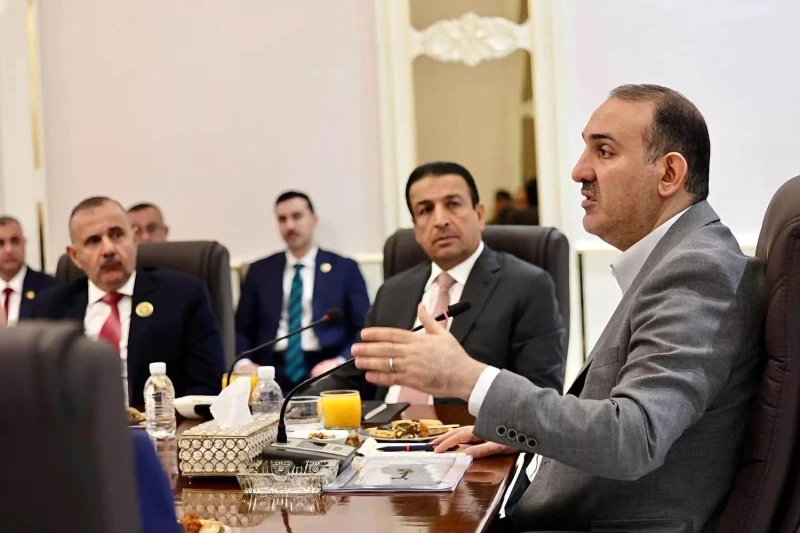
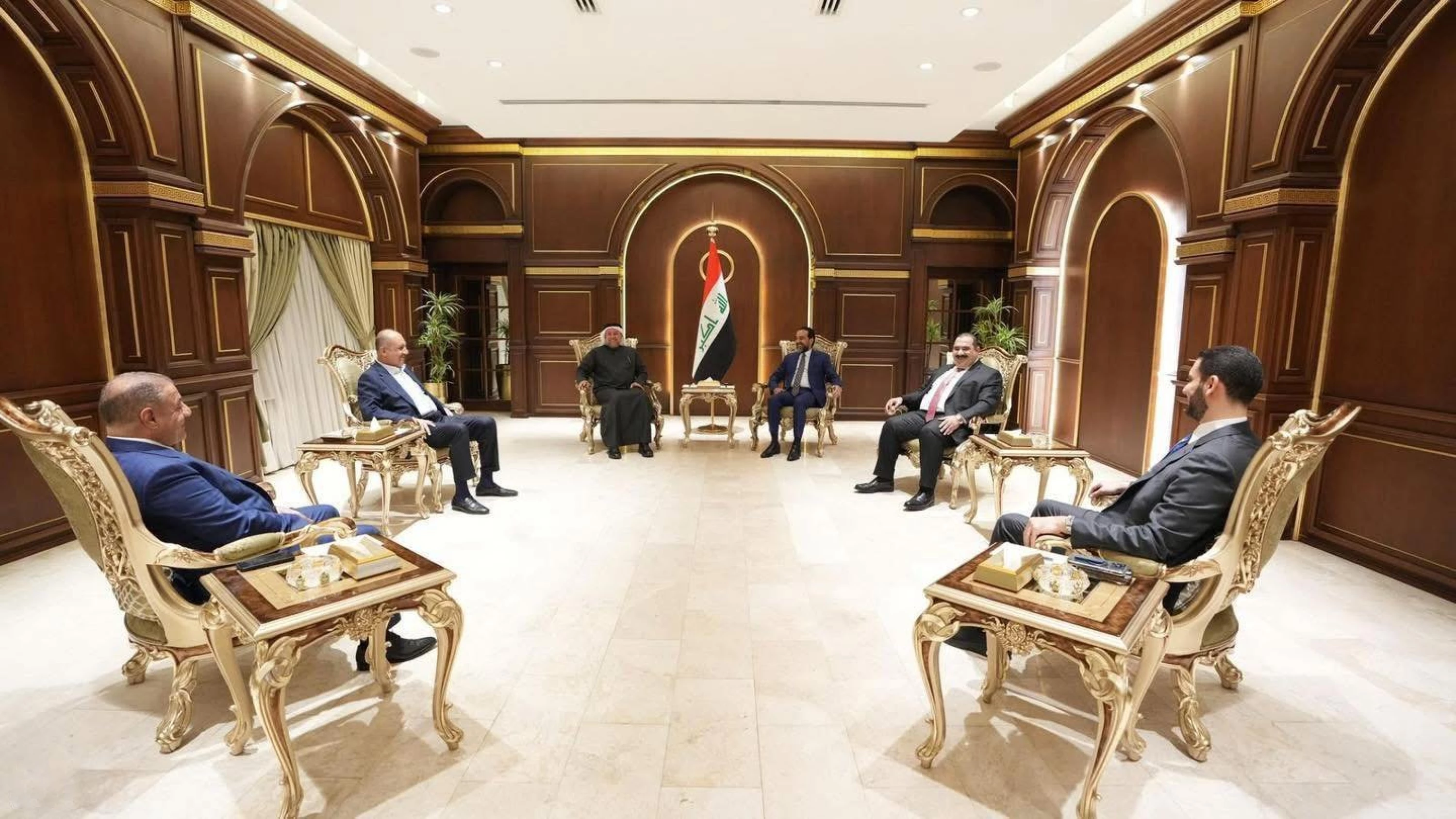
The council recently held its second meeting at Halbousi’s home, where its leaders agreed to prepare a vision paper on how to manage the Iraqi state in the coming phase. They said the paper would lay down clear foundations for governmental and political work.
A statement issued by the council said the meeting, attended by leaders of the parties and alliances forming the council, discussed several important political files.
According to the statement, the participants stressed the importance of speeding up the ratification of the parliamentary election results and commencing the work of the new legislature. They also agreed to prepare the council’s vision paper related to the approach to managing the country in the next stage.
The statement added that the council agreed to continue dialogue with political blocs at the national level to settle constitutional entitlements, form the government, and adopt a realistic joint program that meets citizens’ aspirations.
According to the final election results, the Sunni forces won 77 seats, making the reshaping of alliances a decisive factor in negotiations to form the next government.
Nominated names
Salah al-Kubaisi, a leading figure in the Sovereignty Alliance, said that what is being circulated in the media and on social platforms about dividing positions within the Sunni component is “not real.”
In remarks to The New Region, he said what has happened so far is the formation of a committee to prepare a negotiation paper for the demands of the Sunni component, especially the return of the displaced, the final resolution of the missing persons file, implementation of the General Amnesty Law procedures, and fair representation in state institutions.
He added that the members of the council’s negotiating committee with the Kurdish and Shiite components have not yet been named, and that the decision remains in the hands of the leaders of the blocs forming the Sunni council.
Kubaisi said that the Taqadum Party nominated Halbousi for the speakership but also named a reserve candidate in case Halbousi is not accepted or if his victory is not ratified by the Federal Supreme Court.
For this reason, Taqadum has also nominated Mohammed Tamim. The Sovereignty Alliance has nominated Issawi, while Azm Alliance has nominated Samarrai as its main candidate and Qaisi as a reserve.
“There will most likely be no one candidate for the parliament speakership, and the council will come out with more than one candidate, and leave the choice to Kurdish and Shiite representatives to resolve the matter through voting in parliament, as was the case in the case of Salem al-Issawi and Mahmoud Al-Mashhadani in the last parliamentary term,” Kubaisi noted.
Component rights
Badr al-Fahl, a senior figure in the National Masses Party and the current governor of Salahaddin, said the Political Council has not yet discussed the distribution of positions.
He told The New Region that the meeting focused on ensuring the continuation and strength of the council’s work, stressing that the most important issue at this stage is securing the rights and political entitlements of the Sunni component before discussing positions or candidates.
The main Sunni parties, excluding broader alliances, won 77 out of 329 seats in parliament. The Taqadum Party and its allied lists came first among Sunni forces with 33 seats.
The Azm Alliance came second with 17 seats, followed by the Sovereignty Alliance with 11 seats. The Hasm Alliance, led by Defense Minister Thabet al-Abbasi, won 8 seats, while the National Masses Party, led by Ahmed al-Jubouri, secured 3 seats.
No veto on a specific candidate
Muzaffar al-Karkhi, a leading figure in the Azm Alliance, said there is currently no veto on any candidate for the post of Speaker of Parliament, whether Halbousi, Samarrai, or Issawi.
Karkhi told The New Region that the leaders of the Political Council themselves are writing the negotiation paper for the Sunni component to give it strong political weight and to firmly establish the rights of the community.
He said the Political Council will hold another meeting at Halbousi’s office where Sunni entitlements in terms of positions and ministries will be presented. These include posts in independent commissions, the position of Vice President of Iraq, and stronger Sunni participation in security positions. However, no specific names have been proposed so far.
Final ratification
Ghassan al-Eithawi, a politician close to the Taqadum Party, said the latest council meeting moved beyond the phase of disagreements and focused only on ensuring the continuation of the council’s work, without addressing positions.
He told The New Region that the participants agreed on the need to wait for final ratification of the election results before discussing the settlement and distribution of positions among the five blocs forming the council.
“So far there is no decision of the number and names of ministries and positions that the Sunni component will get, so this issue will be resolved through intensive meetings between the leaders of the council,” he added
Former lawmaker Haider al-Mulla said there has been no sharing or distribution of positions among Sunni blocs so far, adding that the negotiations are still ongoing and that no final decisions will be taken before the Federal Supreme Court ratifies the election results. However, he said the only agreement so far is that a leading political figure, not a secondary one, will be nominated for the post of Speaker of Parliament.
Additional reporting by Amr Al Housni
 Facebook
 LinkedIn
 Telegram
 X
X