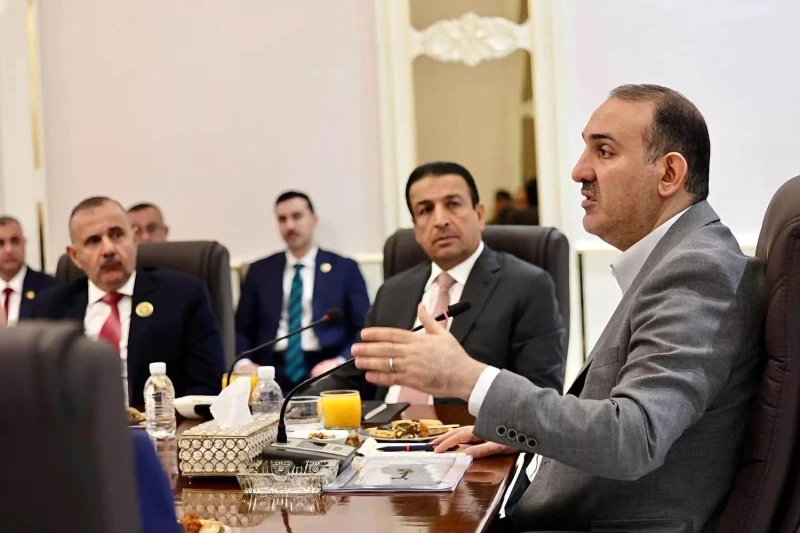
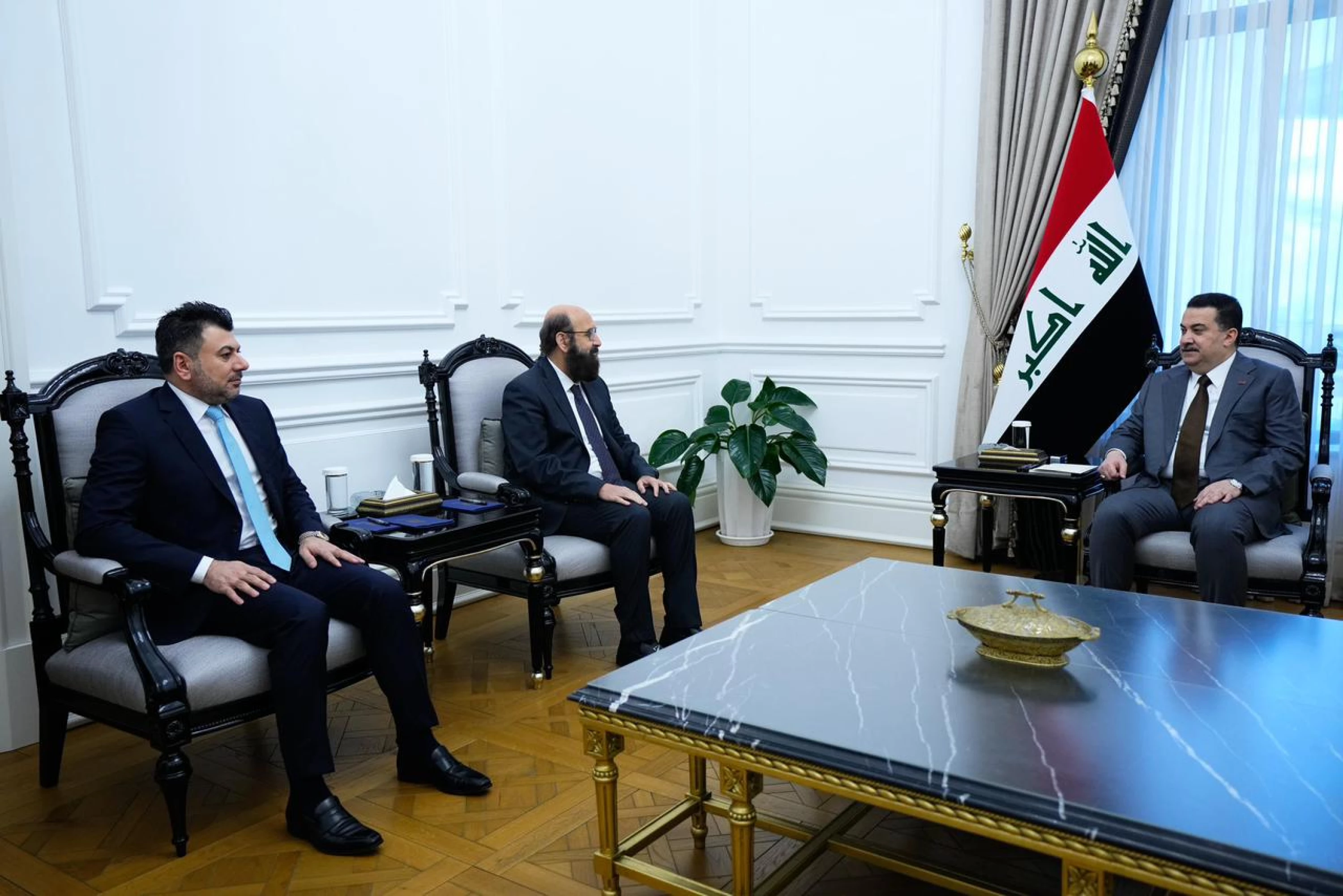
DUBAI, UAE – Iraqi Prime Minister Mohammed Shia’ al-Sudani and President Abdul Latif Rashid met on Monday with Mir Hazim Tahsin Beg, the spiritual leader of Yazidis in Iraq and the world, to discuss the community’s rights, living conditions, and ongoing reconstruction efforts in Yazidi areas.
According to a statement from the Prime Minister’s Office, Sudani said the government aims to uphold equal rights for all communities under the constitution and emphasized the importance of protecting cultural and religious diversity.
The statement also noted that the government is working on projects to rebuild Yazidi-majority areas and facilitate the return of displaced families.
The meeting referenced a recent Cabinet decision allowing Yazidi citizens to obtain ownership of homes and land that had been restricted under the former regime.
Officials say the move is intended to help stabilize areas still recovering from years of conflict and displacement. Tahsin Beg expressed appreciation for steps taken to address Yazidi concerns but stressed the need for continued support to ensure long-term recovery for the community.
On the same day, President Rashid also received the Yazidi leader at Baghdad’s presidential palace. According to the Presidency, Rashid reaffirmed the state’s responsibility to protect the rights of all communities and said Yazidis remain an essential part of Iraq’s national identity.
He highlighted the need for cooperation between religious and social leaders and state institutions to address the consequences of Islamic State (ISIS) crimes and support victims.
Tahsin Beg expressed appreciation for the presidency’s engagement and for efforts to advance Yazidi rights and post-conflict recovery.
In April, the Iraqi government launched a large-scale effort to grant Yazidi families formal ownership of homes and land in 11 residential complexes across Sinjar and surrounding areas.
The move aimed to resolve property issues dating back to 1975, when the former regime demolished more than 140 Yazidi villages and prevented residents from obtaining title deeds.
The government began issuing thousands of ownership documents in coordination with UN-Habitat, marking the first attempt by the Iraqi state to legally settle long-standing property claims for Yazidi communities.
In October 2020, Erbil and Baghdad signed the Sinjar Agreement, aimed at normalizing the situation in the Yazidi heartland.
The agreement outlined that the federal government would oversee security operations in Sinjar in collaboration with the Kurdistan Regional Government (KRG), while Nineveh's local administration would manage public services. It further mandated the removal of the Kurdistan Workers’ Party (PKK) elements and other armed factions from the district, transferring control to the federal army and police. However, over five years since its ratification, the agreement has yet to be implemented.
 Facebook
 LinkedIn
 Telegram
 X
X