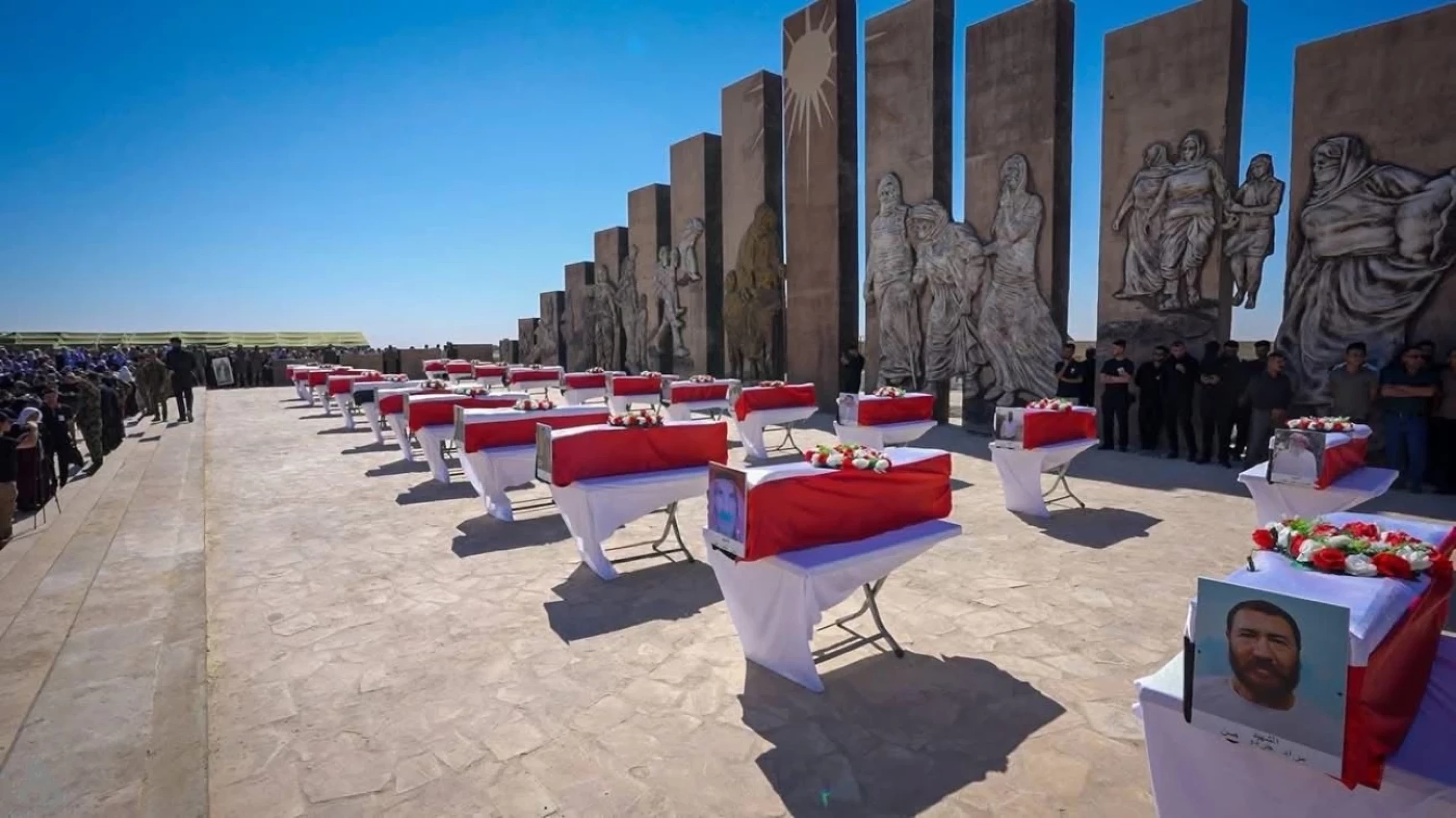
ERBIL, Kurdistan Region of Iraq – Iraq’s health ministry on Sunday announced the launch of a campaign to collect blood samples from Yazidis in Nineveh province, as Baghdad ramps up efforts to identify victims of the Islamic State’s (ISIS) atrocities.
“The ministry has launched a special national campaign through the Mass Graves Department in the Department of Forensic Medicine, aimed at collecting information and blood samples from the relatives of the victims of the Yazidi component in Nineveh,” health ministry spokesperson Saif al-Badr told the state newspaper.
ISIS militants seized control of the Yazidi heartland of Sinjar in a brazen offensive in August 2014, launching a brutal campaign against the native residents and killing over 5,000 Yazidis and abducting thousands of others, many of whom remain missing.
The health ministry has also organized a program, in partnership with the International Committee of the Red Cross missions in Iraq and Sudan, to exchange expertise “in the field of searching for missing persons,” Badr said.
“The program includes the processes of recovering, analyzing, identifying, handing over, and burying remains according to approved standards,” he stated, adding that social support will be provided to the families of the missing.
The blood collection campaign is being implemented in joint coordination with the Iraqi Martyrs Foundation and the International Commission on Missing Persons (ICMP).
According to data from the Petrichor Human Rights Organization, a Sinjar-based NGO, 95 mass graves have so far been identified in Sinjar, of which only 68 have been excavated. Over 800 bodies have been uncovered, but less than 100 of the extracted bodies have been identified so far.
At least 18 countries, including Germany, the United Kingdom, the Netherlands, Belgium, Australia, and Switzerland, have officially recognized ISIS's crimes against the Yazidi community as a genocide.
 Facebook
 LinkedIn
 Telegram
 X
X