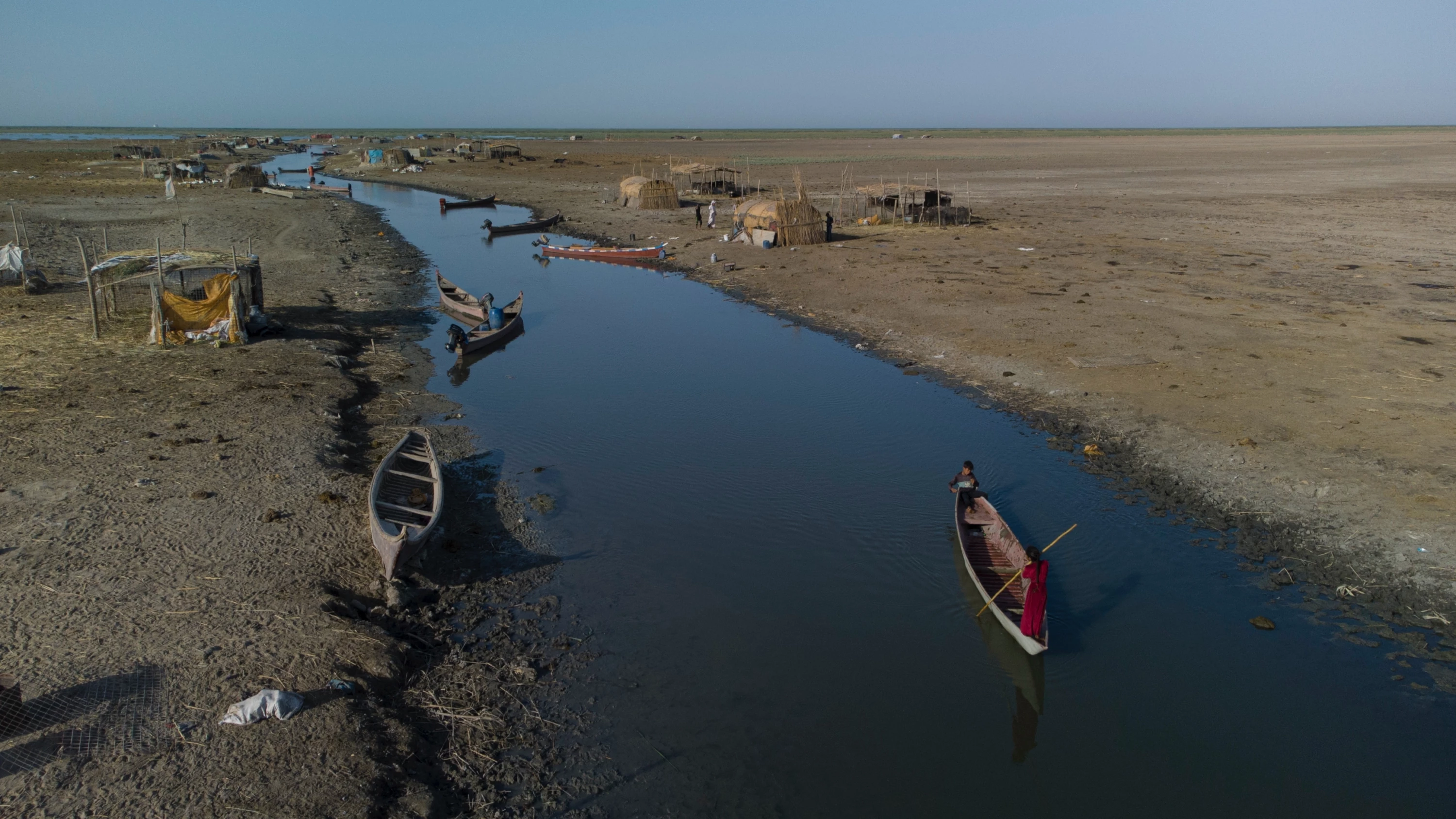
ERBIL, Kurdistan Region of Iraq – Water levels in Iraq’s fabled southern marshes rose a staggering 17 centimeters following heavy rainfall across the country earlier this month, Dhi Qar’s water directorate told The New Region on Sunday, with the area undergoing an environmental revitalization.
“The water levels of the Euphrates River entering the marshes reached 62 centimeters today, after having been at its lowest point at only 45 centimeters at the beginning of December, reflecting a clear improvement in the area’s water situation,” said Hashim al-Assadi, head of water resources in the southern Dhi Qar province.
Iraq was hit by rainfall and flash floods earlier in December, with large parts of the country seeing rainfall in excess of 120 millimeters in some areas. The floods contributed to an increase in water reserves by approximately 700 million cubic meters, according to the water resources ministry.
The rise in water levels has contributed to an “environmental revitalization” in the marshes, according to Assadi, saying greater quantities are “supporting the stability and settlement of local residents.”
Iraq is facing one of its worst droughts on record, with climate change driving water shortages, desertification, and displacement.
The United Nations has ranked Iraq among the world’s most climate-vulnerable countries, while authorities have warned that water reserves have fallen to dangerous levels, making conservation and careful management essential.
In early November, Ankara and Baghdad signed a new memorandum of understanding (MoU) aimed at easing Iraq’s water crisis by focusing on desalination projects, water treatment, and the construction of dams to manage cross-border flows.
On Sunday, the water affairs advisor to Iraq’s prime minister said that the Iraq-Turkey water agreement “will enter full effect in the coming period,” with both sides in the process of finalizing the details.
 Facebook
 LinkedIn
 Telegram
 X
X