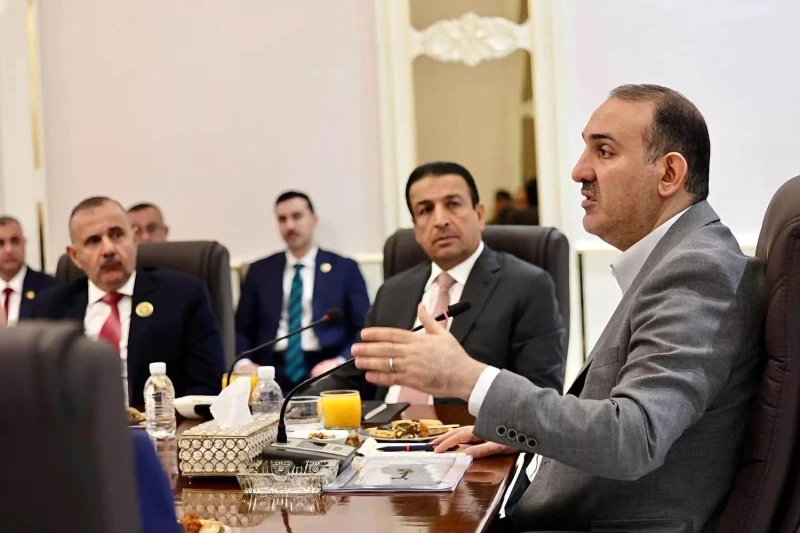
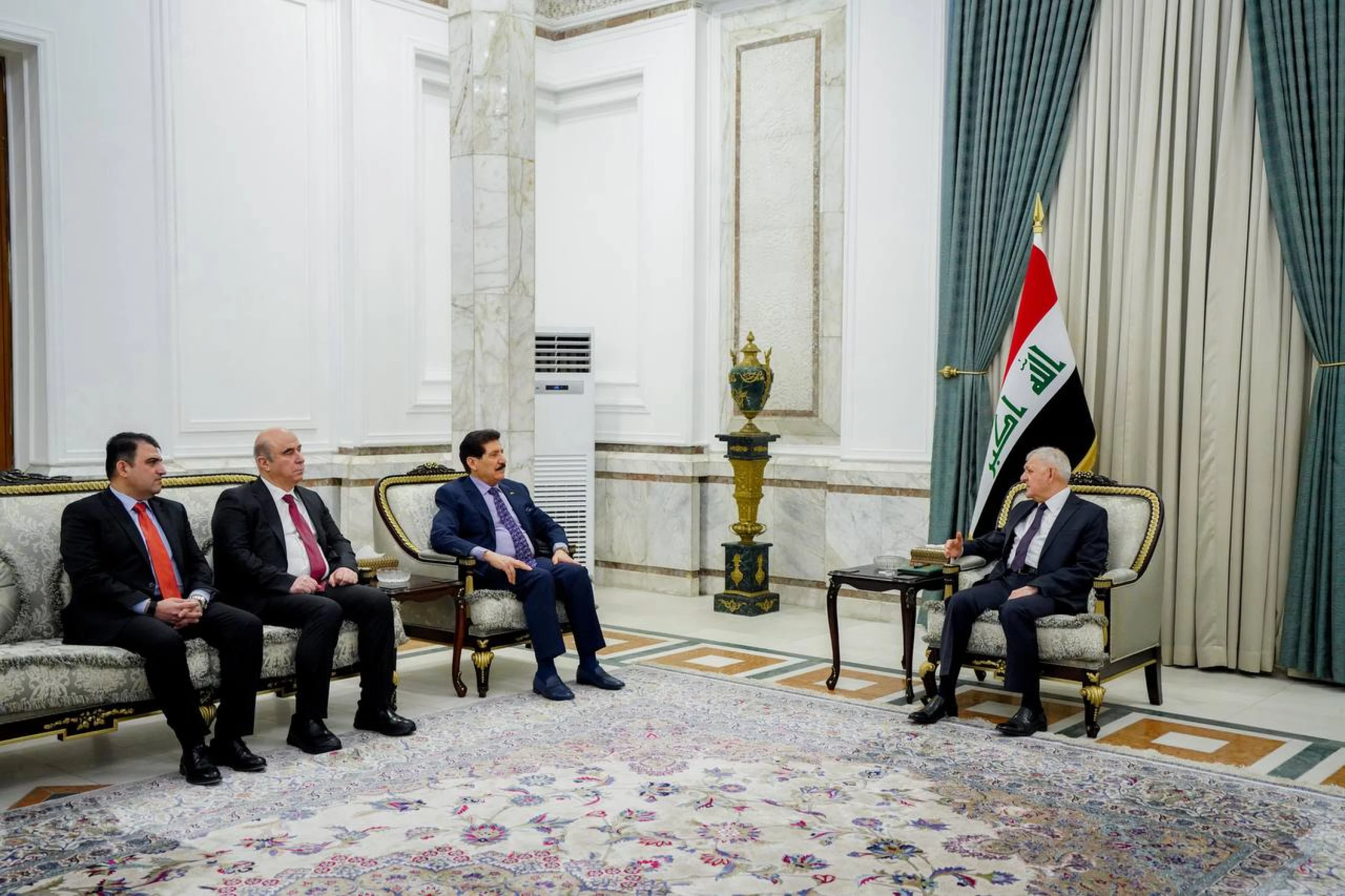
ERBIL, Kurdistan Region of Iraq – A high-level Kurdistan Democratic Party (KDP) delegation on Tuesday met with Iraqi President Abdul Latif Rashid, discussing government formation and bilateral relations between Erbil and Baghdad.
The delegation, headed by the party’s politburo secretary Fazil Mirani, arrived in Baghdad on Monday to meet with top politicians in the Iraqi capital and continue talks on forming the country’s next cabinet.
During the meeting, Rashid stressed “the importance of intensifying consultations among political forces to expedite the formation of the new government” within the established timeline, to ensure “political stability” and meet the expectations of the Iraqis, according to a statement released by Iraq’s presidency.
For his part, Mirani affirmed KDP’s commitment to continue cooperation with “all political forces” to form “a strong and cohesive government that guarantees security, stability, and development, and strengthens the spirit of national partnership.”
Iraq’s political forces are currently engaging in discussions and negotiations regarding the ranks and positions to be allotted in the Iraqi federal government’s new cabinet following the conclusion of the parliamentary elections.
Iraq’s new parliament is set to hold its first session on December 29.
The meeting also addressed bilateral ties and outstanding issues between Erbil and Baghdad.
The president stressed “the necessity of resolving outstanding issues through constructive dialogue and mutual understanding,” in accordance with the country’s constitution and in a manner that reinforces “national partnership.”
The issue of the Kurdistan Region’s civil servant salaries remains the central point of contention between Erbil and Baghdad, with the federal government frequently failing to disburse the Region’s financial entitlements in recent years. Kurdistan Region’s civil servants last received salaries for September.
Sporadic attacks targeting the Kurdistan Region’s oil and gas infrastructure is another issue between the two governments, with Erbil accusing Iraqi armed factions, some of which are integrated into the state apparatus, of being behind the strikes, which have repeatedly led to temporary halts in production at the oil and gas fields. The most recent attack targeting the key Khor Mor gas field in Sulaimani resulted in a power outage across the Region for days.
 Facebook
 LinkedIn
 Telegram
 X
X