ERBIL, Kurdistan Region of Iraq – US President Donald Trump, alongside Israeli Prime Minister Benjamin Netanyahu, on Monday warned that Washington would “absolutely” and “immediately” support potential renewed Israeli military actions targeting Iran if Tehran continues developing its nuclear and missile programs.
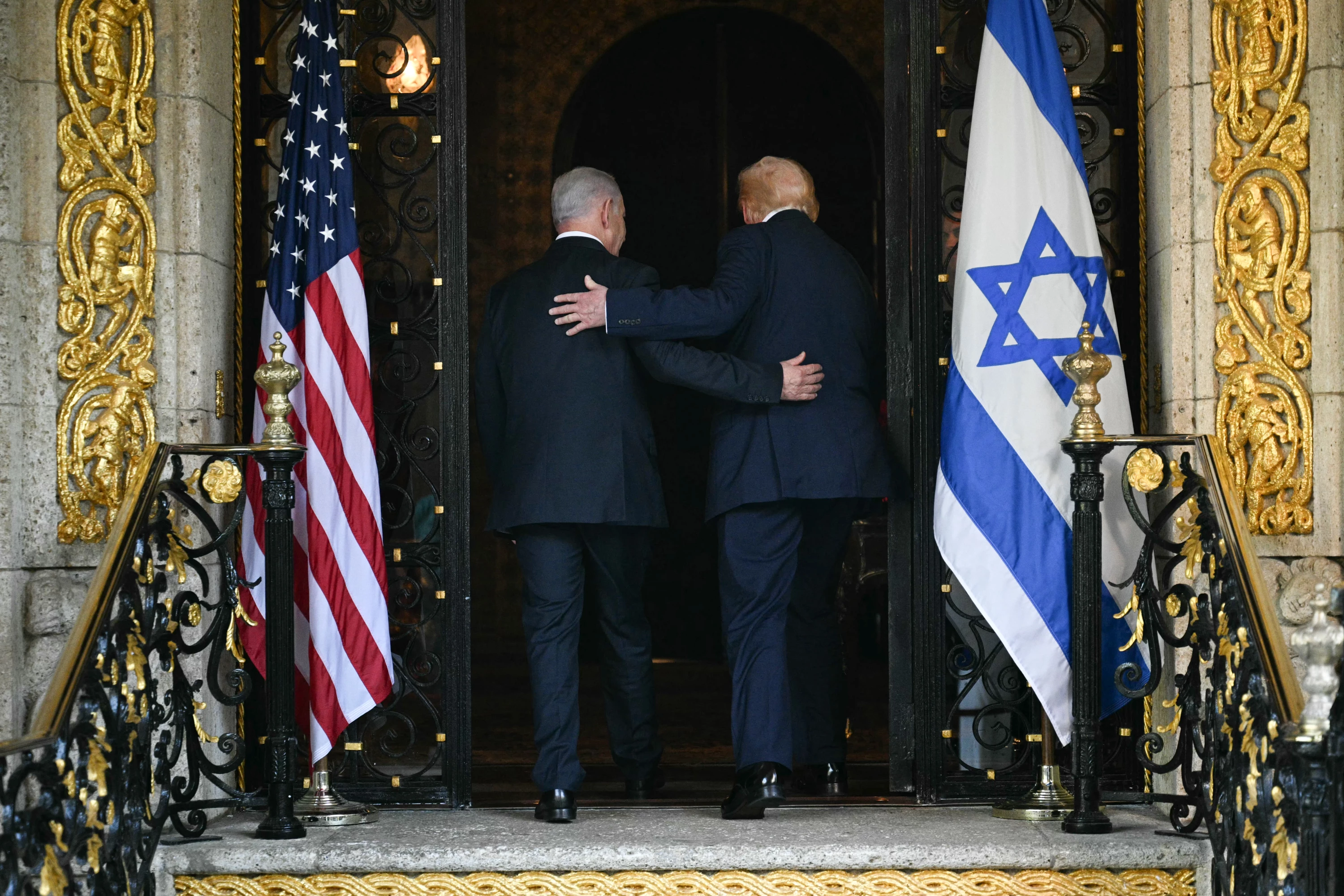
Trump received Netanyahu on Monday at his Mar-a-Lago resort in Florida amid reports of heightened tension between Tel Aviv and Tehran.
Many reports emerged following the Israeli prime minister’s visit to the US, suggesting the trip aimed to brief Trump on possible new attacks on Iran after the June war, as Israel claims to be concerned over Tehran’s expanding missile and nuclear program.
In June, Israel killed top brass Iranian military commanders and nuclear scientists with airstrikes, prompting retaliatory attacks by Tehran, with the two trading salvos of missiles and drones for 12 days. The US also bombed the key Natanz and Fordow nuclear sites in the country near the end of the conflict.
“Now, I hear that Iran is trying to build up again, and if they are, we’re going to have to knock them down. We’ll knock them down. We’ll knock the hell out of them. But hopefully that’s not happening,” Trump said, speaking to reporters while standing next to Netanyahu upon his arrival in Florida on Monday.
Asked whether the US would support possible Israeli attacks on Iran if the latter continues expanding its missile and nuclear programs, Trump stated: “If they will continue with the missiles, yes. The nuclear, fast. One [missiles] will be yes, absolutely. The other [nuclear] was, we will do it immediately.”
While Iran remains under heavy international sanctions and pressure over its nuclear program, it has repeatedly said that its missile program is “not subject to negotiation,” insisting on its right to defend the country, as well as its right to pursue the peaceful use of nuclear energy.
The UN nuclear watchdog and western countries have strongly condemned Tehran for its actions, particularly for blocking nuclear inspectors from visiting and monitoring Iran’s nuclear activities following the June war.
Recalling the June war, Trump said during the news conference with Netanyahu: “If we didn't do what we did to Iran, just to make the subject just slightly different, you wouldn't have peace in the Middle East.”
“I hope they're not trying to build up again, because if they are, we're going to have no choice but very quickly to eradicate that buildup,” said Trump, citing reports he said indicated Iran was using other sites for new buildups.
“We know exactly where they're going, what they're doing, and I hope they're not doing it because we don't want to waste the fuel on a B2,” he said, warning Tehran of the consequences and saying this time they would be “more powerful than the last time.”
In March, following a letter from Trump urging Iran to return to nuclear talks, Iranian Supreme Leader Ayatollah Ali Khamenei criticized the negotiations, accusing the US of seeking to dominate Iran and target its “defensive capabilities,” and stressed that “Iran will certainly not accept” such demands.
The two sides engaged in several rounds of indirect talks aimed at reviving the 2015 nuclear deal, but the negotiations came to a halt with the outbreak of the June war.
Earlier in December, Iran’s Chief of General Staff of the Armed Forces Abdolrahim Mousavi said that permanently improving the country’s air defenses is among Tehran’s “priorities”, noting that significant steps have been taken to boost military capabilities in the country’s south and west.
In December, Iran conducted a five-day joint counterterrorism exercise in the country’s northwest and unveiled new naval capabilities in Bandar Abbas, including the “Sahand” destroyer, the “Kordestan” base, missile boats, unmanned aerial and submersible units, and advanced coastal and sea-based defense systems.
The expansion of drone bases has long been Iran's policy to address what it believes to be growing regional security challenges.
Iran has introduced major plans in recent years to boost its unmanned aerial capabilities, particularly for surveillance and intelligence gathering purposes, as well as precision strikes.
 Facebook
 LinkedIn
 Telegram
 X
X