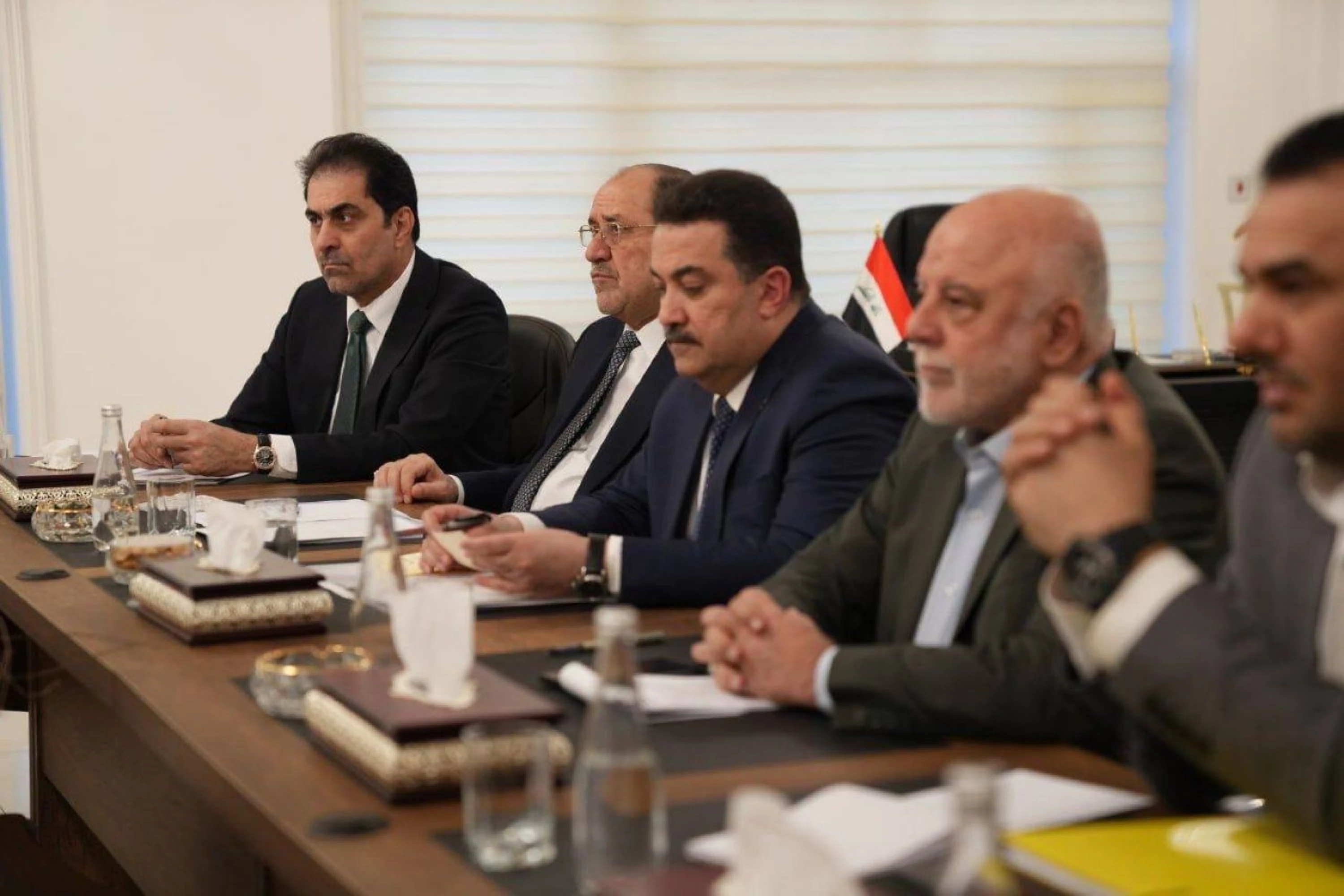
ERBIL, Kurdistan Region of Iraq - Iraq’s ruling Shiite Coordination Framework does not want to choose an “untried and unknown” prime minister, a senior figure in the coalition said Sunday, as negotiations continue over the formation of the next government and key sovereign posts.
Negotiations between the leaders of the Coordination Framework appear to have reached an impasse, with the parties failing to agree on a unanimous candidate for the country’s next prime minister almost two months following the parliamentary elections.
Abbas al-Bayati, a senior member of the State of Law Coalition, said the Framework prefers an experienced figure given current complexities.
Speaking in a televised interview monitored by The New Region, Bayati said the Coordination Framework does not want to choose a prime minister who is “untried and obscure” amid ongoing challenges.
He added that a meeting on Saturday between Prime Minister Mohammed Shia’ al-Sudani and former Prime Minister Nouri al-Maliki “broke the ice,” adding: “We will have a strong prime minister.”
“We do not follow a policy of breaking bones with our partners,” Bayati said, while acknowledging that consensus within the Coordination Framework remains difficult due to the number of forces involved, compared with the more limited poles among Sunni and Kurdish blocs.
“Last-minute negotiations are useful and may involve giving a little and taking a lot,” he said. “Closing nominations with multiple candidates may be followed by withdrawals in favor of others.”
Turning to the Iraq presidency, Bayati said the Coordination Framework does not want to favor one Kurdish bloc over another, adding: “We look forward to the Kurds agreeing on one candidate.”
The parliament convened for the first time on Monday last week, setting off the 30-day countdown to elect a president for the country, a position traditionally reserved for Kurds.
Since 2005, the Iraqi presidency has always been held by a member of the Patriotic Union of Kurdistan (PUK), despite the Kurdistan Democratic Party (KDP) consistently outperforming its rival in both Iraqi and Kurdistani elections.
 Facebook
 LinkedIn
 Telegram
 X
X