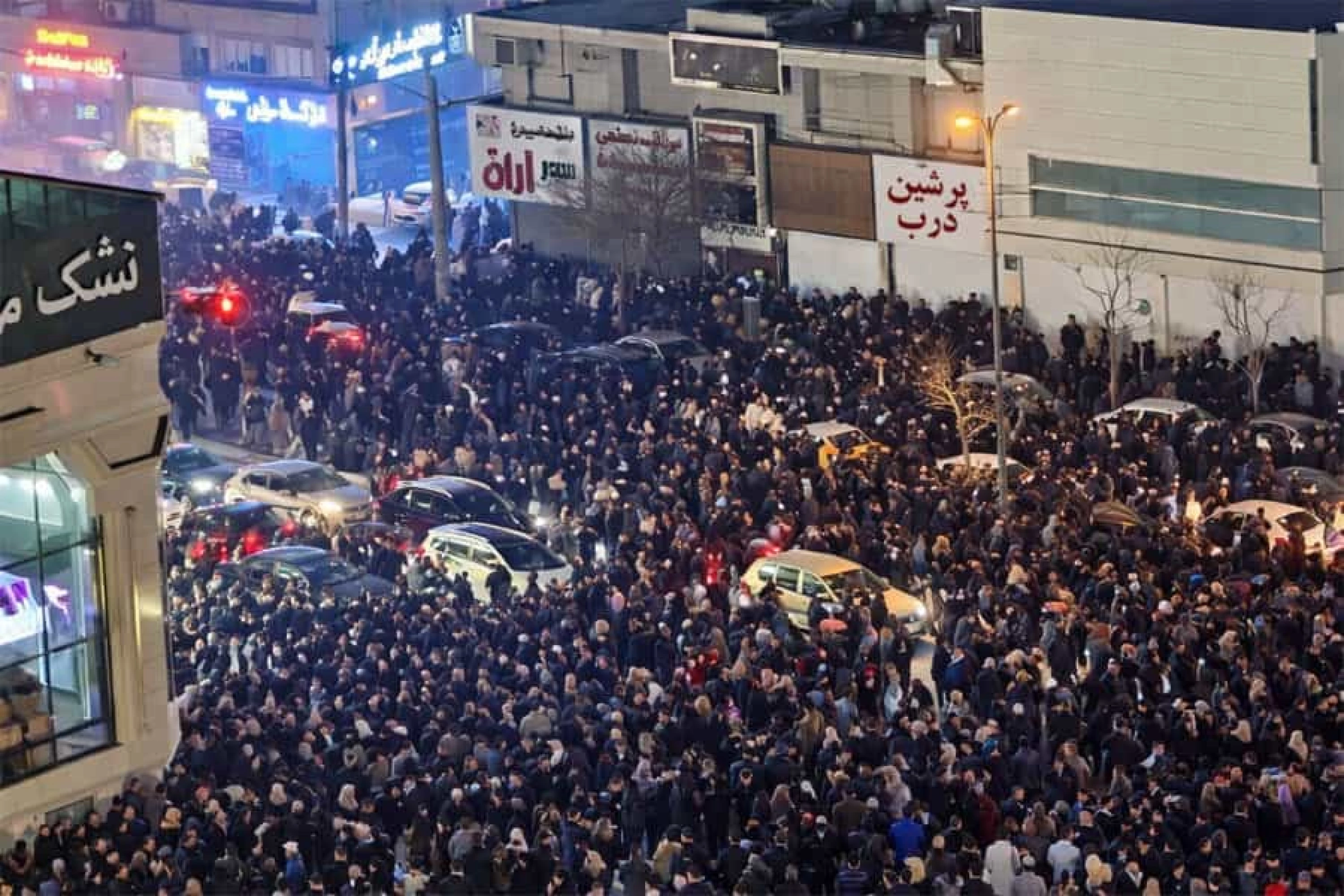
ERBIL, Kurdistan Region of Iraq – Amnesty International on Friday described the crackdown in western Iran’s Ilam and Lorestan provinces as the “deadliest” of the state's response to ongoing protests, slamming the “unlawful use of force” by authorities across the country amid a nationwide internet shutdown.
The monitor said Iranian authorities have “unleashed a deadly crackdown on protesters” across the country, adding that state forces, including the Islamic Revolutionary Guard Corps (IRGC) and Iran’s police force, “have unlawfully used rifles, shotguns loaded with metal pellets, water cannons, tear gas, and beatings to disperse, intimidate, and punish largely peaceful protesters,” according to the statement.
Amnesty called on Iranian authorities to “immediately and unconditionally” release all participants in peaceful demonstrations, saying that “all detainees should be protected.”
Nationwide protests in Iran have entered their second week, beginning on December 27 at Tehran’s Grand Bazaar, where business owners and shopkeepers launched strikes and protests over the falling value of the Iranian rial against the US dollar. The unrest later spread to other provinces, with chants increasingly targeting the state amid a surging current of anti-government sentiment.
The monitor stressed that the “deadliest repression” took place in the provinces of Lorestan and Ilam, home to Kurdish and Lur ethnic minorities.
A clash erupted on Sunday in Malekshahi in Iran’s Ilam province, where security forces opened fire on protesters with heavy weaponry, prompting protests of solidarity across Iran’s Kurdish-inhabited western regions (Rojhelat), culminating in a general strike on Thursday across Rojhelat.
Amnesty said that at least “28 protesters and bystanders, including children,” were killed across eight provinces as of Saturday, while the Oslo-based Hengaw Human Rights Organization on Friday identified 42 protesters “killed by direct fire from government forces” during the recent nationwide protests.
Iran has intensified its crackdown on protesters as demonstrations continue to expand, despite government claims of a softer approach.
As the protests drew their largest crowds in 12 days on Thursday, the Islamic Republic shut down the internet, continuing its pattern of restricting online platforms during periods of unrest to control the flow of news.
The internet monitor NetBlocks said Friday that "Iran has now been offline for 12 hours" following what it described earlier as a nationwide internet blackout, adding the shutdown was part of "escalating digital censorship measures targeting protests" and noting that connectivity is "flatlining at ~1% of ordinary levels" across the country.
The internet monitor NetBlocks said Friday that "Iran has now been offline for 12 hours" following what it described earlier as a nationwide internet blackout, adding the shutdown was part of "escalating digital censorship measures targeting protests" and noting that connectivity… pic.twitter.com/UzK4AqQ7A1
— The New Region (@thenewregion) January 9, 2026
During the nationwide Jin Jiyan Azadi (‘Women Life Freedom) protests in September 2022 and the Bloody November protests in 2019, the Iranian government tightened its crackdown on the Internet.
“People in Iran daring to express their anger at decades of repression and demand fundamental change are once again being met with a deadly pattern of security forces unlawfully firing at, chasing, arresting, and beating protesters, in scenes reminiscent of the Woman Life Freedom uprising of 2022,” said Diana Eltahawy, Amnesty International’s Deputy Director for the Middle East and North Africa.
Eltahawy said the Iranian authorities’ “frequency and persistence” in using force, along with systematic impunity for security personnel who commit grave violations, shows that using such weapons to crush protests “remains entrenched as state policy.”
The Islamic Republic has a long history of labeling protesters as “rioters” and alleging ties to the US and Israel, responding with heavy crackdowns, arrests, and, in some cases, charges that carry the death penalty.
 Facebook
 LinkedIn
 Telegram
 X
X