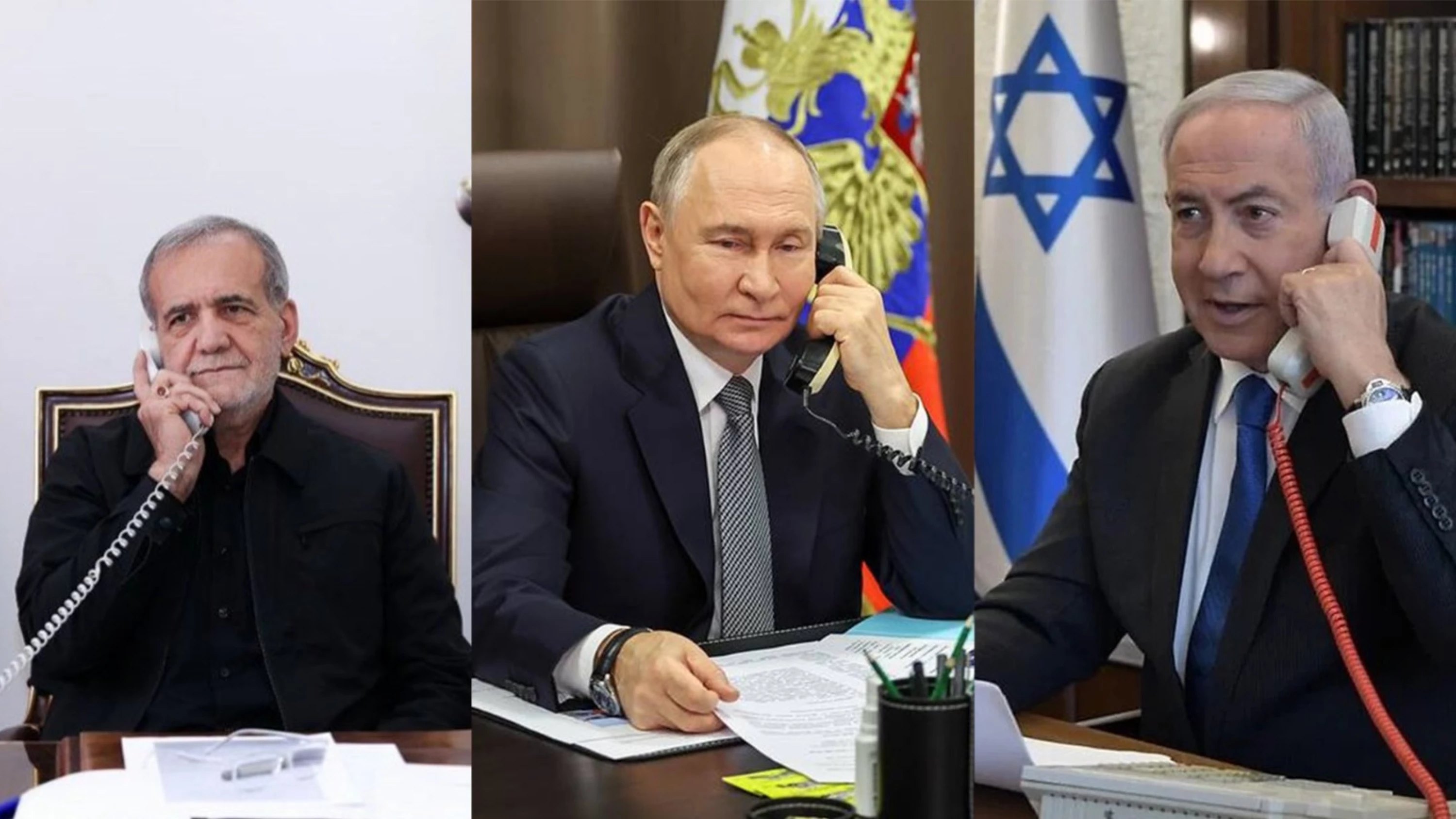
ERBIL, Kurdistan Region of Iraq – Russian President Vladimir Putin held phone calls on Friday with his Iranian counterpart Masoud Pezeshkian and Israeli Prime Minister Benjamin Netanyahu, outlining Moscow’s commitment to making “mediation efforts” and promoting dialogue, amid rising tensions and weeks of nationwide protests in Iran.
Tensions between Iran on one side and the US and its ally Israel have been intensified in recent weeks, with Washington warning Tehran of potential attacks if it continues cracking down on protesters or expands its nuclear and missile programs, and the Islamic republic responding with threats of strong retaliation.
The Kremlin said in a statement that Putin and Netanyahu spoke by phone, where “the leaders discussed the state of affairs in the Middle East and the situation surrounding Iran.”
Iran has faced weeks of nationwide protests, with monitors saying at least 2,700 people have been killed and thousands more arrested or injured, while labeling protestors as “foreign plots” and “terrorist elements” working with the US and Israel.
Security crackdowns have intensified in Iran, and authorities have imposed a near-total communications blackout, cutting internet and phone services nationwide to curb information flow and limit coordination of demonstrations.
Putin laid out “his fundamental stance” in favor of stepping up political and diplomatic efforts to ensure the region’s stability and security, while confirming Moscow’s “commitment to continuing to make mediation efforts and promoting a constructive dialogue involving all concerned parties,” the statement added.
Both diplomats “agreed to maintain contacts at various levels,” the Kremlin said.
In a later statement, the Kremlin said Putin held another phone call with his Iranian counterpart Pezeshkian, who briefed him on the government’s “sustained efforts to normalize the situation in the country” following the protests.
The Kremlin said both sides “unanimously and consistently” support de-escalating tensions surrounding Iran and across the region “as soon as possible.”
The tensions between Iran and the US reached their peak on Tuesday when President Donald Trump canceled talks with Iranian officials and told protestors in Iran that “help is on its way.”
Iran has strongly condemned the comments and threatened retaliation, while blaming the protests on Washington and Tel Aviv.
Russia, Iran’s main ally that has helped Tehran mitigate the impact of international sanctions, has also condemned Washington’s recent threats as foreign interference in Iran’s internal affairs.
Most recently, at a UN Security Council meeting on Iran on Thursday at the request of the US, Russia’s UN Ambassador Vassily Nebenzia accused Washington of calling the session in an attempt to “justify blatant aggression and interference in the internal affairs of a sovereign state.”
He also accused the US of threatening to “solve the Iranian problem in its favorite way, through strikes aimed at overthrowing an undesirable regime.”
Nationwide protests in Iran have entered their third week, beginning on December 27 at Tehran’s Grand Bazaar, where business owners and shopkeepers launched strikes and protests over the falling value of the Iranian rial against the US dollar. The unrest later spread to other provinces, with chants increasingly targeting the state.
 Facebook
 LinkedIn
 Telegram
 X
X