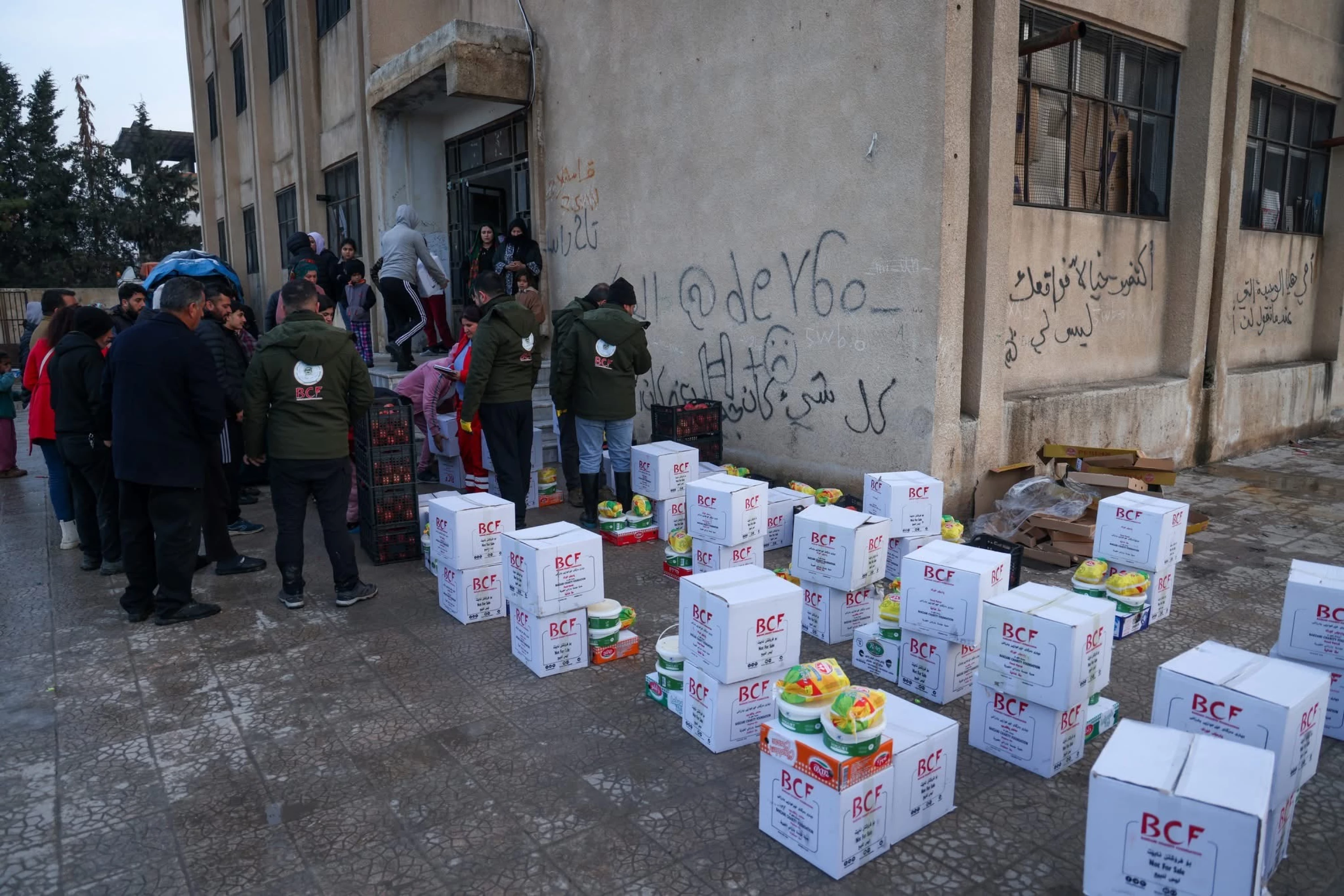
ERBIL, Kurdistan Region of Iraq – The Erbil-based Barzani Charity Foundation (BCF) on Tuesday announced that it has delivered humanitarian aid to more than 9,000 families in Rojava (northeast Syria), with nearly 58,000 people benefiting from the assistance.
The aid has been delivered through 165 trucks to Qamishli, Amude, Girke Leke, Derik, Tirbespi (al-Qahtaniya), and Dirbasiyah, BCF announced in a press release, adding that 57,995 people from 9,180 families had been assisted through their missions.
The Islamist-led Syrian Arab Army has launched a broad military campaign targeting the Syrian Democratic Forces (SDF) and other Kurdish-led forces since early January, displacing hundreds of thousands of civilians from the areas under Kurdish control.
The army and its affiliated factions have imposed a suffocating siege on Kobane for over a week, with the UN reporting increasingly “worsening” humanitarian conditions in the symbolic Kurdish city. At least five children have died from severe cold and lack of medical supplies in Kobane, with growing concerns of similar circumstances recurring in other parts of Rojava as the Syrian army continues its advances.
BCF said its aid consists of more than 20 different essential items, including food, mattresses, and beddings, which have been distributed over 82 schools so far. The group has also distributed over 141,000 liters of heating oil to 108 schools and eight mosques, as temperatures dip to single-digit and below-zero degrees.
The non-profit said that it has delivered 9,330 hot meals over 15 schools and three mosques so far, with an estimated 3,000 to be distributed on a daily basis, adding that medical treatment has also been provided to around 2,750 people.
The mission, however, is not without difficulties, as logistical difficulties and maneuvarability issues present a challenge to BCF's teams, according to Musa Ahmed, the head of the charity.
"This wave of diplaced persons... is different from all the work we have previously done. It is not a specified compound where you can go and distribute aid as you want, or take a large amount of aid and resolve the issues of a house at once," Ahmed said during a press conference on Tuesday morning.
"It is easier for us to go to a house, solve all their problems, and not go there again," he explained, adding however, that this is not feasible, as large trucks are required that cannot be easily moved around the cities' narrow neighborhood roads.
The organization has instead opted for a biweekly approach, Ahmed said, where smaller amounts of aid get distributed over the houses every two weeks, to curb the logistical and maneuverability issues.
 Facebook
 LinkedIn
 Telegram
 X
X