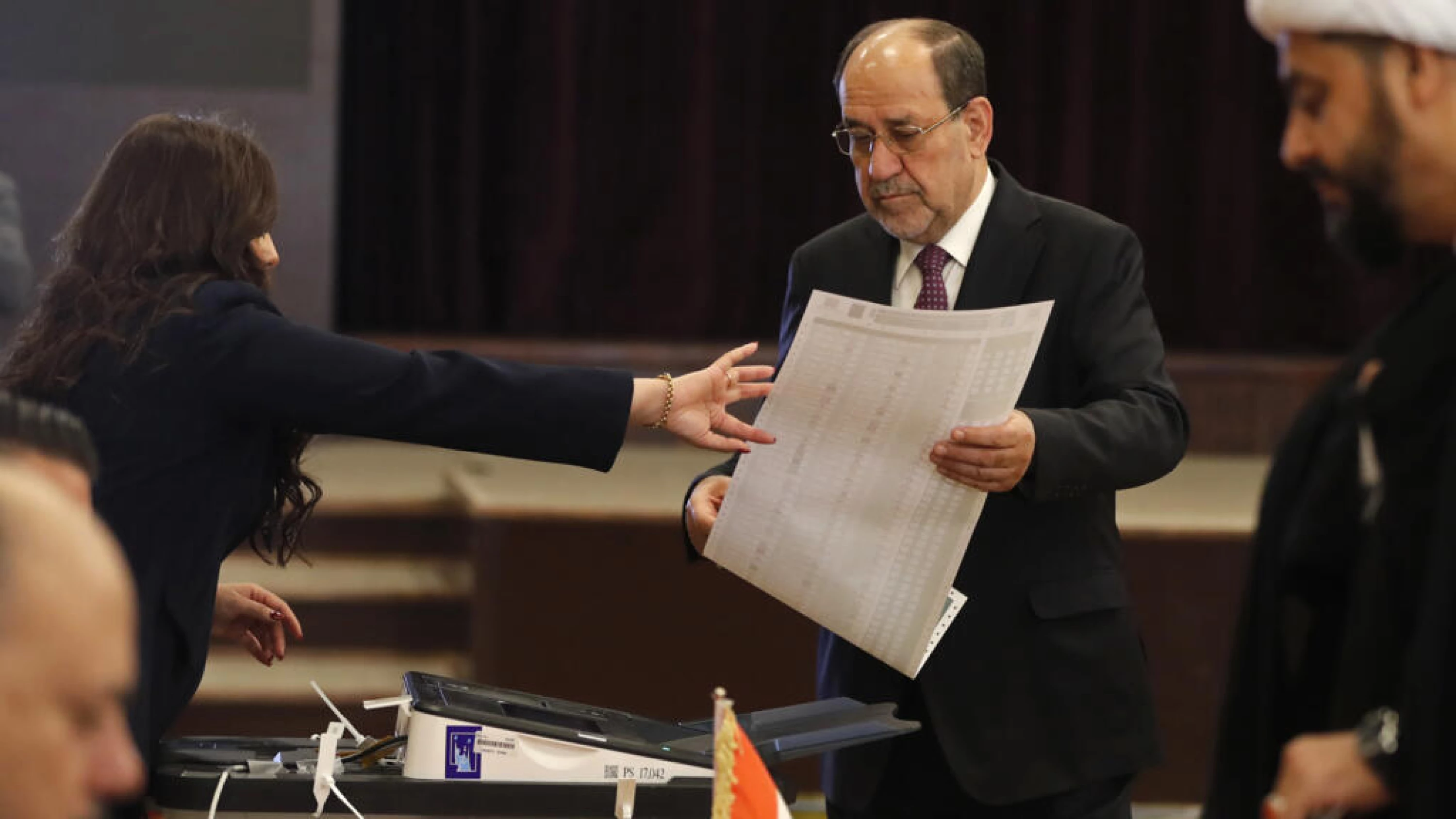
ERBIL, Kurdistan Region of Iraq – State of Law Coalition leader and former Prime Minister Nouri al-Maliki on Wednesday "categorically" rejected the "blatant American interference in Iraq’s internal affairs," a day after US President Donald Trump said Washington will no longer help Iraq if Maliki is reelected as prime minister.
Trump on Tuesday warned that Washington will no longer help Baghdad if Maliki becomes the next prime minister, criticizing his “insane policies and ideologies.”
"Because of his insane policies and ideologies, if elected, the United States of America will no longer help Iraq and, if we are not there to help, Iraq has ZERO chance of Success, Prosperity, or Freedom,” Trump said on his Truth Social platform.
In a statement on Wednesday, Maliki responded to Trump's remarks, saying: "We categorically reject the blatant American interference in Iraq’s internal affairs, and we consider it a violation of its sovereignty, contrary to the democratic system in Iraq after 2003, and an infringement on the decision of the Coordination Framework for selecting its candidate for the position of Prime Minister."
"The language of dialogue between countries is the only political option for dealing with them, not resorting to the language of dictates and threats," he added.
After weeks of deliberations, Iraq's ruling Shiite bloc announced Maliki as its candidate for the country's premiership by "a majority vote" earlier in the week.
"Out of respect for the national will and the decision of the Coordinating Framework guaranteed by the Iraqi Constitution, I will continue to work until we reach the end, in a way that achieves the higher interests of the Iraqi people," Maliki said.
Maliki's State of Law Coalition came in third place in Iraq’s recent parliamentary elections, securing 29 seats out of the 329-seat legislature. The other two top parties were the Reconstruction and Development Alliance, led by incumbent Prime Minister Mohammed Shia’ al-Sudani, and the Sunni Taqadum Party, led by Mohammed al-Halbousi.
If elected, it would mark Maliki's third term as premier. His previous term was riddled with rampant corruption, inflamed sectarianism, and the lightning rise of the Islamic State (ISIS) across swathes of the country. He ultimately stepped down amid major security setbacks – factors that continue to shape the debate over his potential return to office.
 Facebook
 LinkedIn
 Telegram
 X
X