ERBIL, Kurdistan Region of Iraq - Venezuela underwent a historic policy shift this week as its parliament approved a major reform of the Hydrocarbons Law, effectively dismantling decades of state-run oil dominance, coming after the US in early January launched a military raid to depose President Nicolas Maduro.
This legislative change rolls back the cornerstone of former anti-imperialist President Hugo Chavez’s 2006 initiative, which had been implemented to solidify government authority over the nation’s unparalleled energy wealth.
Venezuela sits on the world’s largest oil reserves at over 300 billion barrels, accounting for nearly 20 percent of the world's total oil riches.
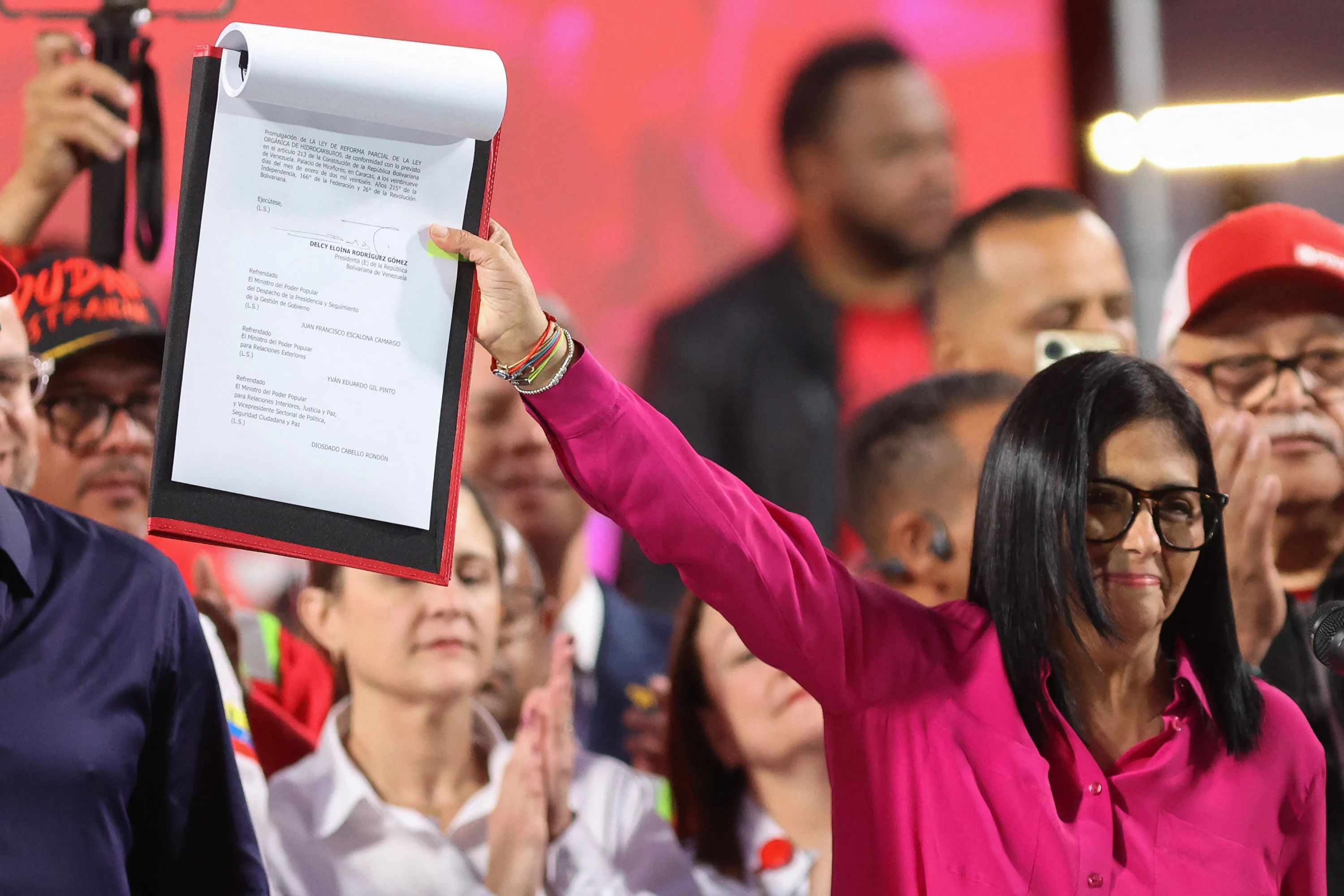
Interim leader Delcy Rodriguez, who previously served as Maduro’s vice president and managed the nation’s hydrocarbons portfolio for years, has reached an agreement to grant the US access to Venezuelan oil. Under her leadership, the oil sector saw a 16 percent increase in 2025, and private sector forecasts suggest that growth could accelerate to 30 percent throughout this year.
The maneuver approved on Thursday provides enhanced protections for private investors by ending mandatory state control over exploration and reducing the tax burden. Under the new rules, private companies are authorized to extract, distribute, and sell oil independently from the government while remaining free to transfer assets to other private firms.
The state also gained the power to slash royalties for major projects and adjust or even eliminate taxes at its discretion. To help win over foreign investors, the new law brings in international arbitration to handle any legal disputes.
The US Treasury Department responded promptly on Thursday by issuing General License 46, a move that marks the first significant easing of the Venezuelan oil embargo since it was implemented in 2019. This license authorizes American companies to export, sell, store, and refine Venezuelan crude, provided that any contracts with the government or state-run PDVSA are governed by US law.
It also sets strict conditions: payments cannot be made through debt swaps, in gold, or using Venezuelan-issued digital assets such as cryptocurrencies, and transactions involving individuals or entities tied to China, Russia, Iran, North Korea, or Cuba are explicitly prohibited.
Analysts expect a surge in Venezuela’s oil exports and income. Previously, under the weight of sanctions, the country was forced to sell its crude at high discounts on the black market, often relying on ghost ships to transport cargo covertly.
In the early hours of January 3, US forces carried out a large-scale military operation in Venezuela, employing air, land, and sea assets, which culminated in the capture of Maduro and his wife in the capital of Caracas. The move was described by US President Donald Trump as a “spectacular assault.”
“We’re going to run the country until such time as we can do a safe, proper, and judicious transition,” Trump added, noting that Washington is not afraid of having “boots on the ground.”
He later explained that the administration is currently designating a group to “run” Venezuela in the aftermath of Maduro’s capture, noting that the group will “largely” consist of Secretary of State Marco Rubio, Defense Secretary Pete Hegseth, and Chairman of the Joint Chiefs of Staff General Dan Caine “for a period of time.”
Maduro has served as Venezuelan president since 2013 and has been a US bugbear in the region for his avowedly socialist and anti-US imperialism stances.
 Facebook
 LinkedIn
 Telegram
 X
X