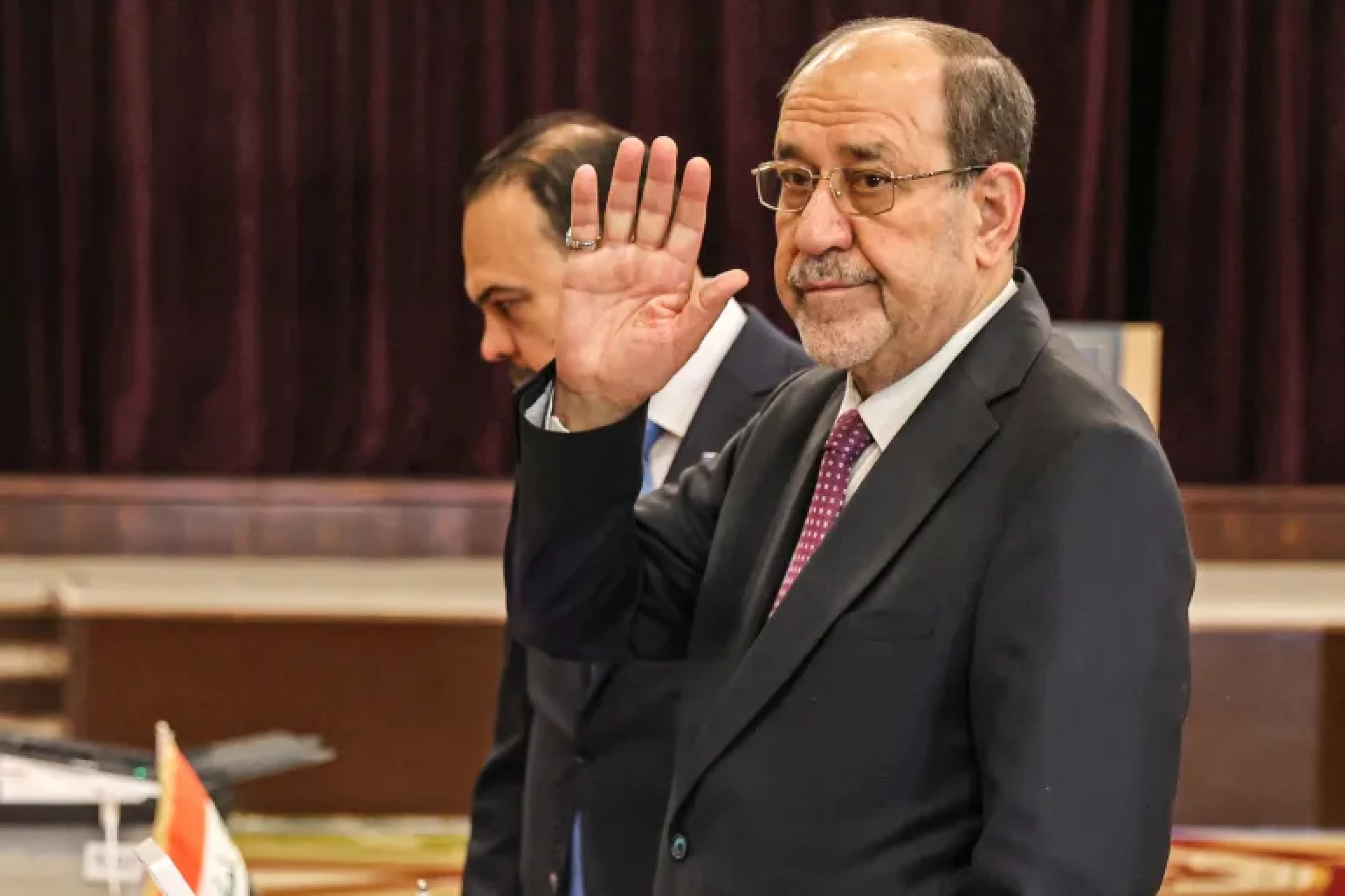
MILAN, Italy – The United States is prepared to use its “full range of tools” to enforce President Donald Trump’s Iraq policy and prevent former prime minister Nouri al-Maliki from returning to power, the State Department told The New Region on Thursday, after Trump warned that Washington would no longer help Baghdad if Maliki is elected.
Trump last week issued an ultimatum to Iraq, warning that Washington will no longer help Baghdad if Maliki, a Shiite heavyweight politician and leader of the State of Law Coalition, becomes the next prime minister, after the ruling Shiite Coordination Framework announced him as their nominee.
His criticism of Maliki’s “insane policies and ideologies” drew the ire of Iraq and neighboring Iran. During Maliki’s tenure, Tehran significantly consolidated its grip over Baghdad, with the Shiite politician perceived as a strong Iran ally.
“We are prepared to use the full range of tools to enact the President’s policy, and have committed this to Iraqi political leadership,” a US State Department spokesperson told The New Region, responding to a question about Maliki’s potential return.
“Our policy towards Iraq requires an Iraqi government that is capable of working effectively and respectfully with the United States,” the State Department asserted.
It referenced Trump’s remarks of “Iraq has ZERO chance of Success, Prosperity, or Freedom” if Maliki becomes the premier.
In a televised interview on Tuesday, Maliki stressed that withdrawing his candidacy could jeopardize Iraq’s sovereignty, vowing to “proceed with this nomination until the end.”
He added that only the Coordination Framework could decide on his withdrawal, through a two-thirds majority, or eight of the 12 key figures that make up the Shiite alliance.
“The Coordination Framework comes first and foremost. If it decides to change the nomination now, I will accept it with open arms,” Maliki told the Iraqi al-Sharqiya channel.
On Saturday, the Coordination Framework threw its full weight behind Maliki and reiterated support for his premiership nomination.
“Choosing the prime minister is an exclusively Iraqi constitutional matter, free from foreign influence,” it said.
Maliki, 75, is Iraq’s only two-time prime minister, from 2006 to 2014. His previous term was riddled with rampant corruption, inflamed sectarianism, and the lightning rise of the Islamic State (ISIS) across swathes of the country.
He ultimately stepped down amid major security setbacks – factors that continue to shape the debate over his potential return to office.
The veteran Shiite politician initially enjoyed the support of the US but later fell out of favor due to his growing ties to Iran.
Both Washington and Tehran wield significant influence over Iraqi politics, leaving Baghdad repeatedly struggling to maintain a delicate balance between ties with the two rivals.
Maliki’s State of Law Coalition came in third place in Iraq’s recent parliamentary elections, securing 29 seats in the 329-seat legislature.
 Facebook
 LinkedIn
 Telegram
 X
X