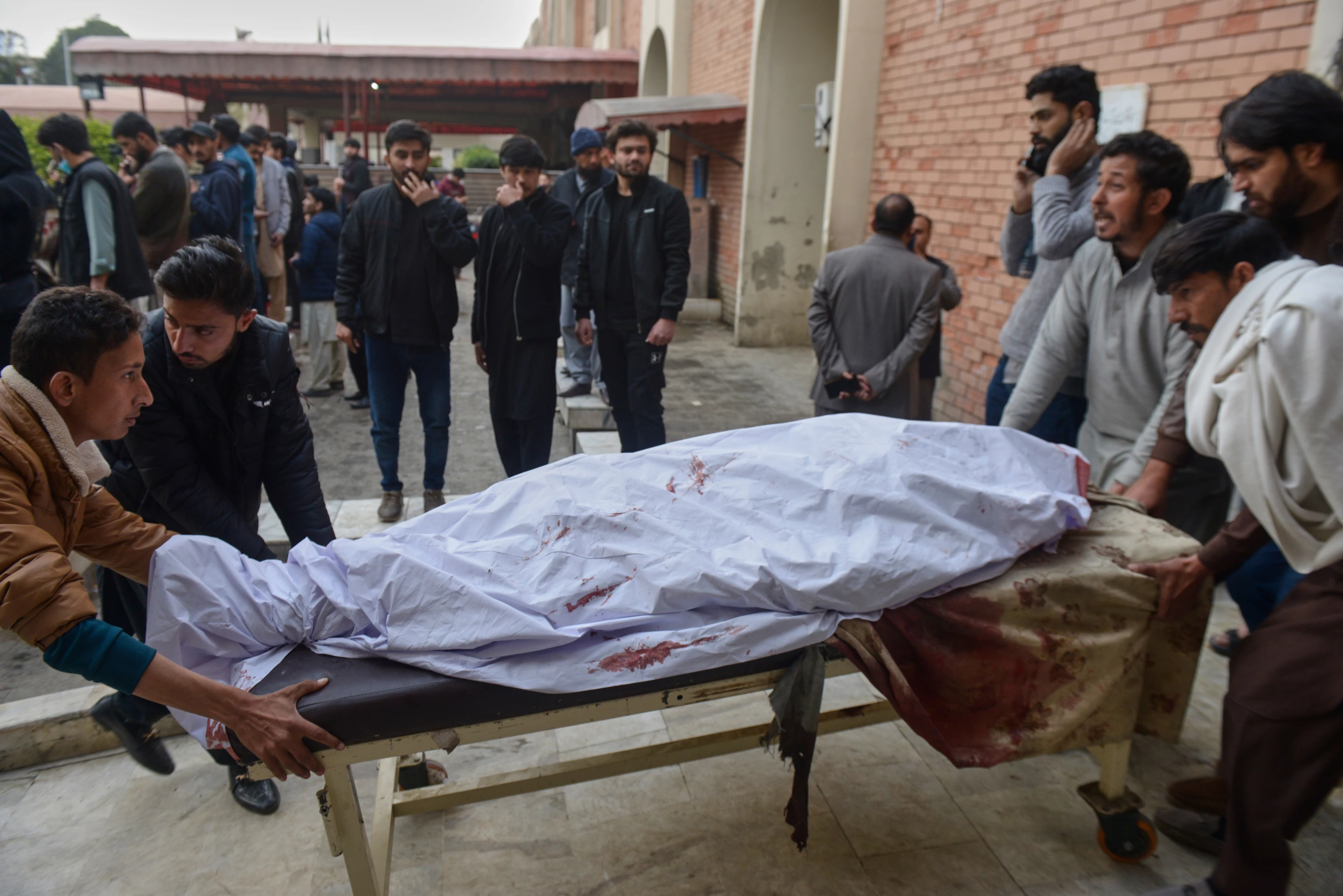
ERBIL, Kurdistan Region of Iraq - An Islamic State (ISIS) affiliate in Pakistan claimed responsibility overnight for a sectarian suicide bombing of a Shiite mosque in Islamabad that killed at least 31 people on Friday, calling members of the religious sect a "human reservoir" for anti-ISIS fighters in Syria.
During Friday prayers, a suicide bomber from the Islamic State in Pakistan group detonated explosives in a mosque in the Tarlai area of Islamabad, injuring over 160 people in addition to the aforementioned fatalities.
Local police reported that the attacker opened fire on the mosque before triggering the explosives when confronted by security guards.
The group, in keeping with a longstanding ISIS practice of targeting Shiites, whom the extremist group deems to be religiously deviant, offered the role of Shiite fighters in fighting ISIS in Syria as a justification for the attack.
Mourners gathered in Islamabad on Saturday to lay to rest the victims of an ISIS suicide bombing of a Shiite mosque in the Pakistani capital that killed at least 31 people during Friday prayers pic.twitter.com/R4Yrkczmg1
— The New Region (@thenewregion) February 7, 2026
"Targeting innocent citizens is a crime against humanity," Pakistani President Asif Ali Zardari said on Friday, adding, "the nation stands with the affected families in this hour of difficulty."
The Iraqi foreign ministry similarly condemned the attack and asserted "its categorical rejection of all forms of violence and terrorism targeting places of worship and innocent people."
The attack is the deadliest in Islamabad since the 2008 suicide bombing near the Marriott hotel, which killed at least 60 people.
Pakistan's Shiite minority has often faced sectarian violence in the Sunni-majority country, with a UN Human Rights Council session in 2024 receiving a report from the ECO-FAWN NGO asserting that the group "has faced relentless violence, discrimination, and marginalization, threatening their very existence."
"The government's failure to protect its Shiite citizens has created a culture of impunity, allowing militant groups to operate with ease," the report said.
 Facebook
 LinkedIn
 Telegram
 X
X