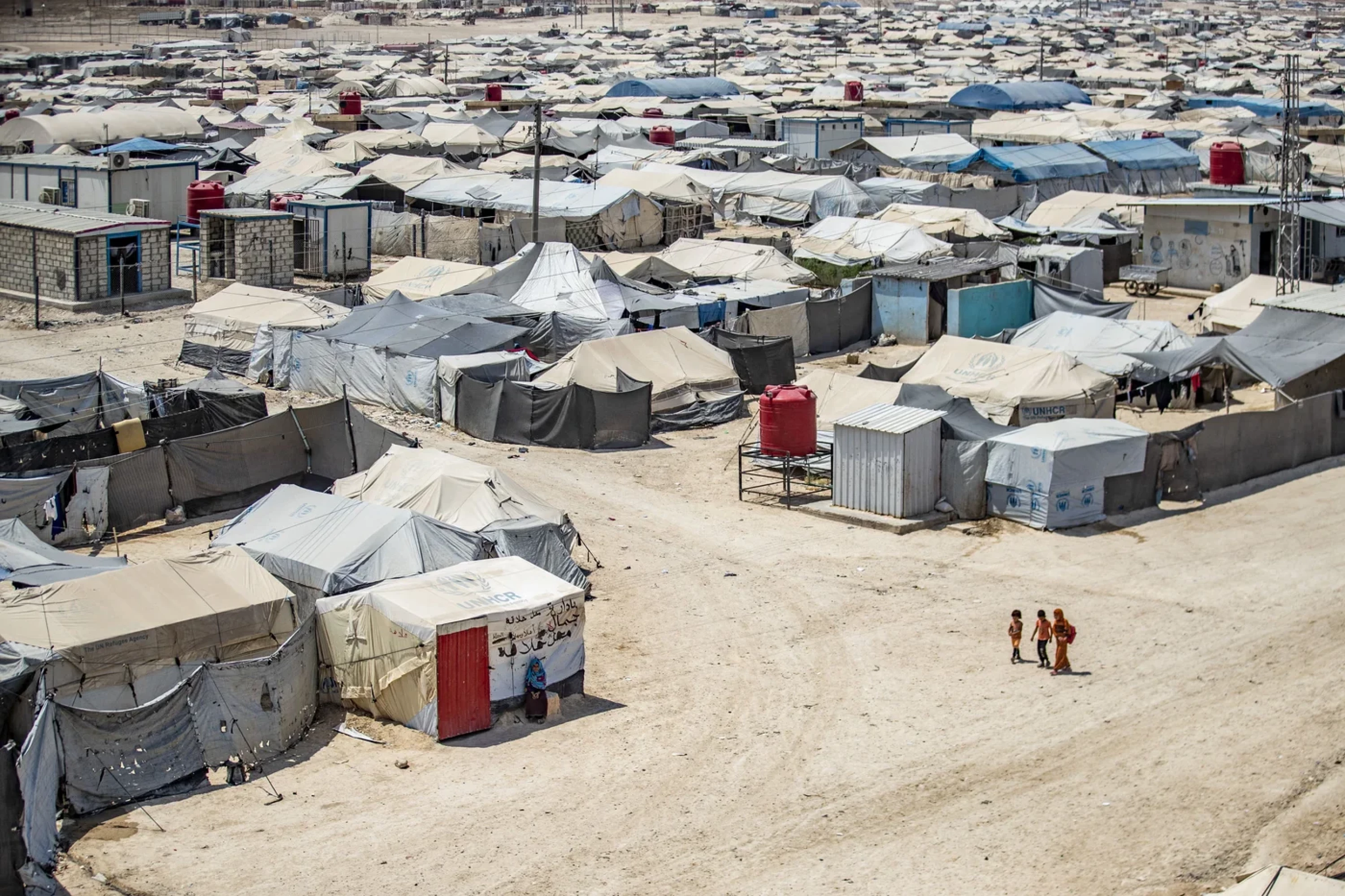
ERBIL, Kurdistan Region of Iraq - After thousands of Islamic State (ISIS) members and affiliates were transferred from Rojava (northeast Syria) to Iraq, Baghdad's top security advisor said Thursday that Iraq wants to return displaced citizens from the notorious al-Hol camp back to their original areas.
National Security Advisor Qasim al-Araji said Iraq is “keen to return displaced Iraqis from al-Hol camp to their original areas” in a way that “ensures their rehabilitation and social integration, which contributes to ending pockets of vulnerability and preventing their exploitation by extremist groups.”
“The Iraqi experience has proven that true security is not built by force alone, but rather by thought, justice, equal opportunities, and social integration,” Araji continued in remarks carried by Iraqi state media.
AFP, citing local humanitarian sources, reported Thursday that most of the foreign families that were held in al-Hol have departed from the camp.
An offensive by the Syrian Arab Army on Rojava last month posed a major threat of ISIS members taking advantage of the security vacuum to escape, leading to Baghdad coordinating with Washington to transfer some 7,000 ISIS prisoners from Syrian facilities to Iraq.
Spokesperson for the Commander-in-Chief of the Iraqi Armed Forces Sabah al-Numan on Thursday said that over 4,500 alleged ISIS members have been transferred so far.
The move came amid uncertainties in Syria after the Kurdish-led Syrian Democratic Forces (SDF) were forced to withdraw from the detention centers, with government-aligned forces taking control, including of the al-Hol facility.
The UN's refugee agency in January warned that the turmoil could lead to security breaches, highlighting the poor conditions in the facility as an aggravating factor for detainees.
"UN agencies have long warned that insecurity, overcrowding and limited services leave residents – many of them women and children – in extremely vulnerable conditions," a UN News report on the matter said.
Iraq has vowed that appropriate judicial measures will be taken against those suspected of involvement in ISIS attacks while also stressing the importance of ensuring a reintegration process to allow those affiliated with the extremist group to return to normal life.
Saad Maan, head of Iraq’s Security Media Cell, told state media on Sunday that the transferred prisoners are held in “fortified precautionary centers equipped with all approved protection and security measures,” and that the cases will be purely handled by Iraq’s judiciary without any outside influence.
Baghdad has also announced that it is working closely with the foreign ministries of other countries to facilitate the repatriation of the detainees to their home countries, where they will face the appropriate legal measures for their ISIS connections.
 Facebook
 LinkedIn
 Telegram
 X
X