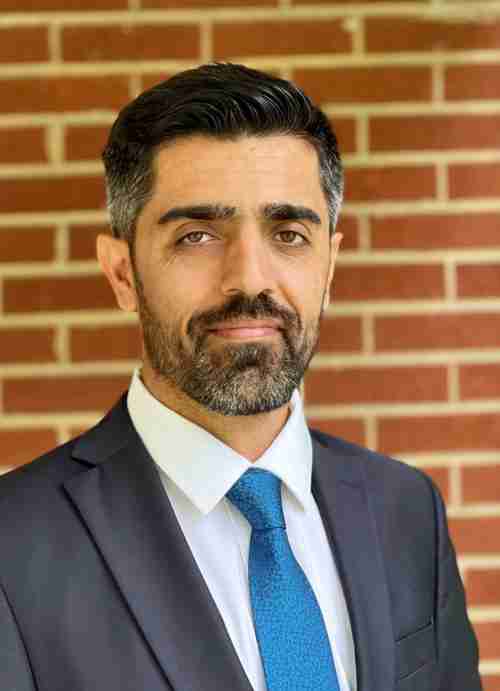
On the latest episode of The New Region's GeoSpace podcast, Mohammed A. Salih hosted Nadine Maenza, co-chair of the International Religious Freedom Roundtable in Washington and former chair of the US Commission on International Religious Freedom. The two discussed how Syria's new government under President Ahmed al-Sharaa is managing the country's diverse religious and ethnic communities following military operations against the Kurdish-led Syrian Democratic Forces (SDF) and mounting concerns over minority protection.
Following the Syrian army's January offensive against SDF-controlled territory in the northeast (Rojava), much of the region has fallen under Damascus' authority. The campaign triggered international concern, particularly after a House Foreign Affairs Committee hearing revealed bipartisan alarm over crimes against minority communities.
“There seemed to be a unanimous agreement that, even by those who are giving testimony, that there have been some problems, with crimes against these communities, and that this isn't a good policy long-term for Syria,” Maenza explained. She noted the hearing represented a significant shift, with both Democrats and Republicans expressing concern.
The situation varies across Syria's minority groups. Maenza identified Yazidis and Kurdish Christian converts as facing special risks.
“ISIS [the Islamic State], of course, targeted them [Yazidis] the most, so they clearly have a history where they were the first ones Islamists will target,” she said, adding that Kurdish Christian converts who have been publicly vocal about their faith could be threatened due to Islamist views of them as apostates.
The February 7 attack in Druze-majority Suwayda, which left at least four civilians dead, raised questions about whether Damascus might be emboldened by its northeastern success. However, Maenza suggested the international outcry might deter further military operations. “Another military operation against the minority community could really change the policy in the international community against this government,” she noted.
A particularly alarming development has been the explosion of hate speech targeting minorities, especially Kurds, on social media and even some pan-Arab Gulf media outlets. Maenza warned of the dangers of unchecked hatred: “You can't control hate. We've seen this time and time again, where leaders think they could grow hate against a community and use it to their own advantage, and then wield it when they want to do what they want to do, but it doesn't work that way. It just takes on a life of its own.”
The integration agreement between the SDF and Damascus government has become crucial for minority safety. “There's a real hope that this integration deal works, because the way the integration deal with the Syrian government was set up, it would keep that local security and local governance that really did transform the religious freedom conditions in northeast Syria," Maenza explained.
She emphasized that the Rojava’s governance model, which features local communes with co-chairmanship requirements ensuring gender balance and minority representation, successfully built social cohesion. “That is how they built that social cohesion in the northeast,” she said, describing it as “like a religious freedom roundtable at every level of government.”
On Turkey's role, Maenza was blunt about minority perceptions. She cited the US Commission on International Religious Freedom's 2025 report stating that Turkish-backed forces “terrorize Kurds and religious minorities with extortion, detention, and tortures.”
Secretary of State Marco Rubio's decision to seat SDF chief Mazloum Abdi and Rojava’s co-chair of foreign relations Elham Ahmad alongside Syrian Foreign Minister Asaad al-Shaibani at the Munich Security Conference sent an important signal.
“That sends a huge message that they matter to the United States, they matter to the international community, and they matter for the future of Syria,” Maenza noted.
She warned that current conditions could trigger mass minority exodus. “I do believe that this is an environment that's going to lead to many minorities leaving unless there's a change,” she said, adding that even some Sunnis fear growing extremist ideology.
Maenza emphasized the need for US pressure with specific guardrails: “The US government needs to be pressing for certain reforms to build an inclusive government, to have protection for the minorities, to include them in governance, and I think to make sure this deal in the northeast holds.”
She concluded by stressing that supporting Sharaa's government requires constructive pressure: “We're not doing President Sharaa any favors by just giving him a high-five and saying: ‘We support you,’ and then making him have to look like the bad guy as he does all of these things. If in fact, we want him to have the space to make these changes, I think it needs to be really tough pressure on him in order to make it something that's doable politically for him.”
 Facebook
 LinkedIn
 Telegram
 X
X