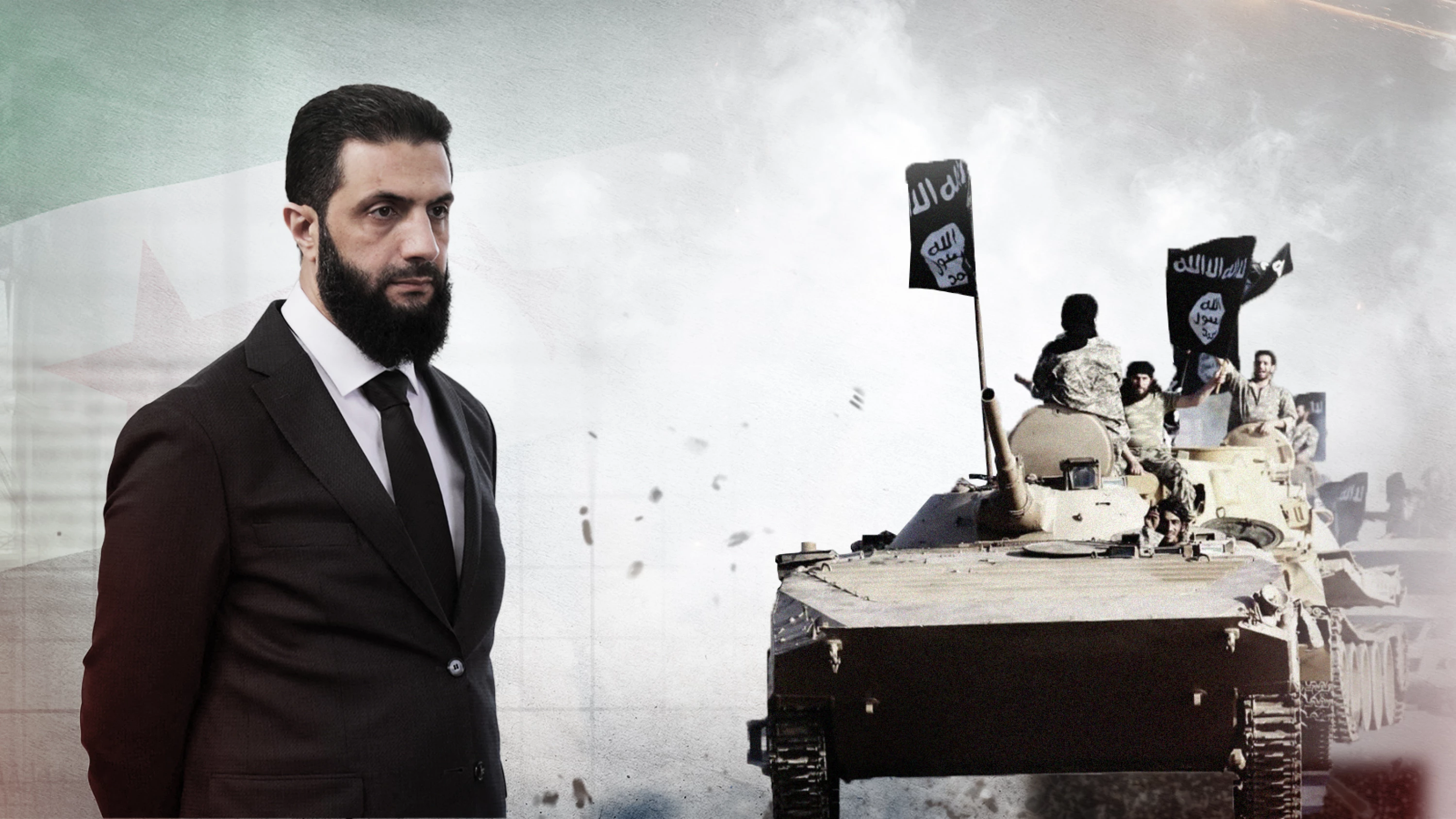
ERBIL, Kurdistan Region of Iraq – The Islamic State (ISIS) on Saturday described the new Syrian government and army as “apostates”, calling for “purging” Syria of its ranks.
A blitz offensive in December 2024, codenamed Deterrence of Aggression, resulted in the fall of Damascus and the ousting of Syria’s long-ruling dictator Bashar al-Assad at the hands of Islamist rebel groups, led by Hay’at Tahrir al-Sham (HTS).
“As for the claims of liberation and toppling the regime in the days of Deterrence of Aggression: That was a Turkish play with flagrant American directing,” ISIS spokesperson Abu Hudhayfah al-Ansari said in a lengthy audio statement published on the group’s affiliated channels on Saturday.
Senior figures from the HTS and affiliated factions, many of whom were linked with al-Qaeda in the past, have since gone on to assume governance in Syria. Former jihadist Ahmed al-Sharaa now serves as the president of the country after abandoning his nom de guerre of Abu Muhammad al-Jolani.
“Syria today is ruled by the Crusaders, having installed over it a soulless puppet they manipulate openly, not from behind the curtain,” the spokesperson continued. “They appointed for it a new figurehead leader, seduced by the devils of the Turks and the West, turning him into a tyrant equivalent to the tyrants of the Arabs.”
Sharaa joined al-Qaeda in Iraq in 2003, just weeks before the American invasion, and quickly rose through the group’s ranks. He was arrested by US forces in Iraq in 2006 and imprisoned for over five years. His release in 2011 coincided with the start of the Syrian civil war, and he would go on to form al-Nusra Front (Jabhat al-Nusra), the Syrian branch of al-Qaeda, in 2012.
In April 2013, ISIS emir Abu Bakr al-Baghdadi demanded al-Nusra join the Islamic State, which was now expanding into Syria, but Sharaa rejected the move, maintaining his allegiance to al-Qaeda emir Ayman al-Zawahiri.
In the Saturday audio message, the ISIS spokesperson claimed that their dispute with al-Nusra over a decade ago was not over politics, but rather beliefs, “between monotheism and polytheism, between the state of divine law and the state of man-made law.”
The new government has been widely accepted by regional and international powerhouses, with US President Donald Trump on Friday praising Sharaa as “doing a phenomenal job.”
In early January, Syria and Israel agreed to set up a communication cell to “facilitate immediate and ongoing coordination on their intelligence sharing, military de-escalation, diplomatic engagement, and commercial opportunities,” in what marked a far cry from the two neighboring countries’ historical approach toward each other, raising eyebrows among conservative Muslim nations given longstanding opposition to normalization with Israel amid the Gaza conflict.
“The new tyrant will not gain the approval of Christians and Jews until he follows their creed, converting to Christianity or Judaism,” Ansari said of Sharaa.
A historic meeting between Trump and Sharaa in Washington in November marked the first visit of a Syrian leader to the Oval Office in eight decades, followed by Syria’s accession to the US-led global coalition against ISIS.
“The new Syrian regime, with its secular government and nationalist army, are disbelieving apostates. There is no obligation more urgent after faith than fighting them to liberate Syria from their clutches,” said the ISIS spokesperson, calling on remaining Syrian factions to defect to ISIS.
Ansari urged the jihadists to prioritize fighting Syria’s new rulers and “marshal all their energies toward that end,” claiming that: “Through this fighting, Syria will purge its filth, its ranks will be sorted, and it will return to its former state.”
The newfound partnership between Washington and Damascus has already seen several coordinated campaigns against ISIS remnants in the country, with the US Central Command (CENTCOM) announcing a total of 50 ISIS members killed or captured, and over 100 infrastructure targets of the militant group struck during two months of targeted operations.
Despite the overwhelmingly positive reception from the international community, the new Syrian authorities have not shied away from violent military campaigns targeting the country’s minority Alawite, Druze, and most recently, Kurds, under the pretext of shutting down “separatist” endeavors, killing and injuring thousands of civilians and being accused of gruesome human rights violations.
 Facebook
 LinkedIn
 Telegram
 X
X