
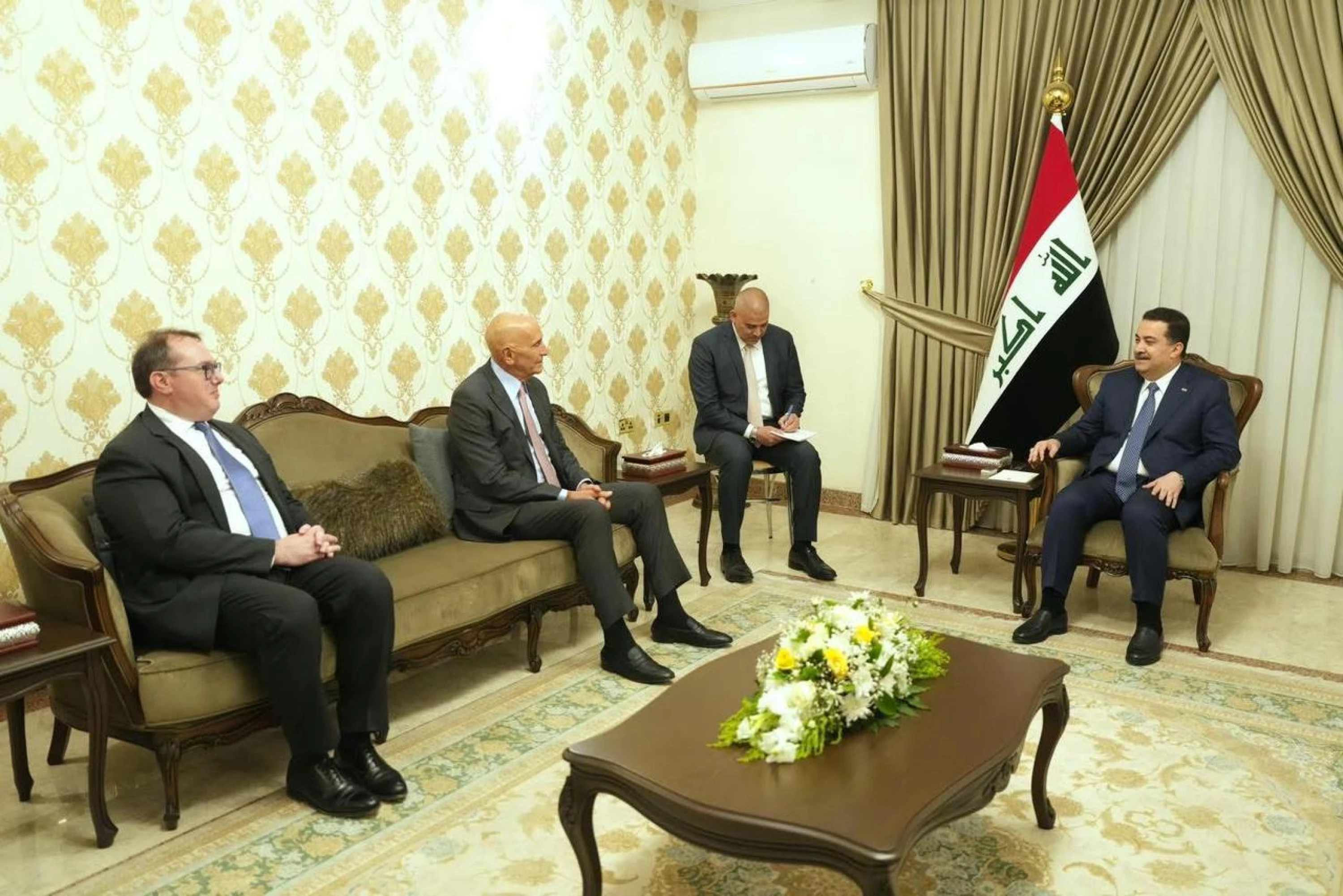
ERBIL, Kurdistan Region of Iraq - Iraqi Prime Minister Mohammed Shia' al-Sudani on Sunday received US Special Envoy for Syria Tom Barrack, with the pair discussing Iraq's role in fostering stability in Syria following recent turmoil between the Kurdish-led Syrian Democratic Forces (SDF) and the Damascus government.
After the Syrian government launched a military campaign against the SDF and the Kurdish-led administration in Rojava (northeast Syria) in January, Baghdad agreed to transfer thousands of Islamic State (ISIS) fighters from its neighbor to prevent detainees from taking advantage of the unrest to escape.
"Discussions were held on the bilateral relations between Iraq and the United States, the general situation in the region, and what Iraq is undertaking to support regional stability, and the stability of Syria in particular," read a statement from the Iraqi premier's office.
"Barrack noted the important role Iraq plays in resolving regional problems, reducing tensions, supporting dialogue, and combating terrorism," the statement continued.
Over 5,700 ISIS prisoners arrived in Baghdad over the course of the transfer operation, which was carried out in conjunction with the US-led Global Coalition to Defeat ISIS.
“The presence of ISIS prisoners in Iraq is not permanent, and the government is working on their return to their countries of origin. Those who arrived in Iraq come from more than 67 countries,” Saeed al-Jayashi, strategic affairs advisor at Iraq’s national security advisory, told state media on Sunday.
In addition to the federal government's efforts, officials from the Kurdistan Region played a vital role in facilitating a January 29 ceasefire and integration agreement between Rojava and Damascus, serving as key interlocutors between the SDF, the government of Syrian interim President Ahmed al-Sharaa, and international guarantors such as the US and France.
In late January, Barrack held a phone call with President Masoud Barzani in which he expressed his gratitude to the Kurdish leader for helping achieve the ceasefire.
The integration agreement has seen limited numbers of Syrian state forces enter Rojava cities and assume administrative roles, while Damascus has attempted to quash Kurdish fears of chauvinism and centralization by formalizing linguistic and cultural rights for the minority.
SDF chief Mazlum Abdi told reporters in mid-February that the Rojava administration informed Damascus that "we want autonomy in the Kurdish areas, no matter under what label," endeavoring to maintain as much local power for the Kurdish-led authorities under the new agreement.
The Syrian military offensive drew widespread condemnation for the bloodshed and abuses by Damascus-affiliated personnel, with the European Parliament issuing a resolution noting the prevalence of "credible reports" of atrocities directed "particularly against the Kurdish population."
"Extrajudicial killings, enforced disappearances, arbitrary detention, forced displacement, and attacks on civilian infrastructure may amount to serious violations of international humanitarian law and, in some cases, to war crimes," a press release from the EU body regarding the resolution said.
 Facebook
 LinkedIn
 Telegram
 X
X