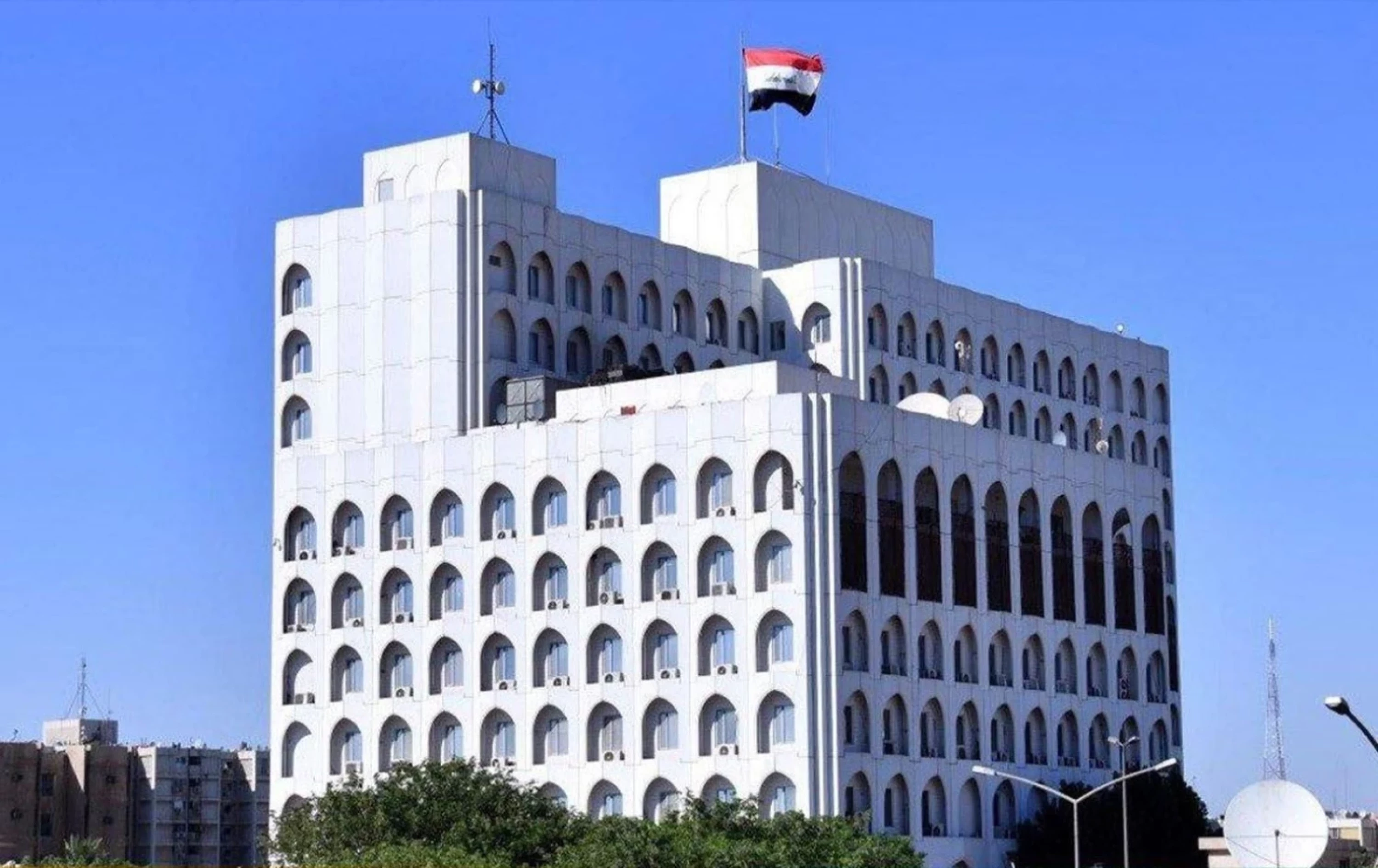
DUBAI, United Arab Emirates - The Iraqi foreign ministry on Thursday held a series of meetings with diplomatic representatives of Egypt, Palestine, and Jordan in which they expressed Baghdad's regret that the aforementioned countries failed to support an Iraqi submission of a map detailing its maritime boundaries to the UN.
The map in question sparked backlash from a number of regional neighbors including Kuwait and Saudi Arabia, with other Arab League nations backing their criticism.
Kuwait’s Foreign Ministry on Sunday said it had summoned the Iraqi Embassy’s charge d’affaires and delivered a formal protest note, claiming the Iraqi submission affects Kuwait’s sovereignty over its maritime areas and fixed maritime features, including Fasht al-Qayd and Fasht al-Aij. Kuwait said it maintains full sovereignty over those areas and that the subject is not up for debate.
Iraqi Deputy Foreign Minister for Bilateral Relations Mohammed Hussein Bahr al-Uloom held meetings in Baghdad with Egyptian Ambassador Ahmed Samir Helmy, Palestinian Ambassador Samar Abdul Rahman, and Jordanian Ambassador Salem al-Tarawneh.
Uloom said Iraq’s submission of coordinates and maps of its maritime domains to the UN is a sovereign right that “cannot be reversed,” stressing it was carried out in full compliance with international law, particularly the 1982 United Nations Convention on the Law of the Sea.
He said the Egyptian statement did not reflect Iraq’s position or the legal steps it had taken transparently through diplomatic channels.
While voicing regret over Cairo’s statement, the Iraqi official emphasized the “deep and historic” ties between the two countries and called for accuracy and objectivity in official statements, noting their direct impact on bilateral relations.
The Iraqi foreign ministry offered similar sentiment for Palestine and Jordan.
On Monday, Egypt’s Foreign Ministry said it was closely following developments related to the maritime boundary issue between Iraq and Kuwait after Iraq deposited its maritime coordinates with the United Nations.
Cairo stressed the importance of respecting international law, especially the 1982 UN Convention on the Law of the Sea, and called for dialogue given the sensitive regional context.
The Palestinian statement expressed a similar position, with Abdul Rahman saying that it was "intended to strengthen Arab cooperation, but it had generated undesirable repercussions that were inconsistent with Palestinian foreign policy."
Similarly, according to the Iraqi statement, the Jordanian ambassador "expressed his gratitude for the information provided by the Undersecretary, praising its importance in enhancing Jordan's understanding of the facts related to this important issue between Iraq and Kuwait."
The three Arab countries also reaffirmed its support for Kuwait’s sovereignty and territorial integrity, including its maritime boundaries, and expressed readiness to support efforts aimed at reaching mutually agreed solutions in line with international law to preserve regional security and stability.
 Facebook
 LinkedIn
 Telegram
 X
X