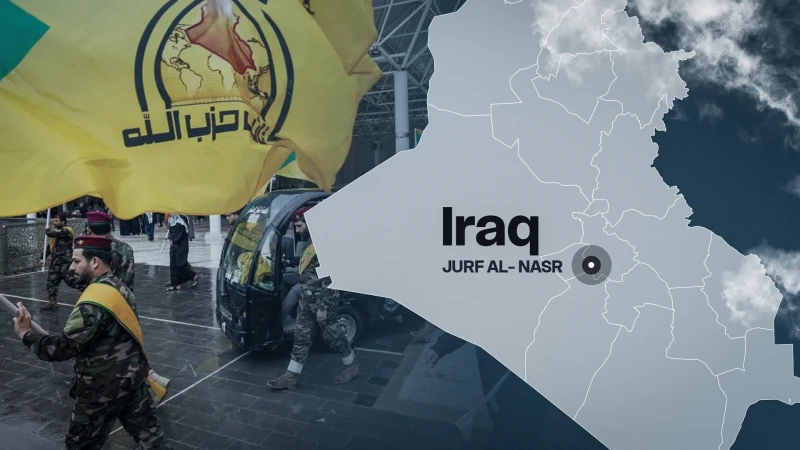
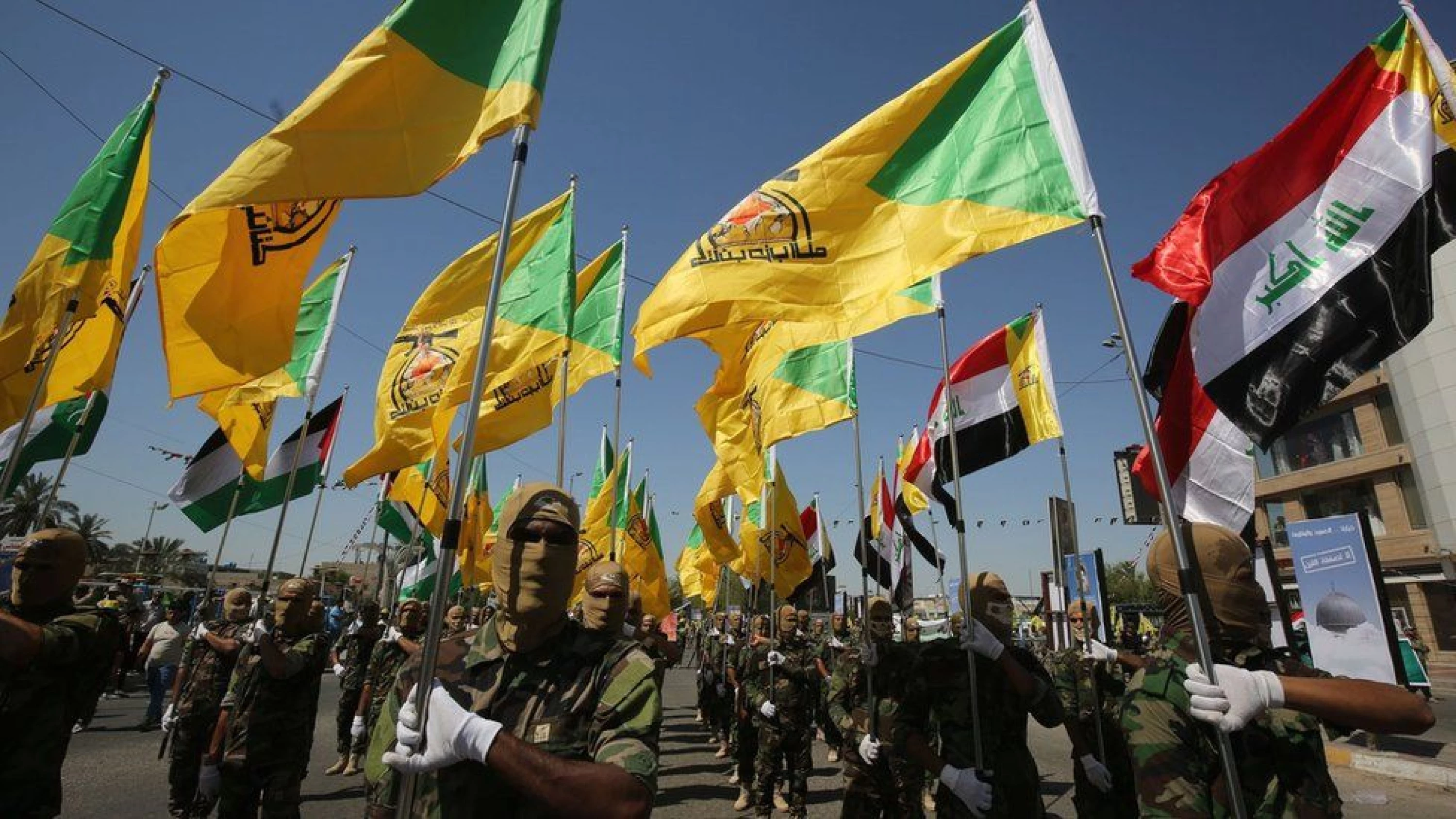
ERBIL, Kurdistan Region of Iraq - Calm returned to Baghdad on Thursday after Iraq’s powerful pro-Iran armed group Kataib Hezbollah, which is part of the Popular Mobilization Forces (PMF), said it will halt attacks on the US embassy for five days.
Saudi Arabia’s state-owned Al Hadath reported that, after the ceasefire, members of the US embassy and the US coordination personnel were evacuated from Baghdad’s Green Zone, alongside NATO personnel.
“There is hope that all sides will abide by the agreement, at least for the Eid holidays. It seems they understood that attacking residential areas and diplomatic missions crosses a red line,” a western diplomatic source told The New Region.
The Islamic holiday of Eid al-Fitr is celebrated by Muslims all over the world at the end of the holy month of Ramadan, starting this year on Friday.
ALSO READ: Kataib Hezbollah says will temporarily halt attacks on US embassy, sets conditions
The group’s Secretary General Abu Hussein al-Hamidawi placed the order, following heavy attacks by the group last Tuesday on the Green Zone, including the US embassy building and Royal Tulip Al-Rasheed Hotel, which hosts several diplomatic missions, including the European Union Advisory Mission in Iraq, angering the Iraqi government.
“Once again, outlaw groups have carried out a criminal act of aggression by targeting the headquarters of the United States Embassy in the capital, Baghdad, this evening,” Sabah Al-Numan, spokesperson for the Iraqi Commander-in-Chief of the Armed Forces said following the attacks, calling them “a blatant terrorist assault on Iraq’s sovereignty and authority.”
After the ceasefire announcement on Thursday, Iraqi Prime Minister Mohammed Shia’ al-Sudani visited the headquarters of the Popular Mobilization Commission (PMC).
During the meeting, Sudani said that “accusing the Popular Mobilization Forces of carrying out actions outside the framework of the state and the law either reflects ignorance or constitutes deliberate misinformation with specific objectives.”
The Iraqi premier underlined that “the Popular Mobilization Forces have played a recognized role in thwarting major threats that targeted the unity of Iraq, particularly those posed by the [Islamic State] ISIS terrorist organization.”
The PMF was formed in 2014 following a call from Shiite Grand Ayatollah Ali al-Sistani to mobilize against the Islamic State (ISIS), after the militant group occupied one-third of Iraqi territory.
During the war, the Shiite-majority PMF moved into Sunni majority areas, such as Anbar and Mosul. Some of the more hardline factions in the PMF, also known as the Islamic Resistance in Iraq, have become increasingly involved in the recent war, and PMF factions in such areas have been increasingly targeted by airstrikes.
Badr Organization Secretary-General Hadi al-Amiri on Thursday condemned what he described as US and Israeli attacks on PMF positions, saying that the combined strikes have killed more than 60 PMF members and wounded 100 others.
Sudani also said that the Iraqi government will provide land plots for their families of PMF fighters that were killed in the strikes, and that “preserving and supporting the PMF is a shared responsibility.”
The US has strongly opposed the preservation of the PMF, and has opposed the Iraqi parliament voting for the PMF Authority Law that would further institutionalize the PMF, which has already been recognized by the Iraqi government since 2016.
Due to US and domestic opposition, the legislation was removed from the parliament’s agenda in August last year. Moreover, the Iraqi prime minister underlined that Iraqi security forces must “not allow any party to draw Iraq into the ongoing war in the region, while continuing to protect vital installations, headquarters, and diplomatic missions.”
Analysts say that the inability of the Iraqi government to stop the attacks by Iran-backed groups has put the government in a difficult position. Kurdish officials have also asked Baghdad to stop the attacks by the outlawed groups.
“They probably issued this statement and proposed this detante after pressure by the Iraqi government. Baghdad is in a dire position, it has been unable of stopping the armed groups attacks on US interests in the country and appears helpless as the US retaliates,” Phillip Smyth, a researcher focused on Shiite armed groups, said.
“They likely want to avoid further strikes on senior leadership, which is typical after high-profile killings—though claims that such figures would no longer be targeted seem unrealistic. They see American scanning and targeting capabilities as quite effective and appear unconcerned about where they might be hit.”
Also, Yesar al-Maleki, Gulf Analyst at the Middle East Economic Survey (MEES), told The New Region that Kataib Hezbollah probably issued the ceasefire statement after pressure from the Iraqi government. “Baghdad is in a dire position, it has been unable to stop the armed groups’ attacks on US interests in the country and appears helpless as the US retaliates.”
The attacks by PMF groups on US bases have invited retaliatory American strikes on PMF positions across the country, killing dozens of fighters and wounding many more, including Abu Ali al-Askari, security chief and spokesperson of Kataib Hezbollah, who was killed last Monday.
“US strikes in past days have been quite harsh that the militias are looking for a way to deescalate,” he added.
Muhanad Seloom, Assistant Professor of International Politics and Security at the Doha Institute for Graduate Studies, said that Kataib Hezbollah “want to collect themselves after losing leaders and locations,” and that they are under “immense pressure by the government.”
However, Seloom said that Kataib Hezbollah is the main target of both the US and Israel and that most likely the attacks will continue after Eid. “I don’t see this group reconciling with the US for the foreseeable future.” The ceasefire announcement came after Erbil and Baghdad reached an agreement to export Iraqi oil through the Kurdistan Region to Turkey’s Ceyhan port on Tuesday.
“If this detante holds - hopes are that the militias would at least cease their attacks on Kurdistan which may allow IOCs [international oil companies] there to restart output,” Maleki said. “That coupled with the recently-agreed Kirkuk exports could see Iraq bring back up to 450,000 barrels per day of exports. An important lifeline for the Iraqi and Kurdish governments.”
However, one major factor that could quickly unravel the ceasefire is Kataib Hezbollah’s demand that Israel halt attacks on Beirut’s southern suburbs.
“Should the enemy fail to comply, the response will be direct and focused, with an escalation of attacks after the five-day period,” the group warned.
“Recent events clearly demonstrate that Israel and the US may not be on the same page when it comes to the objectives of this campaign as seen with the South Pars attacks. So, this specific demand there demonstrates that the groups are not really serious with their proposal,” Maleki stated.
Smyth on the other hand noted that “the inclusion of conditions such as Israel not hitting Beirut, among other things, suggests this is an initial signal as the American administration tests how it is going to respond after the Qatar LNG hit and the South Pars oil field attack. With Israeli statements going back and forth, multiple options are being explored.”
Although the ceasefire is focused on a halt in hostilities in Baghdad, it seems that Iran itself and its proxies will continue attacks in other parts of Iraq, especially on Iranian-Kurdish opposition groups.
Therefore, Smyth said that other attacks remain “fair game, including in Kurdistan and elsewhere, but they are signaling they will not target the US Embassy for now. This may be an early indication of a broader modus vivendi or understanding, but I place little value on what they say at this stage, as reactions are still ongoing.”
Salah Bayaziddi, the Komala Party of Iranian Kurdistan’s representative to the US, posted on X that Iran had launched 18 drones targeting the party’s civilian bases in Zirgwezala and Surdash in the province of Sulaimani on Thursday.
The Kurdistan Freedom Party (PAK), another Iranian-Kurdish opposition party, was targeted in Erbil province, leading to the injury of three PAK members.
“I don’t want to make a mountain out of a molehill. Kataib Hezbollah has issued ceasefire or truce statements in the past and sometimes abided by them, but they are not the core decision-makers—the IRGC [Islamic Revolutionary Guard Corps] is. This is part of a back-and-forth dynamic, testing the Americans, often played out through public messaging and social media,” Smyth concluded.
Victoria Taylor, former US Deputy Assistant Secretary of State for Iraq and Iran and Director of the Iraq Initiative in the Atlantic Council’s Middle East program, said in a post on X that: “The US is unlikely to stop hitting back for very long if the militias are still striking Erbil Air Base and the Baghdad airport facility, which the US considers diplomatic and which the militias consider a military facility.”
 Facebook
 LinkedIn
 Telegram
 X
X