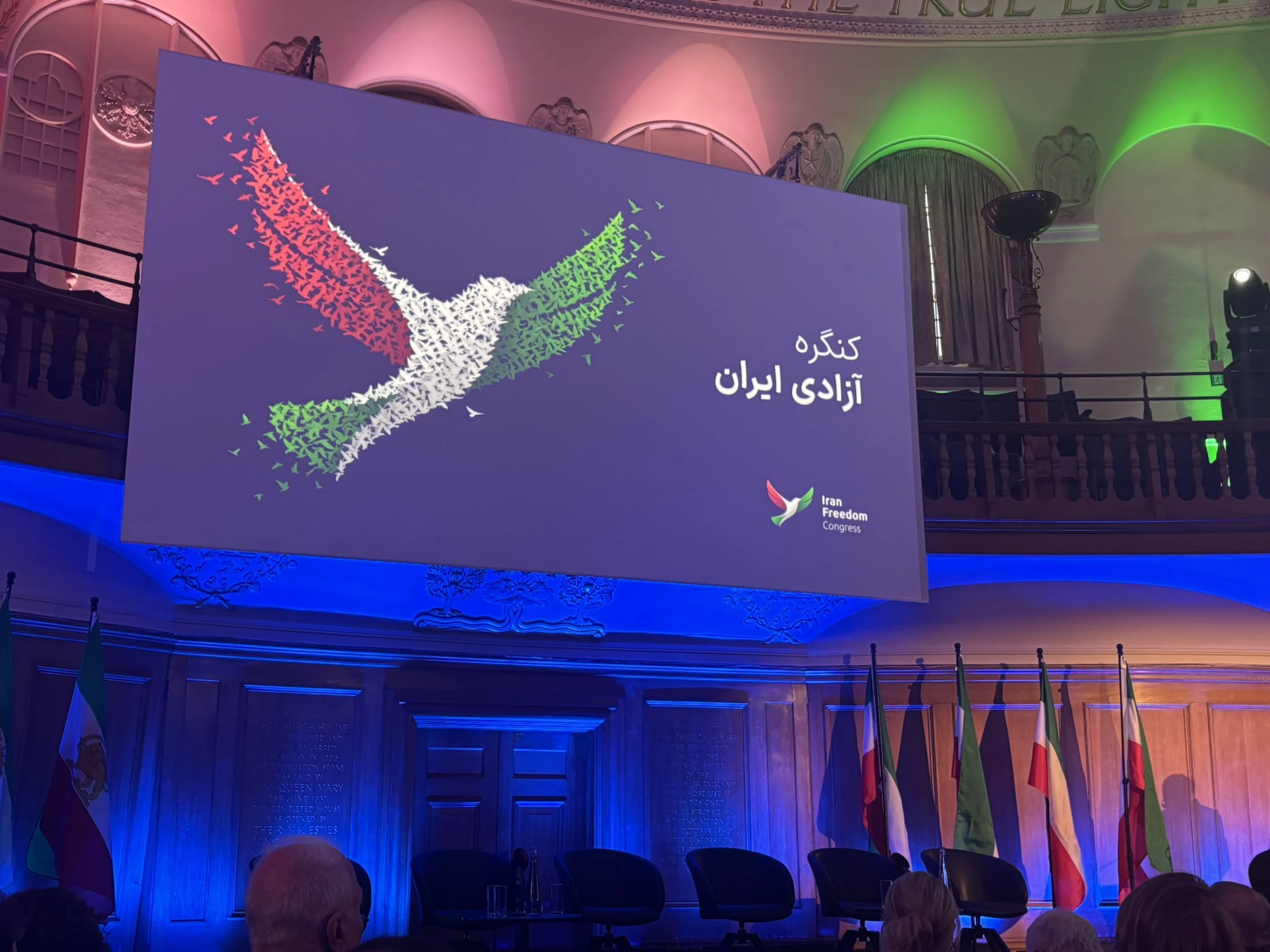
ERBIL, Kurdistan Region of Iraq – The Kurdistan Free Life Party (PJAK) on Friday said it had been excluded from the Iran Freedom Congress, a convention in London on March 28-29 bringing together Iranian opposition parties, which endangered the unity of the Iranian Kurdish parties’ coalition formed last month. At the end, PJAK still joined the conference following consultations.
The Iranian Kurdish opposition alliance, known as the Alliance of Political Forces of Iranian Kurdistan, was formed on February 26, and includes the Kurdistan Democratic Party of Iran (KDPI), Kurdistan Freedom Party (PAK), Kurdistan Free Life Party (PJAK), Organization of Iranian Kurdistan Struggle (Khabat), and the Komala of the Toilers of Kurdistan. On March 4, the Komala Party of Iranian Kurdistan also joined the alliance.
ALSO RELATED: Iranian Kurdish opposition groups form new joint alliance
The KDPI and Komala Party of Iranian Kurdistan were both invited to the Iran Freedom Congress which brought together Iranian civil and political actors, and was set up by businessman turned political activist Majid Zamani, previously involved in the Green Movement in 2009.
Khaled Azizi, KDPI’s spokesperson, and Nahid Bahmani, member of Komala Party of Iranian Kurdistan's leadership, are both listed as part of the Congress’s Coordination Council.
The Foreign Relations Committee of PJAK in an official statement on Friday, blamed “hidden hands” for their exclusion, without specifying if it was referring to foreign countries or other Iranian opposition parties.
“The fundamental question, however, is this: how is it possible that in a congress whose declared aim is trust-building and convergence, such hidden hands can intervene and produce behavior so exclusionary, opaque, and damaging to trust?” PJAK said on Friday.
“According to information we have received from internal sources within the council, it has been claimed that two other Kurdish parties present at the congress—the Kurdistan Democratic Party of Iran and Komala Party of Iranian Kurdistan—played a role in the exclusion of PJAK,” the party added.
“Regardless of the accuracy of this claim, it is an issue that should be examined within the framework of relations among Kurdish parties and under the scrutiny of Kurdish society; nevertheless, it does not diminish the responsibility or consequences of the decision to exclude PJAK from the ‘Iran Freedom Congress’,” it noted.
However, a source in the Komala Party of Iranian Kurdistan denied that they had anything to do with the exclusion of PJAK.
“We have not been involved in any decisions regarding participation or otherwise of PJAK in this conference. We’re not organizers, but guests. The whole thing is an unnecessary row that could have been avoided by a little bit of responsibility and friendly discussions. We and KDPI have explained and clarified this to PJAK. The announcement was a hasty overreaction,” the source said.
A source within the KDPI underlined that their main goal is to keep the Kurdish unity alliance with the Iranian Kurdish opposition parties, and that the KDPI would not do anything to “hurt this alliance.”
“The KDPI had nothing to do with the PJAK not attending that conference. We have spoken with the conference organizers, and we have received assurances and asked them to let PJAK attend,” the source said.
PJAK is affiliated with the Kurdistan Workers' Party (PKK), which for decades waged a guerrilla campaign against Ankara for greater Kurdish rights before agreeing to disband itself and lay down arms in 2025. The Turkish defense ministry in early March said that it was closely monitoring PJAK’s activities.
In the past, the sister party of PJAK, the Democratic Union Party (PYD), was often excluded from Syrian opposition conferences before the fall of the Assad regime, due to Turkish opposition.
“PJAK's links to the PKK seem to be eliciting the same reactions and strategies that occurred during Syria's civil war,” David Romano, Thomas G. Strong Professor of Middle East Politics at Missouri State University, said.
“Turkey or European governments behind the scenes are probably exerting whatever forms of pressure they can to exclude the group, despite its significant levels of support in many parts of Iranian Kurdistan.”
According Romano, the PKK “should probably have been removed from European and US terrorist group lists some time ago, given that it has not conducted attacks on civilians since a long time and is currently engaged in a peace and disarmament process with Ankara. If groups like the MEK (Mojahedin-e-Khalq) and PLO (Palestine Liberation Organization) can be removed from such lists, then the same criteria should be applied to the PKK.”
Arman Torkzaban, a representative of Jomhoor digital democracy platform and member of Jomhoor-academia consortium, who participated in the conference, nearly withdrew from the event.
He told The New Region that the issue stemmed from a miscommunication. “It was a classic example of a multi-layered, multi-party miscommunication. It took us about 36 hours—I got involved early on to track the problem and bring all parties together for discussion. Eventually, a renewed invitation resolved the issue. PJAK wanted an official position.”
“So, there was no exclusion. PJAK was invited as a body of members, but they initially did not have a place on one of the panels. The reason was simply logistical—around 270 people were invited, and about 80 were already participating in panels, leaving no room. However, PJAK was later added to a panel.”
“Due to past experiences, PJAK suspected it might be a case of intra-Kurdish exclusion or a conspiracy stemming from the organizers’ side. As soon as I heard about it, I said I would not take part—this crossed my red lines. But after investigating, it became clear that it was a miscommunication. I’m glad we were able to resolve it, because otherwise it could have jeopardized the Kurdish coalition. It could also have planted seeds of doubt in this congress, which is still in formation but has the potential to become something significant.”
Iran Freedom Congress on its website on Saturday confirmed that an invitation has been extended to PJAK.
“Misunderstandings have emerged in the media space, and we hope this invitation will help resolve them,” the Congress said on their site. “Naturally, within a limited timeframe, it is not possible to host every political current and social network.”
On the last day of the event, Revar Abdanan, PJAK’s spokesperson, in his speech at the conference thanked individuals who threatened to withdraw their participation in the congress due to the exclusion of PJAK.
“Their behavior showed that despite the dark legacy left by centuries of monopoly and authoritarianism in Iran’s political space, awakened consciences, free minds, and independent wills are still present. This is a great support that encourages us to continue our democratic struggle until freedom and victory are achieved.”
 Facebook
 LinkedIn
 Telegram
 X
X